Introduction
Welcome to the heart of Avadh! When most people plan an Indian getaway, they look for pristine beaches, bustling modern nightlife, or quiet mountain peaks. But true travel is about connecting with culture, tasting legendary food, discovering living heritage, and immersing yourself in a city’s unique pace. Lucknow, the capital of Uttar Pradesh, offers exactly that.
Often called the “City of Nawabs,” Lucknow is a beautiful mix of royal history, incredible monuments, world-famous food, and unmatched hospitality (our famous Pehle Aap culture). Whether you are a solo backpacker looking for an affordable adventure, a couple seeking a romantic heritage walk, or a family planning a meaningful weekend trip, Lucknow has something special for everyone.
At the center of this royal experience is the majestic Bara Imambara. This complete travel guide will walk you through everything you need to know to explore this architectural marvel like a pro, save money, avoid common tourist traps, and make your trip truly memorable.
Why Lucknow is a Must-Visit City
Lucknow is not just another dot on the Indian tourism map. It is a living, breathing cultural hub where the past gracefully blends with the present. Here is why it deserves a top spot on your travel list:
- Mind-Blowing Architecture: From grand gateways modeled after old Turkish designs to massive halls built without a single iron beam, Lucknow’s historical buildings will leave you amazed.
- The Food Paradise: Lucknow is arguably the culinary capital of North India. The street food here is iconic, featuring melt-in-your-mouth Tunday kebabs, rich Prakash ki kulfi, and fragrant Awadhi biryani.
- World-Class Craftsmanship: It is the birthplace of Chikankari embroidery—an intricate, delicate hand-embroidered clothing style that makes for perfect gifts and souvenirs.
- Traveler-Friendly Vibe: Unlike many fast-paced metro cities, Lucknow maintains a relaxed, respectful, and safe environment for solo travelers, families, and couples alike.
Complete Guide to Bara Imambara Lucknow
Built in 1784 by Nawab Asaf-ud-Daula, the Bara Imambara (also known as the Asafi Imambara) is a true engineering masterpiece. The history behind its construction is beautiful: it was started as a massive relief project to provide employment to thousands of locals during a devastating famine. To ensure everyone kept their dignity, the working class built the structure during the day, and the upper-class citizens dismantled parts of it at night to keep the work going and receive wages.
Today, it stands as a symbol of resilience, architectural brilliance, and royal Awadhi history. Let’s break down the practical details you need for your visit.
Best Places to Visit Inside the Complex
The Bara Imambara isn’t just one building; it is a sprawling historical complex. The three major areas you must explore inside are the following:
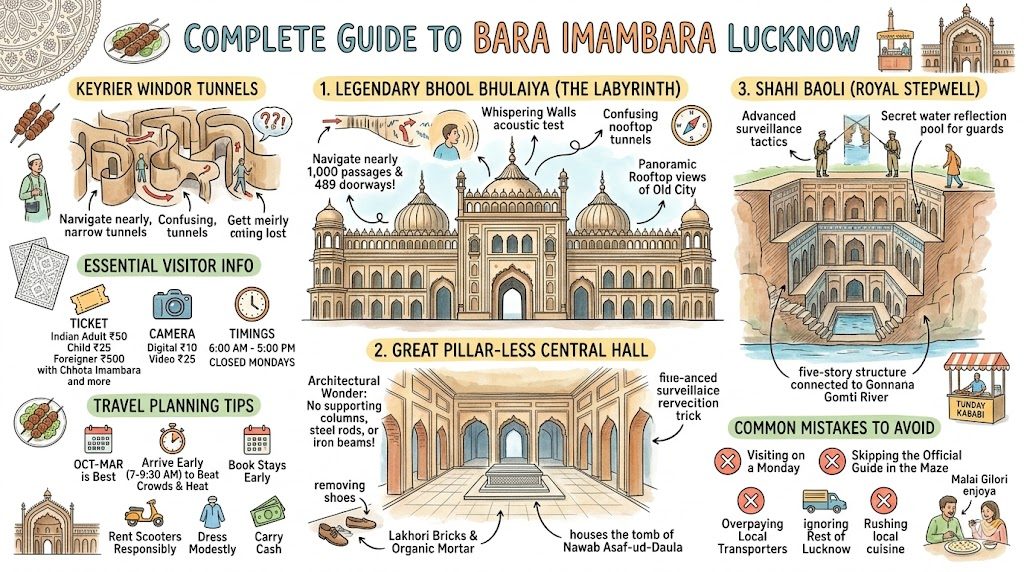
- The Central Vaulted Hall: One of the largest arched rooms in the world, built without any pillars or metal beams supporting the ceiling. It houses the tomb of Nawab Asaf-ud-Daula.
- The Bhool Bhulaiya (The Labyrinth): A mind-boggling maze of nearly 1,000 interconnected narrow passages and 489 identical doorways built right above the central hall.
- Shahi Baoli: A stunning five-story stepwell with unique architecture. The inner chambers are designed so that guards could see the reflection of any outsider approaching in the water before the person could see them.
Things to Do
- Get Lost in the Bhool Bhulaiya: Try navigating the passages to reach the rooftop, which offers panoramic views of the Old City.
- Experience the Acoustic Wonders: Test the whispering walls of the maze, where a whisper at one end of a 20-foot wall can be clearly heard at the other end.
- Photograph the Grand Courtyards: Capture the stunning symmetry of the Indo-Islamic arches and the grand Asafi Mosque standing within the complex.
Entry Fees and Ticket Details
The entry ticket is a combined pass that includes access to the Bara Imambara, Chhota Imambara, the Picture Gallery, and the Shahi Hamam.
- Indian Citizens: ₹50 for adults, ₹25 for children.
- Foreign Tourists: ₹500 per person.
- Camera Fees: ₹10 for a standard digital camera, ₹25 for a video camera (professional tripods are restricted).
Timings and Best Time to Visit
- Timings: 6:00 AM to 5:00 PM. Note that the complex is closed on Mondays.
- Best Time of Year: October to March, when Lucknow’s weather is pleasantly cool and perfect for walking.
- Best Time of Day: Arrive early between 7:00 AM and 9:30 AM to beat the intense crowds and midday heat.
Nearby Attractions
You don’t have to travel far to see more. Right outside the gates, you can walk to the iconic Rumi Darwaza (a 60-foot-tall signature gateway of Lucknow). Within a 1 to 2 km radius, you will find the gorgeous Chhota Imambara, the Husainabad Clock Tower, and the Hussainabad Picture Gallery.
Food Options Nearby
After walking around the complex, head over to Chowk or Aminabad (a short auto ride away). Treat yourself to the world-famous Idris ki Biryani, legendary Tunday Kababi, or grab a refreshing Malai Gilori sweet from Ram Asrey.
Budget Planning
Bara Imambara is an incredibly pocket-friendly destination. A budget of ₹300 to ₹500 per person easily covers the entry ticket, a shared official guide, local e-rickshaw transport, and a delicious street-food lunch nearby.
Local Transport Options
The monument is located in the Hussainabad Heritage Zone of Old Lucknow. You can easily reach it via app-based cabs (Ola/Uber) or auto-rickshaws. If you are taking the Lucknow Metro, hop off at the Charbagh or Hussainganj metro stations and grab a quick e-rickshaw directly to the gates.
Family and Couple-Friendly Suggestions
- For Families: The maze is an absolute hit with kids and seniors alike. Just make sure to stay close to your guide so no one gets separated.
- For Couples: Take a peaceful stroll through the outer courtyards in the late afternoon. The soft golden-hour lighting creates a beautiful, romantic setting for couples looking to take photographs together.
Best Places or Experiences Related to the Topic
To make your heritage trail seamless, here is a detailed breakdown of the three key areas inside the Bara Imambara complex that you cannot afford to miss.
1. The Legendary Bhool Bhulaiya (The Labyrinth)
- Location: Directly above the central chamber of the main Bara Imambara building.
- Why it is worth visiting: It is the only existing historical maze in India. Built out of engineering necessity to lighten the weight of the massive pillar-less roof below, it turned into an incredible, mysterious labyrinth.
- Best things to do: Walk through the winding tunnels, listen to the guide demonstrate the “whispering walls,” and climb out onto the rooftop for a sweeping view of the grand Rumi Darwaza.
- Best time to visit: Early morning (before 10:00 AM) to avoid the heat inside the narrow stone corridors.
- Ideal for whom: Adventure seekers, history lovers, solo travelers, and families with curious kids.
- Travel tip: Always hire an authorized guide. It is incredibly easy to get turned around in the 489 identical doorways, and the guides share fascinating stories that bring the walls to life.
2. The Great Pillar-less Central Hall
- Location: The main central building of the Bara Imambara complex.
- Why it is worth visiting: It is a global architectural wonder. The hall is roughly 164 feet long and nearly 50 feet high, built entirely using traditional Lakhori bricks and organic mortar (rice husks and clay) without a single column, steel rod, or iron beam supporting the roof.
- Best things to do: Stand in the center to admire the sheer scale of the vault, pay respects at the simple tomb of Nawab Asaf-ud-Daula, and observe the beautiful Persian-style interior details.
- Best time to visit: Anytime during operational hours, as it offers a cool respite from the sun.
- Ideal for whom: Architecture enthusiasts, history buffs, and photographers.
- Travel tip: You must remove your shoes before entering this grand hall. You can leave them safely at the shoe counter outside for a nominal tip.
3. The Shahi Baoli (Royal Stepwell)
- Location: To the right side of the main entrance gate inside the complex.
- Why it is worth visiting: It is a unique five-story water reservoir connected directly to the Gomti River. Its structural engineering reflects advanced surveillance tactics used by royal guards centuries ago.
- Best things to do: Walk down the cool stone steps, stand in the eastern chamber to see the secret water-reflection trick, and explore the ancient royal bathhouse (Shahi Hamam).
- Best time to visit: Mid-afternoon, as the deep stepwell remains naturally cool and shielded from the harsh sun.
- Ideal for whom: Backpackers, solo travelers, and fans of unique ancient engineering.
- Travel tip: Look closely at the water pool from the designated viewing window to witness the mirror-like reflection of the main entranceway—it still works perfectly today!
Travel Planning Tips for Lucknow
Planning a trip to a heritage city requires a bit of practical strategy. Keep these simple traveler-focused tips in mind:
- Book Stays Early During Peak Season: Winter months (November to February) bring a massive influx of cultural travelers. Book your hotels near Hazratganj or Gomti Nagar early to secure the best rates.
- Rent Scooters Responsibly: If you rent a scooter to explore the city, ensure you carry a valid driving license and always wear a helmet. Lucknow’s traffic can be chaotic, especially in the narrow streets of the Old City.
- Dress Modestly: The Bara Imambara and its surrounding monuments are active religious and cultural spaces. Wear comfortable clothes that cover your shoulders and knees out of respect for local culture.
- Carry Cash for Local Markets: While online UPI payments work almost everywhere, carrying loose cash is highly recommended for street vendors, local e-rickshaws, and shoe-keeping counters.
- Keep Your Belongings Secure: The maze and nearby crowded markets like Aminabad can get highly congested. Keep your wallets, phones, and cameras secure in a front-facing bag.
- Keep Heritage Sites Clean: Respect the environment. Avoid littering inside these centuries-old architectural wonders and use the designated trash bins.
Common Mistakes to Avoid
- Visiting on a Monday: This is the most common blunder! The Bara Imambara and most surrounding heritage structures are completely closed on Mondays.
- Skipping the Official Guide: Trying to explore the Bhool Bhulaiya alone means you will miss out on the incredible history, the whispering wall demonstrations, and the hidden architectural secrets.
- Overpaying Local Transporters: Always fix the fare with auto or e-rickshaw drivers before you sit inside, or use app-based aggregators to avoid the “tourist tax.”
- Ignoring the Rest of the City: Many travelers only explore the historic North Lucknow area and completely miss the beautifully planned parks, modern cafes, and grand avenues of South/New Lucknow (like Gomti Nagar and Ambedkar Park).
- Rushing the Local Cuisine: Do not settle for fast food. Give yourself time to sit down and experience an authentic, slow-cooked Awadhi meal.
Suggested Lucknow Itinerary Angle
Wondering how to fit the Bara Imambara into your travel plans? Here is how you can easily integrate this complete guide into your schedule, depending on how much time you have.
1-Day Heritage Blitz Plan
- Morning: Arrive at 7:30 AM at Bara Imambara to beat the crowds. Explore the main hall, Bhool Bhulaiya, and Shahi Baoli with a guide.
- Late Morning: Walk out to photograph the Rumi Darwaza and head straight to Chhota Imambara.
- Lunch: Grab legendary kebabs and biryani in the nearby Chowk or Aminabad area.
- Afternoon: Visit the British Residency to understand Lucknow’s pivotal role in the 1857 uprising.
- Evening: Enjoy a relaxed evening walk and shopping session in the historic lanes of Hazratganj.
2-Day Complete Cultural Plan
- Day 1: Follow the 1-Day Heritage Blitz plan to cover the rich historical monuments of Old Lucknow.
- Day 2: Spend your morning exploring the sprawling, grand architecture of Ambedkar Memorial Park in Gomti Nagar. In the afternoon, shop for authentic Chikankari clothing at Janpath Market, and wrap up your trip with a scenic sunset boat ride along the Gomti Riverfront Park.
Weekend Travel Plan
If you are visiting for a quick weekend getaway, dedicate your entire Saturday to exploring the ancient royal corridors of the Bara and Chhota Imambaras. Use your Sunday morning to discover the local hidden gems, street food spots, and artisanal handicraft markets before heading home.
FAQs
1. Can we explore Bhool Bhulaiya without a guide?
While it is technically permitted, it is strongly discouraged. The maze has hundreds of identical, confusing paths designed specifically to disorient people. A guide ensures you don’t get lost and shows you the fascinating acoustic properties of the structure.
2. Is photography allowed inside Bara Imambara?
Yes, photography is permitted in the courtyards, the maze, and the stepwell. However, tripod equipment and professional video shoots require special permission from the Archaeological Survey of India (ASI). Photography might be restricted directly inside active prayer zones.
3. How much does a local guide cost at Bara Imambara?
Official ASI-approved guides generally charge around ₹100 to ₹150 for a small group of two to three people. Always verify their official ID card before hiring.
4. Is the monument accessible for senior citizens?
The main courtyards and the grand pillar-less hall are easily accessible. However, the Bhool Bhulaiya maze involves climbing steep, narrow stone steps, which can be physically challenging for individuals with mobility issues or breathing difficulties.
5. Why is it called the “Asafi Imambara”?
It is named after its founder, Nawab Asaf-ud-Daula, the benevolent ruler of Awadh who commissioned the building in 18th-century Lucknow.
6. Are there places to keep luggage near the monument?
There are no official cloakrooms for heavy suitcases at the gate. It is best to leave your large travel bags at your hotel or at the cloakrooms available at the Charbagh Railway Station.
7. What should I wear when visiting Bara Imambara?
Since it is a deeply respected cultural and religious site, visitors should dress modestly. Avoid sleeveless tops, short dresses, or beachwear. Carrying a light scarf to cover your head inside active prayer halls is a good practice.
8. Which is the nearest metro station to Bara Imambara?
The nearest metro connectivity is through the Charbagh Metro Station or Hussainganj Metro Station. From either station, a quick 15-minute e-rickshaw ride will take you straight to the heritage complex.
9. What are the best things to buy nearby?
The nearby Chowk market is world-famous for premium hand-embroidered Chikankari kurtas, sarees, and dress materials, alongside traditional Itter (organic perfumes) and brass ornaments.
10. How much time does it take to see the whole complex?
On average, it takes about 2 to 3 hours to thoroughly explore the central hall, get through the Bhool Bhulaiya maze, visit the Shahi Baoli, and take photographs.
Conclusion
The Bara Imambara is much more than just an old brick monument—it is a breathtaking testament to human kindness, structural genius, and the glorious soul of Awadhi heritage. By planning ahead, arriving early, hiring a local guide, and respecting the cultural roots of the city, you can experience Lucknow in a smarter, more meaningful way.
As you plan your next perfect trip, let Lucknoworbit.com be your ultimate local companion. We are here to help you dive deeper into hidden neighborhood spots, discover incredible culinary secrets, avoid standard tourist traps, and make highly informed travel decisions. Pack your bags, bring your curiosity, and get ready to fall in love with the magic of Lucknow!
