Introduction
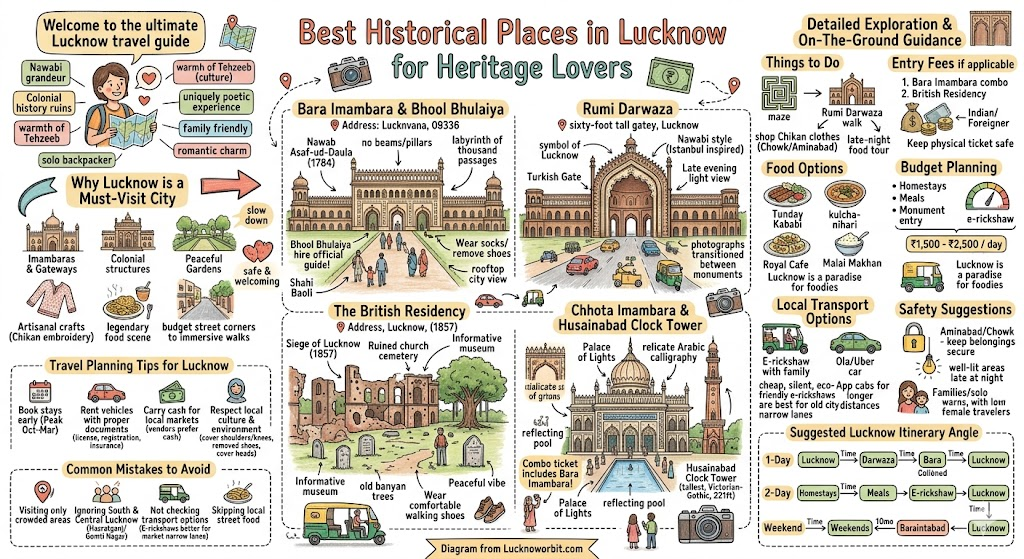
Welcome to the ultimate Lucknow travel guide. If you are a heritage lover planning a trip, you are in for a beautiful journey. Lucknow, the capital city of Uttar Pradesh, is a place where history breathes through grand monuments, old cobblestone lanes, and the legendary warmth of Tehzeeb (culture and etiquette).
Many people associate historic Indian travel with the fortresses of Rajasthan or ancient temples down south. But Lucknow offers a uniquely poetic experience. It is a city built on the grand visions of the Nawabs of Awadh and the dramatic turning points of the 1857 Uprising. Whether you are traveling as a family, a couple looking for historic charm, a solo backpacker, or a weekend traveler, this guide will help you navigate the best places to visit in Lucknow seamlessly.
Why Lucknow is a Must-Visit City
Lucknow is an incredible destination because it successfully bridges two distinct eras. On one side, you have the architectural grandeur of the Nawabi period, famous for its grand Imambaras and massive gateways. On the other, you find the haunting, evocative ruins of British colonial history.
This city doesn’t require a rushed itinerary. It invites you to slow down. Beyond the famous monument walls, Lucknow offers peaceful gardens, chaotic yet charming local markets, artisanal crafts like Chikan embroidery, and a food scene that is legendary worldwide. From budget-friendly street corners to deeply immersive historical walks, it provides a safe, welcoming, and practical experience for every kind of traveler.
Best Places or Experiences Related to the Topic
1. Bara Imambara & Bhool Bhulaiya
Location
- Address: Machchhi Bhavan, Lucknow, Uttar Pradesh 226003. Located in Old Lucknow (North Lucknow travel guide zone).
- Why it is worth visiting: Built by Nawab Asaf-ud-Daula in 1784 as a famine relief project, this structure is an architectural marvel. The central hall is one of the largest arched constructions in the world built without any beams or pillars. Above it lies the Bhool Bhulaiya, an incredible labyrinth of nearly a thousand interlocking passages designed to confuse intruders.
- Best things to do: Hire an official local guide to take you through the mysteries of the Bhool Bhulaiya, view the city from the rooftop, and visit the stunning Shahi Baoli (stepwell) within the complex.
- Best time to visit: Early morning (9:00 AM) to beat both the afternoon heat and the heavy tourist crowds.
- Ideal for whom: Families, solo travelers, architecture students, and history buffs.
- Travel tip: Do not attempt to explore the Bhool Bhulaiya without an authorized guide; it is genuinely easy to get lost. Also, remember to wear socks as you must remove your shoes before entering the main structures.
2. Rumi Darwaza
Location
- Address: Lajpat Nagar, Old City, Lucknow, Uttar Pradesh 226003. Steps away from the Bara Imambara.
- Why it is worth visiting: Standing sixty feet tall, the Rumi Darwaza is the official symbol of Lucknow. Built under the Nawabi style, it is heavily inspired by the sublime gateways of Istanbul (formerly Constantinople), earning it the nickname ‘Turkish Gate’. Its intricate carvings and sheer scale make it one of the most photographed Lucknow tourist places.
- Best things to do: Take a slow walk around the structure to observe how the design changes from the front to the back view. It is best enjoyed as a visual treat while transitioning between monuments.
- Best time to visit: Late evening. When the monument lights turn on against the twilight sky, it looks absolutely breathtaking.
- Ideal for whom: Couples looking for romantic evening views, photographers, and weekend travelers looking for iconic snapshots.
- Travel tip: The gateway sits on a functioning, busy public road. Be very careful of local traffic when trying to position yourself for a photograph.
3. The British Residency
Location
- Address: Mahatma Gandhi Marg, Deep Manak Nagar, Hazratganj, Lucknow, Uttar Pradesh 226001.
- Why it is worth visiting: For anyone interested in the colonial history of India, the Residency is essential for Lucknow trip planning. It was the site of the famous 147-day Siege of Lucknow during the Uprising of 1857. The ruined walls are still scarred with bullet holes and cannonball hits, preserved exactly as they fell.
- Best things to do: Visit the small but highly informative air-conditioned museum inside, walk through the ruined church cemetery, and spend a quiet hour sitting under the old banyan trees.
- Best time to visit: 3:00 PM to 5:30 PM, allowing you to finish your museum tour just as the sun sets over the lawns.
- Ideal for whom: Solo backpackers, peaceful travelers, and those seeking hidden or less-crowded options compared to the bustling Imambaras.
- Travel tip: The lawns are vast, so ensure you wear comfortable walking shoes and carry a water bottle to stay hydrated.
4. Chhota Imambara & Husainabad Clock Tower
Location
- Address: Husainabad Road, Daulatganj, Lucknow, Uttar Pradesh 226003. Roughly 1.5 km westward from the Bara Imambara.
- Why it is worth visiting: Also known as the ‘Palace of Lights’ due to its stunning collection of European chandeliers and glass lamps lit up during festivals, this monument houses the tombs of Nawab Muhammad Ali Shah and his mother. Nearby stands the 221-foot Husainabad Clock Tower, the tallest clock tower in India, displaying beautiful Victorian-Gothic design elements.
- Best things to do: Admire the delicate Arabic calligraphy etched onto the exterior walls, view the reflecting pool in front of the main building, and examine the royal hammams (baths).
- Best time to visit: Mid-afternoon around 1:30 PM when the sunlight filters beautifully through the colored glass windows.
- Ideal for whom: Art lovers, couples, and families.
- Travel tip: Your entry ticket for the Bara Imambara often includes entry to the Chhota Imambara and the Picture Gallery nearby. Keep the physical ticket safe!
Detailed Exploration & On-The-Ground Guidance
To ensure your Lucknow trip planning goes smoothly, here is a practical breakdown of how to manage your daily travel logistics:
Best places to visit
Keep your focus balanced. Combine the grand heritage spots of North Lucknow (Bara Imambara, Rumi Darwaza, Chhota Imambara, Jama Masjid) with the colonial and modern areas of South/Central Lucknow (The British Residency, La Martiniere College, and Hazratganj).
Things to do
- Get lost in the architectural maze of the Bhool Bhulaiya.
- Take a heritage evening walk around the illuminated Rumi Darwaza.
- Shop for authentic, handmade Chikan embroidery clothes in the old markets of Chowk or Aminabad.
- Indulge in a late-night street food tour to taste world-famous Mughlai dishes.
Entry fees if applicable
Fortunately, exploring Lucknow’s history is incredibly budget-friendly.
- Bara Imambara Combo Ticket (includes Chhota Imambara & Picture Gallery): ~₹50 for Indian residents; ~₹500 for foreign nationals.
- The British Residency: ~₹25 for Indian residents; ~₹300 for foreign nationals.
Food options
Lucknow is a paradise for foodies. While exploring the historical monuments in Old Lucknow, stop by the Chowk area to sample authentic Tunday Kababi or Mubeen’s for legendary kulcha-nihari. For vegetarians, head towards Hazratganj for delicious local chaat (like the famous basket chaat at Royal Cafe) and cold Malai Makhan (available during the cooler months).
Budget planning
Lucknow easily accommodates budget backpackers and luxury travelers alike. A budget of ₹1,500 to ₹2,500 per day can comfortably cover clean homestay accommodation, three full local meals, monument entries, and local e-rickshaw transportation.
Local transport options
The absolute best way to travel short distances between monuments in Lucknow is by using local E-rickshaws. They are cheap, silent, eco-friendly, and can easily zip through the narrow lanes of the old city. For longer distances across town, app-based cabs like Ola and Uber are widely available and reliable.
Safety suggestions
Lucknow is generally a very safe and friendly city for tourists, including families and solo female travelers. However, when exploring crowded local markets like Aminabad or Chowk, keep a close eye on your personal belongings and wallets. Stick to well-lit areas if you are walking around late at night.
Travel Planning Tips for Lucknow
- Book stays early during peak season: The ideal weather to visit Lucknow runs from October to March. Hotels and heritage homestays fill up fast during these months, so book your stay at least a few weeks in advance.
- Rent vehicles only with proper documents: If you decide to rent a scooter or car to explore the city at your own pace, ensure you carry a valid driver’s license and check that the vehicle’s registration and insurance documents are completely up to date.
- Carry cash for local markets: While digital UPI payments are widely accepted across modern stores in Lucknow, small street vendors, rickshaw drivers, and historic market shops in Chowk still heavily prefer cash. Keep small denominations handy.
- Respect local culture and environment: Many historical sites in Lucknow hold religious significance (like the Imambaras). Dress modestly when visiting—ensure your shoulders and knees are covered, and carry a scarf to cover your head if required.
- Keep heritage sites clean: Do your part to protect India’s heritage. Avoid littering, use designated bins for plastics, and never deface ancient brick walls.
Common Mistakes to Avoid
- Visiting only crowded areas: Many tourists visit the Bara Imambara and immediately leave. They completely miss out on quiet, evocative, and peaceful heritage spots like the British Residency gardens or the spectacular architecture of La Martiniere College.
- Ignoring South and Central Lucknow: Don’t spend your entire trip trapped in the old city lanes. Central areas like Hazratganj offer beautiful Victorian-style walking paths, while modern spaces like Gomti Nagar showcase the city’s green, contemporary development.
- Not checking transport options in advance: Attempting to drive a large rental car or hailing big cabs inside the narrow, bustling streets of the Chowk area during peak afternoon hours will lead to immense frustration. Leave your cabs at the hotel and switch to e-rickshaws for market exploration.
- Skipping the local street food: Lucknow’s culture is deeply intertwined with its kitchen. Skipping the local street food out of minor hesitation means missing half the city’s soul. Stick to busy stalls with high local turnover for fresh, safe, and delicious meals.
Suggested Lucknow Itinerary Angle
Here is how you can perfectly fit Lucknow’s incredible heritage into various trip lengths:
1-Day Plan: The Core Heritage Express
- Morning: Arrive early at the Bara Imambara to beat the crowds and explore the Bhool Bhulaiya. Walk past the iconic Rumi Darwaza.
- Afternoon: Visit the nearby Chhota Imambara. Head towards Hazratganj for a hearty lunch and try the famous local chaat.
- Evening: Walk through the hauntingly beautiful ruins of The British Residency. End your night with dinner at a traditional Awadhi restaurant.
2-Day Plan: Deep Dive into History & Craft
- Day 1: Follow the 1-day core heritage plan outlined above.
- Day 2: Spend your morning exploring the spectacular Anglo-Indian architecture of La Martiniere College. In the afternoon, head deep into the ancient lanes of Chowk to observe local craftsmen creating Chikan embroidery work. Shop for souvenirs and sample authentic street kebabs for dinner.
Weekend Travel Plan: The Complete Awadhi Experience
- Friday Evening: Arrive in Lucknow, check into your stay, and enjoy a relaxed evening walking around the modern Gomti Riverfront Park.
- Saturday: Dedicate this day fully to Nawabi history (Bara Imambara, Rumi Darwaza, Husainabad Clock Tower) followed by food-tasting in Aminabad.
- Sunday: Visit The British Residency in the quiet morning hours. Spend your afternoon picking up local handicrafts and garments in Hazratganj before catching your evening flight or train back home.
FAQs
1. What is the best time of year to visit Lucknow?
The best time to visit Lucknow is from October to March. The weather during these months is cool and pleasant, making it perfect for walking around outdoor historical monuments without dealing with intense summer heat.
2. Are the historical monuments in Lucknow open every day?
Most major monuments like the Bara Imambara and Chhota Imambara are open throughout the week from sunrise to sunset. However, certain sections or associated museums might have specific timings or closure days (often Mondays). It is always wise to double-check local timings right before heading out.
3. Do I need to hire a guide at Bara Imambara?
Yes, hiring a guide is highly recommended for the Bhool Bhulaiya labyrinth section. The layout is genuinely intricate and confusing. An official guide approved by the tourism department will ensure you don’t get lost and will explain the fascinating acoustic architecture of the walls.
4. Is Lucknow a safe city for solo female travelers?
Yes, Lucknow is generally considered safe for solo female travelers. The locals are exceptionally polite and helpful. As a standard safety practice anywhere, avoid exploring poorly lit, isolated lanes in the old city late at night and prefer using registered app-based cabs for evening travel.
5. What should I wear when visiting the Imambaras?
Because the Imambaras are sacred religious sites, visitors must dress respectfully. Both men and women should keep their shoulders and knees fully covered. Women should also carry a scarf or shawl to cover their heads before entering the main halls.
6. Can we easily explore Lucknow on a tight budget?
Absolutely. Lucknow is a fantastic budget destination. Public monument entry tickets are cheap, local e-rickshaws cost very little per ride, and the world-famous street food is incredibly inexpensive yet high in quality.
7. What is Lucknow famously known for buying?
Lucknow is globally famous for Chikan embroidery textiles, delicate Zardozi garments, authentic Attar (natural traditional perfumes), and local brassware items.
8. How many days are sufficient to see the major historical sites?
A 2-day itinerary is usually perfect to explore all the major historical monuments, experience the local food scenes, and do some light souvenir shopping without feeling rushed.
9. Is Lucknow family-friendly?
Yes, it is excellent for families. Children thoroughly enjoy the puzzle-like nature of the Bhool Bhulaiya, while grandparents appreciate the relaxed pace, parks, and comfortable accessible transport options.
10. Where should I stay in Lucknow for easy sightseeing?
For first-time visitors, staying near central areas like Hazratganj or Gomti Nagar is ideal. These neighborhoods offer a wide range of hotel options, excellent safety, great restaurants, and easy transport connectivity to both old and new parts of the city.
Conclusion
Lucknow is far more than just a typical dot on a travel map; it is an immersive cultural experience that stays with you long after you leave. By taking the time to explore its beautiful monuments, understanding the deep history behind its scarred colonial walls, and enjoying its world-famous food, you will experience the true heart of Awadhi hospitality.
Planning a trip doesn’t have to be overwhelming. Let Lucknoworbit.com serve as your personal, trusted local guide. We provide practical tips, up-to-date travel insights, and honest recommendations to help you make smart travel decisions and discover the absolute best this historic city has to offer. Pack your bags, bring an open mind, and get ready to fall in love with the timeless charm of Lucknow.
