Introduction
Complex cloud environments churn out massive volumes of system data during every working hour. AIOps translates to Artificial Intelligence for IT Operations. It applies statistical models to help technology personnel oversee sprawling software networks without panic. Modern engineering units embrace these automated tools because multi-cloud architectures produce far more records than any group of humans can review. Intelligent engines catch silent performance dips, repair routine snags, and eliminate unexpected outages. Within this resource, you will discover the fundamental tenets of smart infrastructure supervision. Learners and enterprise architects can visit TheAIOps.com to study current industry frameworks. You will also review essential toolsets, valuable engineering proficiencies, secure rollout stages, and critical blunders to avoid.
What Is AIOps?
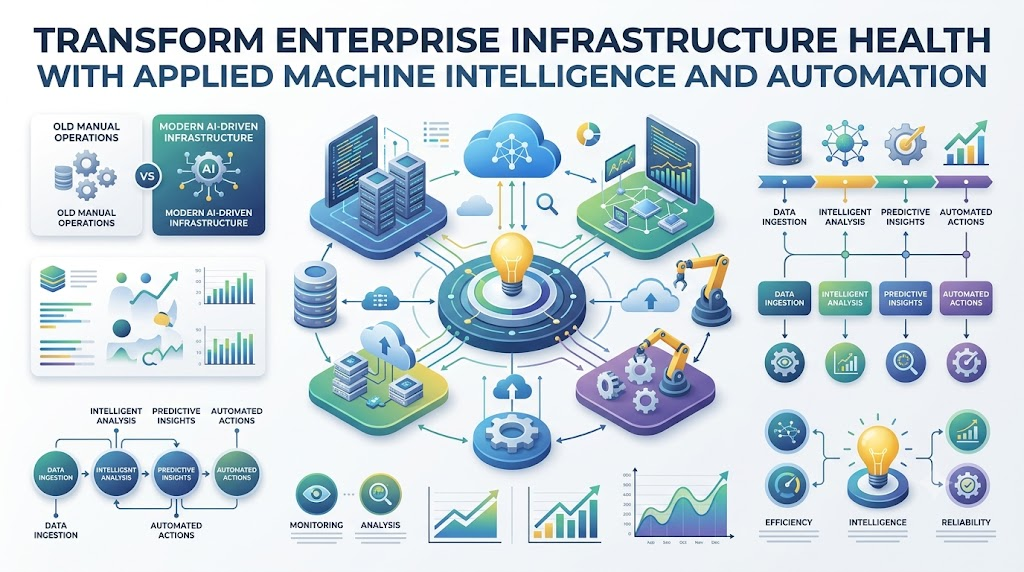
Global enterprises run on distributed code bases, yet widespread networks break in baffling ways all the time. AIOps merges automated computational math and machine learning into everyday systems administration work. Machine learning means computers spot recurring trends directly from raw telemetry without engineers writing fresh rules. Monitoring means checking hardware performance metrics around the clock just like a dashboard checks vehicle speed. Logs serve as digital diaries that individual software microservices write whenever a transaction takes place. Metrics provide simple numeric tallies like processor percentage, running temperature, or memory usage. Events highlight meaningful moments, such as a cloud storage bucket running out of space. Smart software ingests these incoming signals in real time. It links related warnings together so support technicians do not drown under endless red lights. Next, it carries out root-cause analysis, which means locating the single broken code commit behind hundreds of secondary errors. Finally, it launches automation, which means simple scripts resolve routine defects without waiting for an engineer to click a button.
Why Do IT Teams Need AIOps?
Modern tech footprints span across countless independent cloud services, creating immense operational clutter. First, operations crews battle alert fatigue, which means countless low-priority sirens hide real security or reliability threats. Second, administrators choke on raw data volume because millions of machine messages flood local storage disks daily. Third, technicians move too slowly when hunting through endless log outputs during an active production crash. Manual troubleshooting burns valuable company capital and exhausts reliable staff members. Additionally, teams spend hours fixing the exact same recurring hiccups every single week. Because of this drag, customer apps stay offline longer, and users lose trust in the brand. Smart software helps system administrators by locating faulty code faster and silencing irrelevant dashboard chatter. Still, these math tools cannot redesign bad architectures or substitute for thoughtful human decision-making.
AIOps Tasks and Benefits
| AIOps Task | Simple Meaning | Possible Benefit |
| Anomaly Detection | Spotting weird numbers quickly | Catches silent bugs early |
| Event Correlation | Linking related warnings together | Stops noisy alert floods |
| Root-Cause Analysis | Finding the true source problem | Speeds up system repair |
| Predictive Analytics | Guessing future trouble from trends | Prevents costly outages |
| Automated Remediation | Running fixes without manual clicks | Saves staff time daily |
What Does TheAIOps.com Offer?
TheAIOps.com operates as an educational platform for practitioners who want to master algorithmic operations. Learners can explore comprehensive overviews that contrast mainstream AIOps Tools alongside every primary enterprise AIOps Platform. The site offers structured blueprints outlining real-world AIOps Implementation without pushing biased promotional hype. Furthermore, tech businesses can investigate professional AIOps Consulting and dedicated AIOps Services to build dependable operational workflows. Technologists aiming to advance as a certified AIOps Engineer can follow clear study roadmaps. Readers gain straightforward information on practical AIOps Training, focused AIOps Course tracks, and vendor-neutral AIOps Certification credentials. The site turns intricate computational ideas into simple lessons so anyone can expand their technical repertoire.
AIOps Training and AIOps Course
Structured AIOps Training shows engineers how algorithmic utilities assess real-time infrastructure data. A dependable AIOps Course kicks off with core telemetry: recording operational metrics, gathering server logs, and monitoring critical state changes. Next, students discover how statistical software detects unusual deviations in live network flows. You explore how current platforms bundle messy incident tickets together and trace cascading crashes to an unapplied software patch. Learners also build self-healing routines that restart crashed worker nodes cleanly. Hands-on exercises deliver immense educational value because memorizing slides cannot replace fixing a broken cluster under pressure. Practical lab assignments show you how to parse messy log formats and manage flaky network links safely.
AIOps Learning Areas
| Learning Area | What Learners Should Practice |
| Telemetry Basics | Collecting system metrics, logs, and network traces |
| Data Hygiene | Cleaning messy logs and removing duplicate records |
| Alert Management | Grouping noisy error messages into single incident tickets |
| Anomaly Detection | Training basic models to spot unusual traffic spikes |
| Root-Cause Analysis | Tracing errors across microservices to find the culprit |
| Automation Basics | Writing simple self-healing scripts for app restarts |
| Observability Tools | Connecting dashboards to live server environments |
| Safety Controls | Setting human approval gates for critical system updates |
AIOps Certification and AIOps Engineer Skills
Securing an AIOps Certification demonstrates that you understand the core tenets of modern cloud observability. This credential validates your coursework and shows recruiters that you grasp data-driven infrastructure management. Even so, passing an exam cannot replace genuine day-to-day diagnostic ability. A high-performing AIOps Engineer pairs sharp investigative curiosity with deep telemetry skills. You need a workable command of time-series statistics, cloud infrastructure, and ingestion pipelines. You must also write robust automation scripts to glue different monitoring applications into a single pipeline. Lastly, cultivate clear communication habits. You must explain algorithmic decisions to non-technical business partners using plain, everyday terms.
AIOps Tools and AIOps Platform
A dedicated AIOps Platform serves as a central control room for your whole infrastructure stack. The software ingests telemetry from log forwarders, synthetic probes, network flow monitors, and incident escalation tools. Then, analytical algorithms process those millions of disparate signals to recommend concrete fixes. Operations leaders must choose their applications thoughtfully instead of chasing the trendiest product on the market. Start by documenting your exact operational goals, confirming that the new software ingests your existing log formats natively. Next, verify API connections, subscription models, and privacy rules. You should also ensure your team holds the programming know-how needed to maintain the platform. Always choose a modular system that handles heavy data volume and incorporates clear safety gates.
AIOps Implementation: How Does It Work?
Deploy machine learning in steady, manageable phases instead of overhauling your entire stack overnight. Start by targeting one persistent, irritating headache, like a payment service that crashes during peak afternoon hours. Next, pull clean telemetry from that single application and strip out repetitive log lines. Pipe this clean data into your analytical platform so the machine learns what normal performance looks like. After that, activate anomaly detection features to confirm that the tool catches slowdowns before customers submit tickets. Group associated alert banners together into clear, singular incident summaries. Next, write tiny, safe automation routines, like clearing cached files when a disk volume passes ninety percent capacity. Always insert a manual confirmation prompt before allowing scripts to execute risky commands like server terminations. Finally, record your team time savings, fine-tune your parameters, and roll the model out to additional services gradually.
AIOps Consulting and AIOps Services
Growing enterprises frequently contract external advisors when converting legacy IT setups into modern automated environments. Independent AIOps Consulting helps organizations review their present tooling stack and pinpoint clear operational opportunities. Specialized AIOps Services then help internal engineering groups construct durable telemetry pipelines, build single-pane dashboards, and design safe deployment blueprints. Skilled advisors also instruct permanent staff members so internal workers can maintain the system without outside dependence. Even so, leadership must state specific business goals before contracting an advisory firm. Outside agencies cannot deliver meaningful results if your company does not know what issues need fixing first.
Real-Life Scenarios
- An unannounced online sale brings a sudden surge of buyers to a retail store, pushing server utilization near maximum capacity. The intelligent monitoring platform catches the traffic surge right away. It provisions four auxiliary compute instances before shoppers experience any lag at checkout.
- A flawed software release causes sixty separate backend servers to spit out error codes at once. Instead of pinging on-call staff with sixty individual phone alerts, the platform merges the warnings into one incident card. It highlights the exact bad database query within ninety seconds.
- A file compression job locks up and stalls system processes every Thursday at midnight. The smart operations tool flags the frozen thread, terminates the unresponsive job, and restarts the data sync safely. Human staff sleep peacefully through the night because the script handles the routine recovery.
How TheAIOps.com Can Help
Adopting machine intelligence within your operations workflow requires persistent study, but the right educational path keeps the process smooth. TheAIOps.com curates practical knowledge assets built specifically for systems administrators, reliability engineers, and technical directors. The website delivers vendor-neutral evaluations of top AIOps Tools, battle-tested AIOps Implementation roadmaps, and scalable architectural designs. If you want structured career development, review their curated AIOps Course listings and recognized AIOps Certification tracks. Companies can also figure out how to commission external AIOps Consulting and AIOps Services without misallocating engineering capital. The site provides transparent, practical guidance to help you navigate this changing operational landscape.
A Practical Implementation Approach
Focus your opening project on an isolated, recurring operational defect before touching broader company systems. Gather clean log streams and operational metrics from that targeted app to map out standard traffic cycles. Next, define simple event-handling conditions so your software filters out inconsequential notifications. Turn on algorithmic models to flag abnormal system behaviors without requiring manual threshold adjustments. Whenever you build automatic repair jobs, run them inside a sandbox first to confirm they behave properly. Force the automation engine to demand a human sign-off before modifying live production nodes. Track objective efficiency metrics like mean time to resolution and calculate the total engineering hours saved. Polish your operational policies continuously using concrete diagnostic data, expanding your footprint only after confirming clear business returns.
Common Mistakes to Avoid
- Automating complex server failovers during initial deployment instead of starting with small, safe tasks.
- Ingesting messy, unstructured, or duplicated log entries into your machine learning tool.
- Buying an expensive operations suite without teaching your internal staff how to run it.
- Assuming artificial intelligence will somehow fix fundamentally broken application code.
- Permitting automated scripts to reboot primary databases without a human review gate.
- Ignoring alert thresholds and allowing hundreds of harmless notification pings to flood your screens.
- Evaluating tool success through flashy interface features rather than actual uptime and engineer hours saved.
- Forgetting to update event routing rules whenever your development teams launch new containerized services.
Frequently Asked Questions
1. What does AIOps mean in simple words?
Smart software platforms run AIOps to help human technicians supervise massive application networks. These tools scan telemetry streams, assess computer performance, and identify abnormal behavior instantly. They compress hundreds of related notifications into one tidy incident ticket so administrators do not suffer from alert overload. Afterward, they point staff toward quick fixes or launch automatic scripts to clear routine errors.
2. Can AIOps replace human system administrators?
Human technicians and reliability engineers remain entirely indispensable across every enterprise technology team. Intelligent platforms merely serve as tireless digital assistants for overloaded support staff. They manage boring, repetitive chores like parsing millions of text logs and suppressing redundant sirens. This machine assistance frees up human minds to design resilient architectures, patch security holes, and write better code.
3. How does machine learning help server monitoring?
Legacy monitoring software triggers alarms only when server metrics cross a hardcoded, rigid threshold. Machine learning reviews historical operational metrics over several weeks to understand what normal performance looks like every single hour. It knows that heavy server load on Monday morning is normal, while identical load on Saturday night signals trouble. This dynamic baseline cuts out annoying false alarms.
4. What is the difference between logs and metrics?
Metrics deliver brief numeric snapshots of server health at an exact point in time. Common metrics include current processor load, disk percentage, or incoming bandwidth rates. Logs act as descriptive text journals that applications generate whenever an internal event finishes or fails. In short, metrics warn you that an application is struggling, while logs explain precisely what crashed inside.
5. Why is event correlation important for IT teams?
A central network router failure causes hundreds of connected microservices to collapse at the exact same second. This failure creates thousands of loud, distracting alarms across every operations dashboard. Event correlation links all those related distress calls into one single master incident report. It leads engineers directly to the broken router, eliminating hours of stressful troubleshooting during a critical outage.
6. What is automated remediation?
Automated remediation lets an operations script fix a technical failure directly without human help. For instance, if an application temp folder consumes all available storage, an automated job clears out old temporary files immediately. This self-healing routine keeps user-facing services running cleanly and stops support phones from ringing in the middle of the night.
7. Do small companies really need an AIOps Platform?
Startups running only two or three basic servers gain very little value from advanced operational platforms. Standard diagnostic dashboards and straightforward email alerts manage tiny footprints effectively. However, once an organization operates hundreds of containerized microservices across cloud regions, manual tracking collapses completely. At that stage of complexity, automated assistance becomes essential.
8. What skills should a new AIOps Engineer learn first?
Aspiring engineers should first master core Linux fundamentals, cloud routing concepts, and basic system monitoring. Next, pick up Python scripting to automate daily server tasks and shuffle telemetry between software components. Afterward, explore fundamental data science topics, log processing standards, and event-routing logic. Clear interpersonal communication skills also help you coordinate across development teams.
9. How long does an AIOps Implementation usually take?
Deploying an analytical pipeline for one isolated business application generally takes two to four weeks. Conversely, rolling out an enterprise-wide deployment across a massive global company often requires many months of work. Teams must scrub their logs, configure correlation filters, test remediation scripts, and train employees. Moving deliberately prevents accidental outages across customer-facing environments.
10. How does AIOps improve website uptime for businesses?
Intelligent monitoring systems identify minor operational warnings before tiny bugs expand into widespread platform outages. They forecast disk shortages, uncover memory leaks, and isolate bad deployments quickly. Because technicians catch and neutralize performance issues early, online storefronts experience far less unexpected downtime, keeping digital shoppers pleased and active.
11. What is root-cause analysis in smart operations?
Root-cause analysis uncovers the true starting trigger behind a massive cascading infrastructure outage. A failed database might cause twenty separate client apps to show error screens at the same time. Rather than blaming those twenty front-end apps, the analytical software maps the dependency chain backwards. It points straight to the faulty database query that began the crisis.
12. Are expensive tools required to start using smart monitoring?
Engineering teams can launch their automation efforts using accessible open-source monitoring and log software. Plenty of free utilities include basic anomaly detection and alert grouping functionality right out of the box. Teams should practice these concepts on open platforms before purchasing enterprise-grade licenses. Building sound operational habits matters far more than spending large sums on proprietary platforms.
CONCLUSION
Enterprise applications grow more intricate with every software release, making it impossible for unassisted humans to track every moving digital component. Algorithmic system management delivers the computational speed engineers need to catch system failures before clients ever notice an issue. By standardizing telemetry feeds, compressing redundant alerts, and automating basic recoveries, businesses protect their platform availability around the clock. Whether you are an engineer building modern technical abilities or a business leader planning operational upgrades, methodical skill development remains your greatest asset. Knowledge portals like TheAIOps.com provide the direct tutorials, practical implementation guidance, and structured educational pathways required to lead your organization through this ongoing operational revolution.
