Introduction
Forget sterile metropolitan dining halls and tourist-choked buffet circuits that homogenize regional flavors into bland compromises. Lucknow does not merely serve food; it orchestrates an ancestral culinary ritual passed down through royal bawarchis and rakabdars who perfected slow-cooking into a fine art. Here, cooking remains an enduring love language whispered over slow-burning coal braziers, simmering brass deghs, and fragrant spice distillations that date back centuries.
Stepping into the timeless gastronomic heart of the city demands shedding modern dining rush and embracing the unhurried elegance of the Nawabi dastarkhwan. From melt-in-the-mouth galouti kebabs seared on enormous copper tawas to rich, aromatic biryanis sealed with whole-wheat dough, Lucknow rewards the patient palate. Every serpentine alleyway tells a vivid tale of royal patronage, culinary obsession, and unwavering culinary craftsmanship that you simply cannot duplicate anywhere else on earth.
Why Lucknow is a must-visit city
Lucknow commands unparalleled cultural and gastronomic prestige, holding a royal mandate shaped over two centuries of Awadhi sovereignty. Geographically anchored along the fertile plains of the Gomti River in Uttar Pradesh, the city evolved into the undisputed cradle of refined Northern Indian culinary culture. Unlike regions whose cuisines rely on sharp, overwhelming chilies, Awadhi cooking stands apart through subtle layers of fragrance, gentle dum pukht steam infusing, and delicate balances of vetiver, saffron, and stone-ground spices.
Reaching this culinary capital is seamless across every traveler bracket. The state-of-the-art Chaudhary Charan Singh International Airport links direct flights from prime domestic and Gulf hubs, while the historic Charbagh Railway Station welcomes superfast expresses from across the nation. Expansive expressways connect road travelers swiftly from Delhi, Agra, and Varanasi. On the ground, boutique heritage hotels, modern business properties, and historic homestays ensure every food lover finds comfortable sanctuary.
The food lover’s travel circuit moves across two contrasting cultural landscapes: the sensory, historic maze of Old Lucknow—specifically Chowk and Aminabad—and the colonial and contemporary dining avenues of Hazratganj and Gomti Nagar.
| Key Fact | Details |
| Culinary Heritage | Awadhi Dum Pukht, Galawat kebabs, Sheermal, Nihari-Kulcha |
| Best Tasting Season | October to March (Crisp winter air enhances rich gravies and warm sweets) |
| Average Tasting Circuit | 2 to 3 days for thorough regional immersion |
| Major Transport Hubs | Lucknow Charbagh Station (LKO), CCS International Airport (LKO) |
| Primary Food Enclaves | Chowk, Aminabad, Hazratganj, Kashmiri Mohalla, Gomti Nagar |
Best Places or Experiences
Tunday Kababi, Aminabad
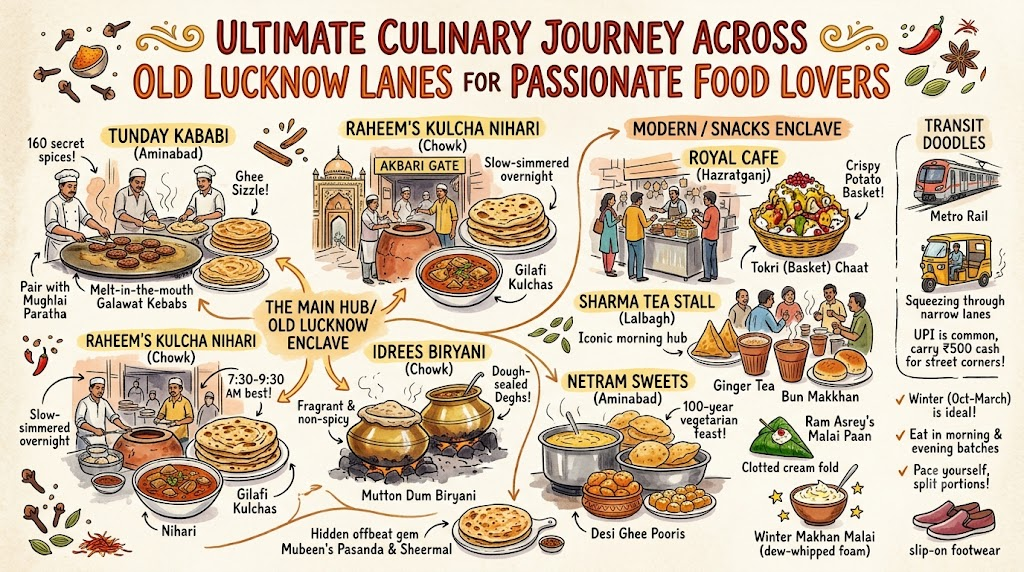
Tunday Kababi stands as an iconic monument to Awadhi meat artistry, preserving a recipe conceived during the reign of Nawab Asaf-ud-Daula. Legend tells of a toothless nobleman who demanded a kebab so extraordinarily tender that chewing became unnecessary. Master chef Haji Murad Ali, who possessed only one functioning arm—earning him the moniker “Tunday”—answered this royal challenge by blending finely minced meat with over 160 secret herbs and aromatic spices.
The Aminabad outlet thrums with chaotic, electric energy from morning until late midnight. Patrons crowd tight wooden benches as skilled cooks deftly slap soft, silky meat patties onto massive, shallow brass tawas. The sizzle of pure ghee, accompanied by the sight of golden, flaky Mughlai parathas puffing over iron griddles, creates an unforgettable multi-sensory feast that forms the bedrock of any serious Lucknow culinary exploration.
- Location: Phool Wali Gali, Aminabad, roughly 3.5 km from Lucknow Charbagh Railway Station.
- Why it is worth visiting: The definitive birthplace of the legendary 160-spice Galawat kebab recipe, celebrated globally by top culinary historians.
- Best things to do: Watch the cooks shape kebab patties directly onto smoking tawas, order the signature buffalo and mutton Galawat kebabs, and pair them with paper-thin Mughlai parathas.
- Best time to visit: 12:30 PM for lunch to dodge evening rush, or 7:30 PM for prime atmosphere.
- Ideal for whom: Dedicated non-vegetarian food enthusiasts, cultural food historians, and bold street food travelers.
- Travel tip: The original Aminabad branch serves both buff and mutton kebabs; if you require mutton exclusively, state your preference clearly when ordering.
Raheem’s Kulcha Nihari, Chowk
Tucked inside the bustling alleys of Chowk, Raheem Hotel has spent over a century perfecting the quintessential breakfast of royal Lucknow: slow-simmered Nihari paired with freshly baked Gosht-stuffed or plain Kulchas. Born as an invigorating dawn meal for laborers building historic monuments, Nihari quickly ascended to royal banquets due to its exquisite complexity. The marrow-infused stew simmers overnight inside sealed earthen pots, drawing deep, gelatinous richness from long cooking and aromatic whole spices.
Visiting Raheem’s is an exhilarating step back into historical Lucknow. The open-air front kitchen showcases a wood-fired tandoor where bakers slap disc-shaped kulchas against blazing clay walls, producing blistered, flaky flatbreads patterned like flower petals. Sitting down here amidst early morning fog, dipping hot, layered bread into shimmering, spicy gravy topped with fresh ginger juliennes and lemon juice, is an irreplaceable Awadhi rite of passage.
- Location: Akbari Gate, Chowk, approximately 5.5 km from Hazratganj.
- Why it is worth visiting: Unmatched regional mastery over tender beef and mutton shanks simmered in spiced bone-marrow broth.
- Best things to do: Pair the Pasanda stew with multi-layered baked Gilafi Kulchas, inspect the roaring tandoor ovens by the entrance, and sip a piping hot cup of local Kashmiri chai next door.
- Best time to visit: 7:30 AM to 9:30 AM for the freshest morning Nihari batch before it sells out.
- Ideal for whom: Early morning food explorers, meat lovers, and seekers of authentic street dining heritage.
- Travel tip: Morning batches feature the tenderest cuts and richer bone marrow broth; arriving past 11:00 AM risks missing the best preparations.
Idrees Biryani, Chowk
Idrees Biryani represents the purist peak of authentic Awadhi Dum Biryani, fundamentally defying commercial notions of fiery, masala-heavy rice preparations. Operating out of an unpretentious, open shop near Raja Bazar, master cooks here rely on subtle steam infusion rather than raw heat. Long-grain basmati rice is parboiled in seasoned broth and layered meticulously with tender mutton chunks that have been gently braised in milk, saffron, and aromatic spices.
The degh is sealed shut with sticky whole-wheat dough and placed above smoldering charcoal embers for hours, allowing the meat juices and fragrant spice steam to saturate every single grain of rice. When the seal is finally cracked open, the released perfume of pure ghee, kewra water, and sweet cardamom draws crowds from across the neighborhood. Each forkful delivers subtle, multi-layered aromas rather than abrasive spice burn, defining the true essence of royal Awadhi hospitality.
- Location: Raja Bazar, Chowk, around 6 km from Lucknow Charbagh Station.
- Why it is worth visiting: The crown jewel of royal Awadhi Dum cooking, showcasing delicate fragrance, tender meat, and non-greasy textures.
- Best things to do: Arrive right as the massive sealed degh is opened, savor the mutton biryani alongside cooling onion raita, and order a side of rich mutton korma.
- Best time to visit: 12:30 PM for lunch or 6:30 PM for the early evening batch.
- Ideal for whom: Connoisseurs of nuanced rice preparations, slow-cooking purists, and seasoned culinary explorers.
- Travel tip: Seating space is extremely limited; consider taking an order to go if traveling with a larger family group.
Royal Cafe, Hazratganj
Hazratganj’s wide, Victorian-style promenade hosts Royal Cafe, the undisputed birthplace of Lucknow’s legendary Basket Chaat. While Old Lucknow rules royal meats, Hazratganj commands the ultimate heights of sophisticated street appetizers. The cafe revolutionized North Indian chaat culture by frying shredded, woven potato baskets until crisp, creating edible bowls designed to hold a symphony of savory toppings.
Inside this crunchy potato vessel, chaat masters layer boiled chickpeas, spiced potatoes, velvety sweet curd, zesty mint chutney, tangy tamarind drizzle, crunchy sev, and jewel-like pomegranate seeds. The explosive combination of crisp textures, cool yogurt, tart fruit notes, and fragrant roasted cumin captures the genius of Lucknow’s vibrant vegetarian culinary culture.
- Location: 9/7, Shahnajaf Road, Hazratganj, 4 km from Charbagh Railway Station.
- Why it is worth visiting: Home of the iconic, heavily loaded Tokri (Basket) Chaat that reinvented North Indian street snacks.
- Best things to do: Order the signature full-size Basket Chaat at the live street counter, explore nearby historic bookshops, and stroll the colonial arcades of Hazratganj.
- Best time to visit: 4:30 PM to 8:30 PM when the boulevard comes alive with evening shoppers.
- Ideal for whom: Vegetarian food enthusiasts, street snack connoisseurs, families, and casual evening strollers.
- Travel tip: One full Basket Chaat easily feeds two adults; pace your appetite if you plan on dining at a sit-down restaurant later.
Sharma Tea Stall, Lalbagh
Sharma Tea Stall is an enduring cultural institution where politicians, poets, scholars, and traveling gourmands gather over steaming glasses of aromatic chai. Established decades ago, this modest establishment is celebrated for its unique pairing of spiced tea with freshly prepared bun makkhan and flaky round samosas. The tea itself is brewed with precision, balancing strong black tea leaves with whole buffalo milk and freshly crushed ginger.
The real showstopper alongside the tea is the legendary bun makkhan. Freshly baked, pillowy sweet buns are sliced open and generously smeared with handmade, unsalted white butter, often sprinkled with a pinch of sugar. Dunking this soft, buttery bun into a hot glass of ginger tea on a crisp morning delivers pure comfort food bliss.
- Location: 1, Habibullah Estate, Lalbagh, near Hazratganj.
- Why it is worth visiting: A quintessential Lucknow breakfast stop offering legendary ginger tea, round samosas, and airy bun makkhan.
- Best things to do: Order a round samosa filled with spiced potato cubes, enjoy a bun makkhan dunked in kulhad chai, and soak in lively local morning conversations.
- Best time to visit: 7:30 AM to 10:00 AM for peak morning freshness and social energy.
- Ideal for whom: Solo travelers, early morning breakfast chasers, tea aficionados, and budget food explorers.
- Travel tip: Seating is entirely curbside and standing; park vehicles away on the main street as the lane fills rapidly with morning visitors.
Netram Ajay Kumar Sweets, Aminabad
Netram Ajay Kumar represents the pinnacle of traditional Awadhi vegetarian breakfast culture, delighting patrons with pure desi ghee preparations for over a century. Located at the entrance to Aminabad, this bustling sweetmeat shop transforms everyday breakfast into an artisanal feast. Giant iron vats bubble with golden ghee as cooks fry crisp, puffed pooris stuffed with spiced urad dal fillings.
The pooris are served alongside a rotating trio of flavorful vegetable curries: a tangy potato gravy, spiced pumpkin sabzi, and dry tossed lentils, accompanied by sweet and sour sonth chutney. Finishing this hearty morning spread with a glass of rich rabdi-topped lassi or warm jalebis provides complete insight into the city’s celebrated vegetarian culinary mastery.
- Location: Sri Ram Road Crossing, Aminabad, 3 km from Charbagh Railway Station.
- Why it is worth visiting: Over a century of pure ghee poori-kachori breakfast tradition and authentic regional confectionery.
- Best things to do: Feast on the five-poori breakfast platter with seasonal vegetable curries, sample freshly made imarti, and drink thick clay-cup lassi.
- Best time to visit: 8:00 AM to 11:00 AM for piping hot, freshly fried pooris.
- Ideal for whom: Vegetarian travelers, traditional sweet lovers, and hearty breakfast enthusiasts.
- Travel tip: Visit on an empty stomach; the desi ghee preparations are rich, filling, and deeply satisfying.
Offbeat Exploration: Hidden Gems Tourists Miss
Mubeen’s Pasanda and Kulcha, Chowk
While most mainstream tourists fixate exclusively on kebabs, true local gastronomes head straight to Mubeen’s near Akbari Gate for their slow-braised Pasanda. Flat ribbons of tenderized meat are marinated for hours in raw papaya, curd, and hand-ground spices before being simmered gently over low coals. Paired with piping hot Sheermal flatbreads, this dish delivers an extraordinarily tender bite that outshines commercial curries.
Ram Asrey’s Malai Paan, Banwali Gali
Founded in 1805, Ram Asrey is the guardian of Lucknow’s most delicate confectionery creation: the Malai Gilori, or Malai Paan. Instead of betel leaves, confectioners gently skim paper-thin sheets of set clotted cream (malai), folding them into triangular envelopes stuffed with crushed pistachios, almonds, mishri, and fragrant kewra essence. The creation melts instantly upon your tongue, leaving a delicate floral sweetness.
Raja Thandai, Chowk Market
Operating continuously since the early 20th century, this historic beverage outpost serves rich, herbal thandai ground daily on heavy stone slabs. The cooling concoction features ground almonds, cashews, saffron, fennel seeds, and green cardamom steeped in chilled buffalo milk. Curious travelers can also request a mild traditional herbal infusion for a truly authentic taste of old Lucknow social rituals.
Detailed Practical Guidance for Travelers
| Destination | Standard Entry Fee | General Timings | Best Local Food Options Nearby | Recommended Nearby Attractions |
| Tunday Kababi | Free Entry (₹150–₹350 per meal) | 12:30 PM – 11:30 PM | Prakash Kulfi, Netram Sweets | Aminabad Bazaar, Chikan garment markets |
| Raheem’s Kulcha Nihari | Free Entry (₹120–₹250 per meal) | 7:00 AM – 11:00 PM | Mubeen’s, Raja Thandai | Akbari Gate, Chowk historic alleys |
| Idrees Biryani | Free Entry (₹180–₹320 per meal) | 12:00 PM – 10:00 PM | Rahim Hotel, Lalla Biryani | Bada Imambara, Rumi Darwaza |
| Royal Cafe | Free Entry (₹200–₹450 per meal) | 11:00 AM – 11:00 PM | Marksmen Indo-Chinese, Chedilal Shakes | Hazratganj Promenade, State Museum |
| Sharma Tea Stall | Free Entry (₹50–₹120 per meal) | 6:30 AM – 7:30 PM | Dastarkhwan Lalbagh, Rovers Food | Hazratganj Market, GPO heritage building |
| Netram Sweets | Free Entry (₹100–₹220 per meal) | 7:30 AM – 10:00 PM | Tunday Kababi, Kalika Chaat | Sri Ram Road, Aminabad cloth bazaars |
Logistics & On-Ground Navigation
Local Transport Options
- Metro Network: Lucknow Metro is modern, spotlessly clean, and air-conditioned; use it to travel effortlessly between Charbagh Railway Station, Hazratganj, and Vishwavidyalaya.
- E-Rickshaws: These silent, battery-operated vehicles are the undisputed masters of navigating the tight, crowded lanes of Chowk and Aminabad where cars cannot fit.
- Auto-Rickshaws: Available at every street corner; always negotiate the fare firmly before boarding or insist on using the fare meter.
- Ride-Hailing Cabs: Ola and Uber operate reliably across the city, making them the best option for traveling between newer hotel districts and Old Lucknow.
Budget Planning
- Budget Foodie Tier: ₹800 – ₹1,400 per person per day. Covers local street breakfasts, legendary kebab lunches, heritage tea stalls, and public transport via metro and e-rickshaws.
- Mid-Range Gastronomic Tier: ₹2,200 – ₹4,000 per person per day. Accommodates private app-cab travel, sit-down family meals at iconic dining rooms, sweet tasting tours, and souvenir confectionery shopping.
Safety and Inclusivity Tips
- Families: Most heritage restaurants in Aminabad and Hazratganj feature dedicated, air-conditioned family dining rooms on their upper levels away from street-level crowds.
- Couples: Hazratganj, Gomti Nagar, and Riverside promenades offer relaxed, well-lit pedestrian corridors ideal for leisurely evening walks and safe late-night dessert runs.
- General Safety: Watch your belongings in crowded alleys like Aminabad market, carry bottled water, and ease your stomach into rich, ghee-laden meals with hot tea or lime soda.
Food Lover’s Secret: Most iconic Old City kitchens prepare their specialty dishes in distinct morning and evening batches. When the current pot of Nihari or Dum Biryani empties, service stops until the next shift begins. Always plan visits around these batch timings.
Strategic Travel Planning Guardrails
Travel Planning Tips for Lucknow
- Schedule your culinary adventure between November and February when chilly weather makes rich meat gravies, saffron milk, and hot halwas a delight.
- Keep ₹500 to ₹1,000 in physical cash notes for small street vendors, as internet connectivity in dense historic lanes can occasionally interrupt digital UPI scans.
- Dress in modest, breathable cotton clothing and slip-on footwear, as culinary walks often weave past active shrines and historic mosques.
- Pace your tasting menu by splitting full portions with a travel partner, leaving room to try five or six distinct delicacies each day.
- Carry digestive digestive aids, mints, and oral rehydration packets to keep your stomach comfortable between rich dining sessions.
Common Mistakes to Avoid
- Packing your itinerary with four heavy meat meals in a single day without allowing adequate walking and digestion intervals.
- Visiting Old City food shops in Chowk before 11:30 AM (except for morning Nihari joints), as traditional sweet and kebab shops rarely open early.
- Assuming that world-famous biryani here resembles spicy Hyderabadi variants; authentic Awadhi biryani relies on delicate aromatics, broth, and subtle perfume.
- Spending valuable lunch hours inside generic shopping mall food courts instead of patronizing historic legacy eateries.
- Forgetting to carry bottled mineral water during intensive open-market food explorations.
Suggested Itinerary Blueprints
1-Day Quick Dash (The Royal Epicurean Express)
Targeted at travelers on a rapid layover who want to experience the city’s legendary culinary highlights without wasting a minute.
- Morning: Begin at 8:00 AM with spiced ginger tea and bun makkhan at Sharma Tea Stall, followed by a mid-morning cultural stop at Bada Imambara.
- Afternoon: Head to Chowk by 1:00 PM for aromatic Awadhi Dum Biryani at Idrees, followed by a creamy Malai Paan at historic Ram Asrey.
- Evening: Conclude with dinner at Tunday Kababi in Aminabad for legendary Galawat kebabs, pairing them with sweet saffron kulfi at Prakash Kulfi.
2-Day Deep-Dive (Heritage Meats & Sweet Traditions)
Designed for dedicated food travelers seeking a balanced immersion across both vegetarian legacy treats and royal non-vegetarian masterpieces.
- Day 1: Dedicate the morning to Raheem’s Kulcha Nihari in Chowk, stroll through the architectural wonders of Husainabad, refresh with Raja Thandai, and spend the evening enjoying Basket Chaat at Royal Cafe in Hazratganj.
- Day 2: Start your morning with pure ghee pooris and vegetable curries at Netram Sweets in Aminabad, shop for authentic Chikankari textiles, and finish with a feast of mutton korma, galouti kebabs, and roomali roti at Dastarkhwan.
Complete Weekend Travel Plan (The Grand Awadhi Dastarkhwan)
A relaxed, comprehensive Friday-to-Sunday loop covering street eats, hidden culinary gems, and relaxed riverfront strolls.
- Friday: Arrive in the city, check in, and spend a relaxing evening sampling chaat and local kulfi along the colonial arcades of Hazratganj.
- Saturday: Wake early for dawn Kulcha Nihari at Akbari Gate, explore the spice bazaars of Chowk, savor Dum Biryani for lunch, and spend a relaxed evening trying roasted boti kebabs and sheermal at Naushijaan.
- Sunday: Enjoy a leisurely morning poori breakfast at Netram, visit the British Residency, hunt down offbeat Pasanda at Mubeen’s, and pick up boxes of Malai Gilori and regional rewri as souvenirs before departing.
Common Tourist Mistakes to Avoid
- Geographic Blunders: Attempting to jump back and forth between Gomti Nagar in the east and Chowk in the far west multiple times in a single afternoon. Always cluster your food stops by neighborhood.
- Commercial Traps: Booking expensive dining packages in modern international hotel chains rather than experiencing the authentic culinary masters who have run their kitchens for generations.
- Neglecting Modern/Alternative Zones: Overlooking the thriving contemporary cafe culture in Gomti Nagar and Hazratganj, which offers artisanal coffee and relaxed spaces to unwind between heavy street meals.
- Transport Overpayment: Accepting arbitrary, inflated flat-rate prices quoted by auto drivers outside transit hubs; verify rates on mobile apps before negotiating.
- Luxury Dining Bias: Believing that refined flavors require fine-dining decor. The city’s greatest culinary treasures are found along humble alleyways with plain wooden seating and simmering copper pots.
Frequently Asked Questions
1. What makes authentic Awadhi Biryani fundamentally different from Hyderabadi Biryani?
Awadhi biryani, traditionally called pakki biryani or pulao, relies on subtle steam cooking (dum pukht) rather than aggressive spice heat. Meat is gently braised in milk, saffron, and aromatic spice broth before being layered with parboiled basmati rice. Hyderabadi variants cook raw marinated meat directly with rice using heavier chilies, while Lucknow’s version highlights delicate floral perfumes, tender meat texture, and distinct sweet aromatics like kewra and green cardamom.
2. Are vegetarians well-catered to in a city famous for non-vegetarian kebabs?
Yes, Lucknow possesses an extraordinary, centuries-old vegetarian culinary heritage that matches its meat culture. Iconic establishments like Netram Sweets serve artisanal desi ghee pooris with rich vegetable gravies, while street vendors across Hazratganj craft world-famous potato Basket Chaat. You will also find royal vegetarian kebabs made from lentils, raw bananas, and yam, alongside rich seasonal paneer gravies and unmatched dairy-based confections across every neighborhood.
3. What exactly is a Galawat Kebab and how should it be eaten?
A Galawat kebab is an ultra-tender patty made from finely minced meat tenderized with raw papaya and blended with over 100 aromatic spices. It is seared gently on a large brass griddle with pure ghee until the exterior turns golden brown while the inside remains silken. It should be picked up carefully with a piece of warm Mughlai paratha or roomali roti, as attempting to eat it with cutlery simply breaks it apart.
4. Where can I find the most authentic Kulcha Nihari in the city?
The most authentic Kulcha Nihari is served at Raheem Hotel, situated near the historic Akbari Gate in Chowk. Operating for over a century, their cooks simmer tender shanks and bone marrow overnight in sealed deghs with warming spices. It is paired with freshly baked Gilafi Kulchas slapped against tandoor walls, creating an unmissable breakfast combination that consistently sells out by mid-morning.
5. How much spending money is needed for a 2-day street food tour in Lucknow?
A budget of ₹1,500 to ₹2,500 per person easily covers two days of hearty food exploration, including all legendary street dishes, sweet tastings, and local e-rickshaw transport. Iconic food stops like Tunday Kababi, Sharma Tea Stall, and Idrees Biryani offer remarkably affordable pricing. Travelers wishing to include air-conditioned restaurant dining rooms and premium sweet takeaway boxes should budget approximately ₹3,500 to ₹5,000 for the weekend.
6. Is it safe to eat street food in Old Lucknow for sensitive stomachs?
Street food in Lucknow is generally prepared fresh in high-volume turnover kitchens, making major legacy stalls dependable. However, because Awadhi cuisine uses generous amounts of pure ghee and rich marrow broths, travelers with sensitive digestion should pace their meals carefully. Always drink bottled mineral water, avoid raw street salads, and carry digestive aids or sip hot ginger tea after rich dining sessions to maintain comfort.
7. Which months offer the ideal weather for a culinary tour of Lucknow?
The months from late October through March offer the best weather for exploring outdoor food lanes. Winter temperatures range between 8°C and 22°C, making midday walking through busy outdoor markets comfortable and pleasant. Furthermore, winter weather is uniquely suited for enjoying the city’s richest delicacies, including steaming Kulcha Nihari, Makhan Malai froth, roasted dry fruit halwas, and saffron-infused night milk.
8. What is Makhan Malai and where can I find it?
Makhan Malai, also known as Nimish, is an ethereal winter delicacy crafted from milk foam that is exposed to overnight dew and whipped into an airy cloud. Flavored delicately with saffron, rosewater, and cardamom, and garnished with crushed pistachios and silver leaf, it melts instantaneously upon the palate. It is sold exclusively during cool winter mornings by street vendors carrying brass platters through Chowk.
9. Can solo female travelers comfortably explore the street food stalls in Chowk?
Solo female travelers can comfortably explore the food corridors of Chowk and Aminabad, especially during daytime and early evening hours. The shopkeepers and local diners are welcoming, though bustling market streets can feel overwhelming during peak evening rush. Staying along primary market thoroughfares, dressing in modest casual clothing, or hiring a licensed local culinary heritage guide ensures a relaxed and respectful experience.
10. What edible food souvenirs should I bring home from Lucknow?
Top culinary souvenirs include boxes of Malai Gilori (sweet clotted cream envelopes) from Ram Asrey, authentic cashew and sesame rewri from Lucknow’s legacy confectionery markets, and freshly baked Sheermal bread. Visitors can also purchase specialized Awadhi spice potli blends from old grocers in Chowk, allowing them to recreate fragrant royal korma and biryani broths in their own home kitchens.
11. What is the difference between Sheermal and traditional Mughlai Paratha?
Sheermal is a rich, saffron-tinted flatbread made from refined flour, kneaded entirely with warm milk and ghee, and baked inside an iron tandoor before being brushed with aromatic kewra water. Mughlai Paratha, by contrast, is an unleavened, layered flatbread fried over a flat iron tawa using generous ladles of ghee. While Sheermal offers a slightly sweet, perfumed aroma, the paratha is flaky, crisp, and savory.
12. Why do food lovers visit Hazratganj in the evening rather than during the day?
Hazratganj transforms in the evening into a vibrant cultural hub as heritage street lamps illuminate its colonial-era whitewashed arcades. The local tradition of “Ganjing”—leisurely strolling the pedestrian avenue—comes alive between 5:00 PM and 9:00 PM. Street stalls like Royal Cafe and beverage counters hit peak operational stride during these hours, offering pleasant people-watching and outdoor dining under cool evening breezes.
Conclusion
Embarking on a culinary journey through Lucknow is far more than a vacation check-list; it is an emotional and sensory pilgrimage into the soul of refined hospitality. Long after you return home, the memories will linger: the morning aroma of saffron and charcoal embers drifting through Chowk, the first bite of a tender kebab that dissolves into memory, and the gentle courtesy of elders sharing stories over clay cups of tea. Choosing this path over an ordinary vacation leaves you with a profound appreciation for culinary heritage, human warmth, and the timeless art of living deliciously.
