Introduction
Most travelers view Lucknow through the narrow lens of ticketed monuments and postcard snapshots, checking off majestic domes before quickly moving on. Yet, the true heartbeat of Awadh refuses to be contained within museum ropes or congested tourist parking lots. Step past the manicured perimeters, and you will discover a living civilization where courtesy is a spoken art form, century-old woodblocks still stamp fluid cotton, and simmering deghs perfume labyrinthine alleyways untouched by commercial tourism.
This guide bypasses generic tourist checklists to immerse you in genuine Awadhi life. From secretive perfume distillers in ancient quarters to fading culinary rituals along crumbling gates, here is your definitive gateway to experiencing authentic local Lucknow.
Why Lucknow is a must-visit city
Lucknow represents one of South Asia’s most refined cultural tapestries, bridging classical Ganga-Jamuni Tehzeeb with unmatched architectural and gastronomic traditions. Geographically anchoring the fertile plains of Uttar Pradesh along the tranquil Gomti River, it once stood as the epicenter of arts, Urdu poetry, dance, and statecraft under the Nawabs of Awadh. Today, its historic districts remain deeply authentic, resisting the homogenization seen in rapidly commercialized metropolitan centers.
Reaching the city is seamless for every traveler segment. Modern expressways link Lucknow directly with Delhi and Agra, while Chaudhary Charan Singh International Airport and the historic Charbagh Railway Station offer direct transit from major Indian hubs. Within the city, modern amenities sit directly alongside atmospheric residential quarters, offering an accessible urban journey.
| Travel Dimension | City Metric |
| State & Geographical Zone | Uttar Pradesh, Central Indo-Gangetic Plains |
| Ideal Discovery Season | October to March (Crisp mornings, cool evenings) |
| Cultural Heritage Core | Awadhi court etiquette, Chikankari textiles, Ittar distillation, Dastangoi |
| Culinary Benchmark | Dum-pukht cuisine, Kakori & Galawat kebabs, Sheermal, Makhan Malai |
| Key Transport Hubs | Charbagh Station (LKO), Lucknow International Airport (LKO), Purvanchal Expressway |
Best Places or Experiences
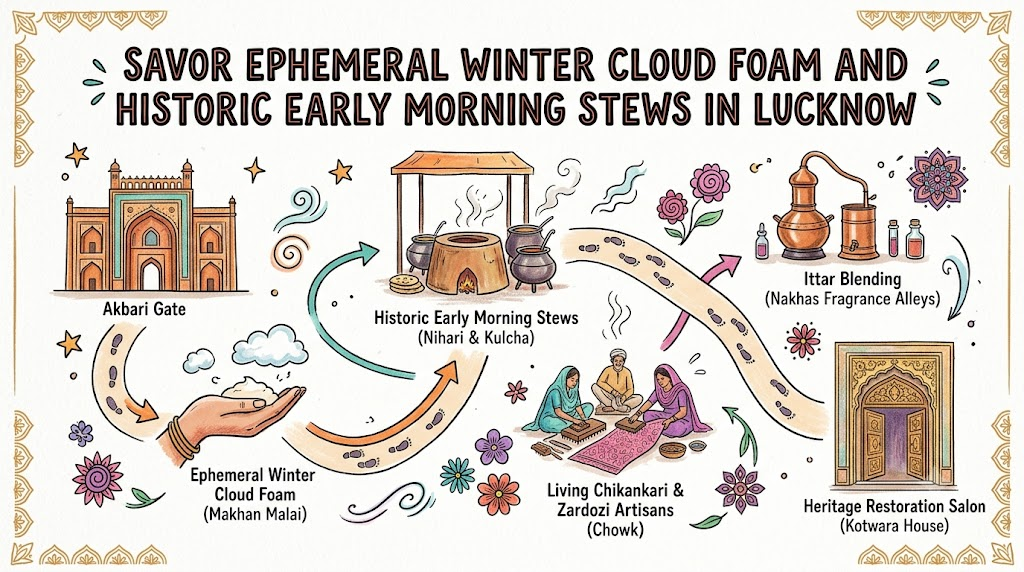
The Artisans of Chowk: Living Chikankari and Zardozi Karkhanas
Away from sanitized boutique showrooms, the dense lanes of Old Lucknow house multi-generational craft communities where master artisans practice hand embroidery. Within shared courtyards, local embroiderers meticulously execute intricate shadow work, murri, and phanda stitches on gossamer cotton fabrics.
The process remains entirely analog and collaborative: wooden blocks transfer fugitive blue ink patterns onto raw cloth, which passes through skilled neighborhood hands before final river-washing and finishing. Engaging directly with these artisans provides a profound look into centuries of design heritage that fashion houses worldwide continue to celebrate.
- Location: Chowk district, Old Lucknow, approximately 6 km northwest of Charbagh Railway Station.
- Why it is worth visiting: Witness world-renowned needlecraft at its raw source without middleman markups.
- Best things to do: Watch artisans carve bespoke wooden printing blocks, observe raw fabric washings, and purchase unstitched fabric directly from craft workshops.
- Best time to visit: 11:30 AM to 4:30 PM (when natural daylight illuminates the open courtyards).
- Ideal for whom: Slow-travelers, textile aficionados, cultural anthropologists, and mindful shoppers.
- Travel tip: Respect artisan privacy by always asking permission before photographing delicate handwork in domestic karkhanas.
Traditional Ittar Blending in the Fragrance Alleys of Nakhas
Wandering down the quiet fragrance corners of Nakhas and Chowk reveals brass-lined shops that have preserved the traditional art of deg-bhapka hydro-distillation. Master perfumers work with copper stills to capture fragile botanicals directly into aged sandalwood oil bases.
Here, scent creation is treated as poetic philosophy rather than industrial chemistry. Shelves hold crystal vials containing seasonal distillations: mitti ittar smelling of baked earth after the first monsoon shower, refreshing vetiver (khus), and exotic night-blooming jasmine (motia) crafted using ancient recipes.
- Location: Nakhas bazaar stretch, bordering Chowk, 5.5 km from the city center.
- Why it is worth visiting: Discover centuries-old botanical perfumery made entirely without synthetic fixatives or alcohol.
- Best things to do: Sample pure Mitti Attar on fragrance blotters, witness custom oil blending, and commission a personalized attar blend.
- Best time to visit: Late afternoon (3:00 PM to 6:00 PM), when shopkeepers have uninterrupted time for tastings.
- Ideal for whom: Connoisseurs of artisanal fragrance, couples, and holistic wellness seekers.
- Travel tip: Avoid wearing scented lotions or colognes on your visit so your olfactory palate stays clear.
The Dawn Gastronomy Walk: Nihari and Kulcha along Akbari Gate
As morning mists rise over the old city, the atmospheric alleyways of Akbari Gate awaken to the clanking of iron cauldrons. Long before typical tourists awake, locals gather around open-air tandoors to break their fast with slow-simmered Awadhi stews.
Cooked overnight over dying charcoal embers, the tender shank meat dissolves effortlessly into aromatic, spiced bone-marrow gravy. It is paired with hot, layered leavened bread (kulcha) slapped against the fiery walls of underground clay ovens, providing a timeless glimpse into culinary heritage.
- Location: Akbari Gate, Victoria Street, Old Lucknow, 5 km from Hazratganj.
- Why it is worth visiting: Experience unadulterated Awadhi breakfast culture alongside generations of neighborhood residents.
- Best things to do: Watch bakers slap dough into subterranean clay ovens, savor slow-cooked Nihari with bone marrow, and conclude with warm Kashmiri chai.
- Best time to visit: 6:30 AM to 8:30 AM (the best simmering batches finish right around dawn).
- Ideal for whom: Passionate culinary travelers, morning explorers, and meat lovers.
- Travel tip: Arrive before 8:00 AM; the most celebrated historic cauldrons sell out fast every single morning.
Heritage Restoration Salon at Kotwara House
Situated within the historic Kaiserbagh Palace complex, Kotwara House offers an intimate look inside surviving Awadhi aristocratic residential architecture. Maintained by filmmaker Muzaffar Ali and his family, this restored private wing balances living history with artistic patronage.
Ornate stucco ceilings, antique chandeliers, family heirlooms, and curated craft ateliers showcase living Nawabi elegance. The residence stands as an inspiring contrast to sterile state-run museums, demonstrating how heritage can remain dynamic, relevant, and lived-in.
- Location: Kaiserbagh Palace Complex, Central Lucknow, 3.5 km from Charbagh Station.
- Why it is worth visiting: Experience an authentic residential palace environment preserved through contemporary craft revitalization.
- Best things to do: Admire preserved palace furnishings, examine artisanal Zardozi collections, and arrange an architectural salon tour.
- Best time to visit: Mid-afternoons by prior appointment or scheduled cultural gathering.
- Ideal for whom: Architecture purists, decorative arts scholars, and history enthusiasts.
- Travel tip: Access requires advance permissions or attending a curated heritage walk, as this is a private estate.
Savoring Winter Cloud Foam: Makhan Malai in the Bazaars
Makhan Malai (also known locally as Nimish) represents one of the most fragile culinary delicacies in northern India. Prepared exclusively during chilly winter mornings, milk and cream are hung outdoors overnight to collect natural morning dew before being hand-whipped into an airy, cloud-like foam.
Infused delicately with saffron, cardamom, and rose water, then garnished with crushed pistachios and edible silver foil (varq), the dessert dissolves instantly on the tongue. It reflects the Awadhi obsession with ethereal textures and subtle flavor notes.
- Location: Gol Darwaza and Chowk crossroads, 6 km from Hazratganj.
- Why it is worth visiting: Sample an ephemeral culinary creation impossible to package, transport, or produce industrially.
- Best things to do: Observe the foam scooped from large clay dishes, pair it with savory morning poori-kachori, and speak with multigenerational vendors.
- Best time to visit: November through February only, between 7:00 AM and 10:00 AM.
- Ideal for whom: Dessert enthusiasts, street food connoisseurs, and families with children.
- Travel tip: Never delay tasting; this delicate morning creation collapses into liquid once exposed to midday sunshine.
Offbeat Exploration: Hidden Gems Tourists Miss
The Abandoned Splendor of Dilkusha Kothi
Far removed from the bustling crowds of Bara Imambara, the tranquil English baroque ruins of Dilkusha Kothi stand quietly within lush military cantonment parklands. Built in the early 19th century as a countryside hunting lodge and summer palace for Nawab Saadat Ali Khan, the roofless masonry shells and weathered towers are surrounded by quiet walking trails perfect for meditative exploration.
Sibtainabad Imambara of Hazratganj
While millions walk down the neon-lit retail avenues of Hazratganj, very few realize that stepping through an unassuming arched gateway reveals the serene Sibtainabad Imambara. Built in 1847 by Nawab Amjad Ali Shah, its peaceful brick-paved courtyard, decaying stucco motifs, and silent prayer halls offer a sudden oasis of quiet right in the heart of modern commercial chaos.
The Sunset Stepwell at Shahi Baoli
While many visitors explore the upper labyrinth (Bhool Bhulaiya) of the Bara Imambara complex, the intricate multi-tiered subterranean stepwell connected directly to the Gomti River basin is often overlooked. Designed with subtle angled sightlines that allowed ancient guards to monitor pool reflections, this subterranean marvel offers a fascinating glimpse into Awadhi hydro-engineering.
Detailed Practical Guidance for Travelers
| Destination | Standard Entry Fee | General Timings | Best Local Food Options Nearby | Recommended Nearby Attractions |
| Chowk Artisan Alleys | Free public access | 11:00 AM – 8:00 PM | Radhey Lal Parampara Sweets, Raja Thandai | Gol Darwaza, Tehseen ki Masjid |
| Nakhas Ittar Bazaars | Free public access | 12:00 PM – 9:00 PM | Rahim’s Kulcha Nihari, Mubeen’s Pasanda | Nadan Mahal, Akbari Gate |
| Akbari Gate Food Walk | Free (Food costs ₹150–₹350) | 6:30 AM – 11:30 PM | Tunday Kababi (Original), Haji Zubair Nihari | Kazmain shrine, Victoria Street |
| Kotwara House | Accessible via tour/inquiry | By appointment only | Royal Cafe Hazratganj, Marksmen | Safed Baradari, Begum Hazrat Mahal Park |
| Dilkusha Kothi Grounds | Free (ASI managed) | Sunrise to Sunset | Cantonment bakery stalls, Sadar Bazaar | La Martiniere College, Bibiyapur Kothi |
Logistics & On-Ground Navigation
Local Transport Options
- Lucknow Metro Rail: The North-South corridor provides fast, clean connections linking Chaudhary Charan Singh Airport to Charbagh, Hazratganj, and Munshipulia.
- Electric Auto-Rickshaws (E-Rickshaws): The ideal way to navigate the tight, winding alleys of Chowk, Aminabad, and Nakhas where larger cars cannot enter.
- App-Based Aggregators: Uber, Ola, and Rapido run reliably across modern city districts like Gomti Nagar, Aliganj, and the Cantonment.
- Private Car Rentals: Recommended if you plan day excursions to outlying spots such as Mahmudabad, Dewa Sharif, or Nawabganj wetlands.
Budget Planning
- Backpack & Independent Explorer Tier: ₹1,200 – ₹2,200 per day. Covers budget boutique guesthouses, public metro and e-rickshaw hops, street cuisine, and free monument exploration.
- Mid-Range & Heritage Comfort Tier: ₹4,500 – ₹8,500 per day. Includes heritage hotel stays, private air-conditioned transport, sit-down dinners, and curated walking tours.
Safety and Inclusivity Tips
- Families: The historic districts are welcoming and safe; keep young children close in busy pedestrian alleys around Aminabad and Chowk.
- Couples: Public spaces and parks welcome travelers warmly; dressing modestly when entering historic monuments and shrines ensures respectful interactions.
- General Safety: Pickpocketing can occur in packed market centers; keep valuables securely tucked away and carry small cash denominations for street stalls.
Local Secret: Do not plan your artisan visits for Thursdays. Many historic family-owned craft ateliers and old-city workshops observe their traditional weekly closure on this day.
Strategic Travel Planning Guardrails
Travel Planning Tips for Lucknow
- Plan your trip between November and February to enjoy crisp, walkable winter days.
- Keep cash on hand; small artisans and historic street vendors rarely accept digital payments.
- Dress respectfully with covered shoulders and knees to comfortably explore active prayer sites.
- Carry a light shawl or scarf, which is often required when entering active shrines and Imambaras.
- Wear easy slip-off footwear, as shoes must be removed frequently at monuments and workshops.
Common Mistakes to Avoid
- Cramming both Old Lucknow and distant Gomti Nagar into a single rushed afternoon.
- Buying inexpensive machine-embroidered garments from generic shops instead of authentic handmade Chikankari.
- Relying exclusively on private cars, which easily get trapped in the narrow lanes of the old city.
- Arriving at traditional culinary spots during late afternoons when fresh batches have sold out.
- Skipping local street tea stalls in favor of standard international coffee chains.
Suggested Itinerary Blueprints
1. Day Quick Dash (The Old City Soul Circuit)
Target Audience: Time-strapped cultural travelers seeking concentrated authenticity.
- Morning (7:30 AM – 10:30 AM): Start with slow-simmered Nihari and fresh kulchas at Akbari Gate, followed by Makhan Malai in the Chowk crossroads.
- Midday (11:00 AM – 3:00 PM): Walk the artisan alleys of Chowk to observe Chikankari woodblock carving and visit traditional ittar distillers in Nakhas.
- Evening (4:30 PM – 8:00 PM): Explore the quiet ruins of Dilkusha Kothi before finishing with a classic kebab dinner along Victoria Street.
2. Day Deep-Dive (Heritage, Craft & Modernity Circuit)
Target Audience: Curious explorers who want a balanced journey through past and present Awadh.
- Day 1: The Imperial Heritage Core: Explore the Bara Imambara subterranean stepwells, walk through Kaiserbagh’s historic gates, tour Kotwara House, and spend the evening enjoying tea along Hazratganj.
- Day 2: Craft Traditions & Culinary Trails: Spend the morning exploring family embroidery workshops in Chowk, visit historical perfumers, browse the book markets of Aminabad, and conclude with riverside views at Gomti Riverfront Park.
3. Complete Weekend Travel Plan (The Master Awadh Circuit)
Target Audience: Dedicated cultural travelers spending a full long weekend.
- Friday: Arrive, settle into a heritage hotel, and take a sunset stroll through the peaceful grounds of Dilkusha Kothi before enjoying a slow Awadhi dinner.
- Saturday: Take a dawn food walk around Akbari Gate, explore living karkhanas in Chowk, sample artisanal ittar, and visit the serene Sibtainabad Imambara at dusk.
- Sunday: Discover European-Awadhi architecture at La Martiniere College, browse vibrant handicraft markets, and end your journey with a sunset walk along the Gomti River.
Common Tourist Mistakes to Avoid
- Geographic Blunders: Group your sightseeing logically. Exploring the Old City (Chowk, Nakhas, Husainabad) and modern Gomti Nagar on the same afternoon will leave you stuck in heavy cross-town traffic.
- Commercial Traps: Avoid purchasing low-cost synthetic Chikankari from modern commercial malls. Authentic hand needlework is found in old neighborhood karkhanas where profits support local artisans directly.
- Neglecting Modern/Alternative Zones: Balance your historical exploration with visits to Lucknow’s contemporary creative spaces, such as art galleries and indie coffee houses in Gomti Nagar.
- Transport Overpayment: Agree on e-rickshaw fares beforehand or use rideshare apps to avoid inflated quotes outside major railway stations.
- Luxury Dining Bias: Sticking only to five-star hotel menus means missing out on the unmatched flavors of historic, family-run food stalls that have perfected their recipes across generations.
Frequently Asked Questions
1. How does hand-embroidered Chikankari differ from mass-produced machine embroidery?
Authentic handmade Chikankari displays subtle organic variations across its thirty-two traditional stitch techniques, including shadow work and raised knots. Machine-made imitations feature uniform, overly tight synthetic threads and messy back stitching. Genuine hand embroidery feels soft, lightweight, and breathable against the skin, reflecting the patient craftsmanship of individual artisans rather than automated mass production.
2. Is it safe to eat street food throughout Old Lucknow’s markets?
Yes, eating street food is generally safe when you visit popular, multi-generational stalls with high customer turnover. Stalls around Akbari Gate and Chowk cook dishes fresh over high heat right before your eyes. To stay comfortable, stick to piping hot cooked preparations, drink bottled water, and avoid raw salads or pre-cut fruits from open carts.
3. What is the proper cultural etiquette when visiting active Imambaras and shrines?
Visitors should dress modestly by covering shoulders, arms, and legs. Remove footwear before stepping onto tiled courtyards and carpeted prayer halls. Women must cover their heads with a light scarf, while men should avoid sleeveless shirts. Always speak quietly, avoid using flash photography around worshippers, and walk respectfully around ongoing religious observances.
4. Can visitors purchase authentic traditional ittar without alcohol or chemical additives?
Yes, traditional perfumers in Chowk and Nakhas specialize in 100% natural, alcohol-free perfume oils distilled into a pure sandalwood base. Look for shops that store scents in aged leather bottles (kuppi) and glass flagons. Request pure hydro-distilled deg-bhapka oils rather than diluted synthetic fragrance variations commonly sold in modern commercial department stores.
5. Why are Thursdays unique when exploring markets across Old Lucknow?
Thursdays serve as the traditional weekly holiday for many multi-generational merchants, textile workshops, and craft guilds throughout Chowk and Nakhas. Visiting on Thursdays means finding closed shutters and quiet streets instead of bustling workshops. Schedule your visits between Friday and Tuesday to experience these artisanal lanes in full swing.
6. What makes traditional Awadhi Dum Pukht cooking technique truly unique?
Dum Pukht involves sealing meats, spices, and rice inside heavy round-bottomed copper pots (deghs) using a ring of fresh wheat dough. Placing glowing charcoal embers above and below the pot traps escaping steam completely. This gentle, pressurized cooking environment tenderizes ingredients in their own natural juices, yielding unmatched tenderness and aroma.
7. How do I reliably arrange an e-rickshaw for an entire morning in Chowk?
You can hire an e-rickshaw driver for a customized half-day tour directly outside the Chowk police station or near Gol Darwaza. Agree politely on a fixed hourly rate (usually ₹150–₹200 per hour) before setting off. Hiring a dedicated driver ensures seamless travel through narrow alleys while keeping waiting times minimal.
8. Where can visitors see authentic Awadhi Zardozi metal embroidery being made?
Authentic Zardozi workshops operate in the residential quarters of Victoria Street, Chowk, and Saadatganj. Artisans sit around a raised wooden frame called an adda, weaving gold and silver metallic threads, beads, and sequins onto silks and velvets. Booking a guided heritage walk helps you access these private neighborhood ateliers respectfully.
9. What should one look for when purchasing real bone-china or terracotta pottery in Lucknow?
Look for Chinhat pottery workshops along the city outskirts, celebrated for glazed domestic ceramics, terracotta planters, and decorative tableware. Authentic handmade pieces have a pleasant earthy weight, smooth lead-free glazing, and slight organic variations in finish. Buying directly from artisan centers supports local potters and avoids inflated retail markups.
10. When is the Makhan Malai sweet available during the year?
Makhan Malai is an exclusively seasonal delicacy available only from November through mid-February. Its preparation depends on cold winter night dew and morning fog to whip whole milk into a light, airy foam. Warm weather prevents the delicate foam from holding its shape, so it disappears during the summer.
11. Is Lucknow easily walkable for independent travelers exploring on foot?
Old Lucknow’s historic districts like Chowk, Hazratganj, and Kaiserbagh are best explored on foot, as walking lets you appreciate neighborhood details cars easily miss. However, long distances between these distinct zones require quick hops via the Lucknow Metro or auto-rickshaws, especially during warm midday hours.
12. How does the architecture of Dilkusha Kothi differ from the Bara Imambara?
While the Bara Imambara exemplifies classical Awadhi-Mughal architecture with sweeping arched vaults, delicate plasterwork, and labyrinthine corridors, Dilkusha Kothi reflects European neoclassical and English baroque influences. Built without internal arches or central domes, Dilkusha features classical pilasters and hunting lodge proportions that highlight the evolving architectural tastes of 19th-century Awadh.
Conclusion
Choosing to experience Lucknow beyond its typical tourist circuit reveals the living soul of a civilization built on gentility, hospitality, and unmatched artistic dedication. As you wander along fragrant perfume lanes, hear the steady tap of woodblocks against crisp fabric, and share freshly baked bread with friendly locals, the city leaves a lasting impression. Awadh is not merely an itinerary of static monuments to photograph, but a warm, living tradition that welcomes every curious traveler with open arms.
