Introduction
Forget the sterile, over-packaged tourist traps that trade authentic heritage for commercial noise. True travel is about discovering places that whisper ancient stories through every arched gateway, bustling bazaar, and slow-simmering copper pot. Lucknow stands proudly as a cultural stronghold where the refined grace of a bygone era remains wonderfully alive. Here, time moves at the gentle pace of a cascading fountain, inviting you to immerse yourself deeply in timeless traditions, unmatched hospitality, and royal elegance.
Why Lucknow is a must-visit city
Lucknow serves as a masterclass in cultural preservation, architectural genius, and legendary culinary arts, anchoring the heartland of Northern India along the banks of the Gomti River. The city reflects the sophisticated vision of the Nawabs, marrying Persian aesthetic sensibilities with indigenous craftsmanship.
Modern connectivity ensures an effortless journey for every traveler archetype. Chaudhary Charan Singh International Airport and Lucknow Charbagh Railway Station connect the city seamlessly to major national hubs, while wide expressways and a modern metro grid make intra-city transit smooth. The travel circuit effortlessly pairs monumental exploration with sensory feasts.
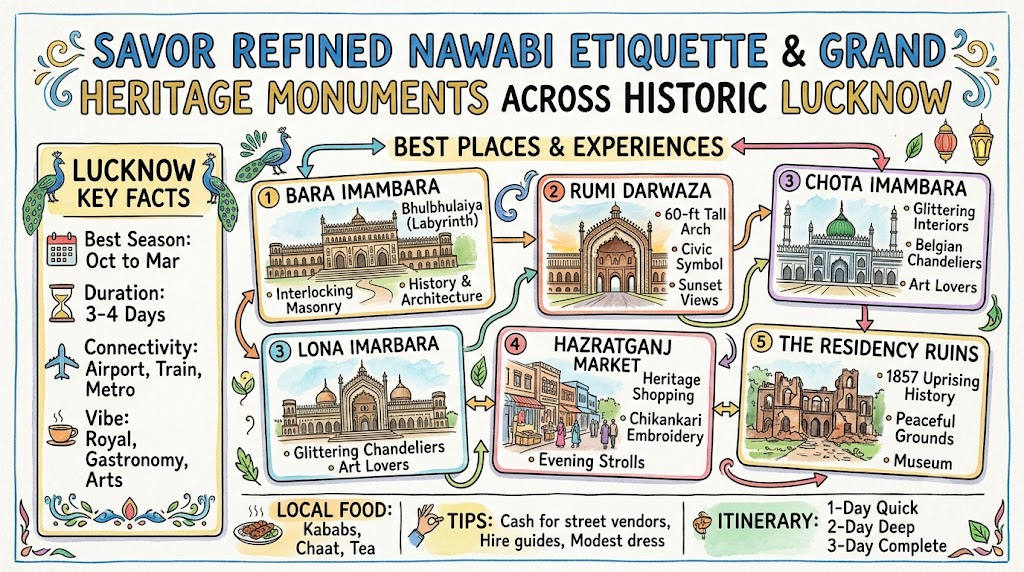
| Key Fact | Details |
| Best Travel Season | October to March (Cool, pleasant weather for heritage walks) |
| Ideal Trip Duration | 3 to 4 Days |
| Primary Connectivity | International Airport, Major Junction Railway Station, Expressway Grid |
| Top Travel Vibe | Royal heritage, classical arts, legendary gastronomy, leisurely pacing |
Best Places or Experiences
Bara Imambara
Built during a devastating 1784 famine as an employment relief project, the Bara Imambara stands as an architectural wonder of the Awadh era. Its massive central hall is famously constructed entirely without wood, iron, or girder support, relying purely on interlocking brick masonry.
Atop the main hall lies the legendary Bhulbhulaiya, an intricate labyrinth of over a thousand identical doorways and dark interconnected corridors. This maze was cleverly designed to confuse intruders while providing natural ventilation and acoustics that allow a whisper to travel across vast structural spans.
- Location: Machchhi Bhavan district, approximately 4 km from Lucknow Charbagh railway station.
- Why it is worth visiting: Showcases the engineering mastery of the 18th century alongside deep spiritual and cultural significance.
- Best things to do: Navigate the labyrinth with an authorized local guide, admire the intricate stucco work in the central hall, and view the stepwell step-garden complex.
- Best time to visit: Early morning between 9:00 AM and 11:00 AM to beat afternoon crowds and heat.
- Ideal for whom: History buffs, architecture enthusiasts, and curious families.
- Travel tip: Hire an official badge-carrying guide at the entrance to fully grasp the maze’s engineering secrets.
Rumi Darwaza
Standing sixty feet tall, the Rumi Darwaza is the iconic gateway of Lucknow and a masterpiece of Awadhi civic architecture. Inspired by ancient Constantinople portals, this monumental arch features delicate floral motifs and a top pavilion that once held a massive drum ensemble.
The structure served as the historic western entry to the royal precinct and remains a powerful symbol of the city’s cosmopolitan history. Its majestic curves capture golden hour sunlight, transforming the stone into a breathtaking canvas of shifting amber tones.
- Location: Husainabad area, about 5 km from the city center.
- Why it is worth visiting: It is the architectural emblem of Lucknow, representing the pinnacle of Indo-Islamic design synthesis.
- Best things to do: Capture striking architectural photographs at dusk, observe local street life around the plaza, and enjoy a horse-carriage ride nearby.
- Best time to visit: Late afternoon through sunset for the most dramatic lighting.
- Ideal for whom: Photography enthusiasts, culture seekers, and solo explorers.
- Travel tip: Visit just before sunset when the evening lights turn on, illuminating the historic stonework.
Chota Imambara
Also known as the Imambara Hussainabad Mubarak, this glittering 19th-century monument serves as an ornate mausoleum for Nawab Muhammad Ali Shah. Its interiors feature Belgian chandeliers, gilded mirrors, and intricate calligraphy that earned it the nickname “The Palace of Lights.”
The complex also houses the royal watchtower, Satkhanda, an unfinished multi-story tower meant to rival the Qutub Minar. The immaculate gardens and reflective water pools enhance its serene, palatial atmosphere.
- Location: Hussainabad Trust Road, roughly 6 km from the central railway hub.
- Why it is worth visiting: Houses an incredible collection of European chandeliers, silver-worked tazias, and royal artifacts.
- Best things to do: Admire the reflective mirror work, inspect the ornate silver throne, and walk around the quiet garden complex.
- Best time to visit: Mid-afternoon between 12:00 PM and 3:00 PM when interior crystal fixtures catch sunlight directly.
- Ideal for whom: Art lovers, heritage travelers, and photography enthusiasts.
- Travel tip: Remove footwear before stepping onto the marble platforms inside the main hall.
Hazratganj Heritage Market
Hazratganj is the cultural heartbeat of Lucknow, blending historic Victorian-style architecture with upscale modern storefronts and legendary local eateries. Established over a century ago, this shopping avenue gave birth to the popular local phrase “Ganjuing,” meaning leisurely evening strolls.
The beautifully restored yellow-and-white facade preserves its colonial-era charm while housing traditional chikankari emporiums, bookstores, and classic tea houses. It remains the ultimate social meeting ground for local residents and visitors alike.
- Location: Central Lucknow, 2 km from Hazratganj crossing.
- Why it is worth visiting: The ultimate center for authentic Chikan embroidery shopping and classic Awadhi café culture.
- Best things to do: Shop for hand-embroidered Chikan garments, sip spiced tea at historic tea stalls, and observe vibrant local street life.
- Best time to visit: 5:00 PM to 9:00 PM for the vibrant evening atmosphere.
- Ideal for whom: Shoppers, food lovers, and cultural explorers.
- Travel tip: Check government-certified emporiums for genuine hand-stitched Chikankari work.
The Residency Ruins
The Residency is a sprawling complex of British-era garrison buildings scarred by the dramatic events of the 1857 uprising. Today, its bullet-riddled brick walls and crumbling arches stand quietly amidst manicured lawns and towering trees.
A small museum on-site preserves original sketches, models, and military artifacts detailing the historic siege. The peaceful atmosphere offers a profound space for historical reflection amidst nature.
- Location: Ashok Marg, near Kaiserbagh, 3 km from the city center.
- Why it is worth visiting: A poignant historical site offering deep insight into the turbulent events of 1857.
- Best things to do: Walk through the museum exhibits, read commemorative plaques among the ruins, and enjoy the shaded garden paths.
- Best time to visit: Morning hours between 9:00 AM and 12:00 PM.
- Ideal for whom: Military history buffs and heritage researchers.
- Travel tip: Wear comfortable walking shoes, as navigating the uneven historic terrain requires steady footing.
Offbeat Exploration: Hidden Gems Tourists Miss
Kaiserbagh Palace Complex Quads
Hidden away from mainstream itineraries, the crumbling pavilions of the Kaiserbagh Palace complex reveal the faded grandeur of the last Nawab’s royal estate. Exploring these quiet courtyards offers an unfiltered look at authentic nineteenth-century architecture largely untouched by modern tourism.
Aminabad Traditional Perfume Ateliers
Tucked deep inside the labyrinthine alleys of Aminabad, multi-generational perfumers craft traditional attars using ancient hydro-distillation methods in copper stills. Visitors can experience rare natural floral scents extracted from jasmine, rose, and baked earth.
Satkhanda Watchtower Base
While most tourists view Satkhanda from a distance, standing right at its incomplete base reveals interesting brickwork patterns and structural secrets that highlight royal ambition left frozen in mid-construction.
Detailed Practical Guidance for Travelers
| Destination | Standard Entry Fee | General Timings | Best Local Food Options Nearby | Recommended Nearby Attractions |
| Bara Imambara | ₹50 (Indians) / ₹500 (Foreigners) | 6:00 AM – 5:00 PM | Tunday Kababi (Akbari Gate), Rahim’s Kulcha | Rumi Darwaza |
| Rumi Darwaza | Free Access | Open 24 Hours | Chowk Street Kebabs | Bara Imambara |
| Chota Imambara | ₹50 (Indians) / ₹500 (Foreigners) | 9:00 AM – 5:00 PM | Royal Cafe Basket Chaat (Hazratganj) | Clock Tower |
| Hazratganj Market | Free Access | 10:00 AM – 10:00 PM | Moti Mahal, Royal Cafe, Sharma Tea Stall | Ambedkar Park |
| The Residency | ₹25 (Indians) / ₹300 (Foreigners) | 8:00 AM – 6:00 PM | Dastarkhwan (Hazratganj) | Kaiserbagh Palace |
Logistics & On-Ground Navigation
Local Transport Options
- Metro Network: The Red Line connects major transit points quickly and comfortably across the city.
- E-Rickshaws: Abundant and budget-friendly for navigating narrow heritage lanes and short neighbourhood trips.
- Auto-Rickshaws & Cabs: App-based aggregators like Ola and Uber provide reliable point-to-point transportation.
- Car Rentals: Recommended for hiring private cabs for day-long heritage excursions and outer explorations.
Budget Planning
- Backpack/Budget Tier: ₹1,200 – ₹2,000 per day covering metro rides, local street food, and standard entry fees.
- Mid-Range Comfort Tier: ₹3,500 – ₹6,000 per day including private cab rentals, sit-down Awadhi dining, and heritage hotel stays.
Safety and Inclusivity Tips
- Families: Heritage sites feature clear pathways and security personnel for safe family exploration.
- Couples: Stick to well-lit public areas during evening hours and respect local cultural norms.
- General Safety: Keep basic cash handy for small vendors in old city markets where digital payments may occasionally lag.
Local Secret: Old city lanes get extremely congested during peak afternoon hours. Plan your visits to Chowk and Akbari Gate early in the morning or late evening.
Strategic Travel Planning Guardrails
Travel Planning Tips for Lucknow
- Plan your visit between October and March to enjoy pleasant weather during outdoor heritage walks.
- Carry a mix of digital UPI apps and small denomination cash for street food purchases and parking.
- Dress modestly when visiting religious monuments and historical shrines across the old city.
- Stay hydrated and carry sun protection if exploring open archaeological complexes during midday.
- Book certified guides in advance for complex heritage sites like Bara Imambara.
Common Mistakes to Avoid
- Trying to cover both old city bazaars and modern parks in a single compressed afternoon.
- Relying on large cars in narrow old-city alleys where e-rickshaws are much faster.
- Skipping local street-level culinary vendors in favor of standard multi-cuisine hotel restaurants.
- Forgetting to verify official monument timings, which can vary slightly on festive holidays.
- Assuming fixed pricing without checking official entry ticket windows at monuments.
Suggested Itinerary Blueprints
1-Day Quick Dash (Heritage Heart Circuit)
Designed for travelers with limited time who want to experience the core architectural wonders of Awadh.
- Morning: Explore the magnificent Bara Imambara and navigate the Bhulbhulaiya labyrinth.
- Afternoon: Walk past Rumi Darwaza and tour the glittering halls of Chota Imambara.
- Evening: Enjoy a traditional Awadhi dinner and an evening walk through Hazratganj.
2-Day Deep-Dive (Royal Heritage & Craft Trail)
A balanced two-day itinerary blending deep historical exploration with local artisanal shopping.
- Day 1: Morning visit to The Residency ruins, followed by afternoon explorations of Kaiserbagh palace fragments.
- Day 2: Dive into Chowk bazaars for Chikankari shopping and traditional attar sampling, ending with sunset photography at Rumi Darwaza.
Complete Weekend Travel Plan (The Ultimate Awadh Loop)
A comprehensive three-day journey immersing you in every facet of Lucknow’s cultural tapestry.
- Friday: Arrive, settle into your heritage accommodation, and take a relaxed evening stroll in Hazratganj.
- Saturday: Dedicate the entire day to Husainabad monuments, old city food walks, and perfume workshops.
- Sunday: Explore local museums, pick up authentic handicrafts, and enjoy a farewell Awadhi feast.
Common Tourist Mistakes to Avoid
- Geographic Blunders: Grouping geographically distant attractions on the same day instead of dividing your trip by neighborhood zones.
- Commercial Traps: Spending too much time in modern air-conditioned malls while missing authentic local markets.
- Neglecting Modern/Alternative Zones: Forgetting to explore Lucknow’s thriving café culture and leafy residential neighborhoods.
- Transport Overpayment: Always cross-reference ride-hailing apps or insist on running meters to prevent price inflation.
- Luxury Dining Bias: Avoiding street-level culinary legends, which prevents you from experiencing the true soul of Awadhi cuisine.
Frequently Asked Questions
1. What makes Awadhi cuisine different from standard North Indian food?
Awadhi cuisine relies on slow-fire dum cooking techniques where meats and rices simmer in sealed copper pots with delicate aromatic spices. This patient preparation draws out rich, subtle flavors without relying on heavy chili heat or tomato-based gravies found elsewhere.
2. Is it safe to explore the narrow lanes of Chowk on foot?
Yes, the historic lanes of Chowk are generally safe and welcoming during daytime and early evening hours. Visitors should remain mindful of passing e-rickshaws and keep personal belongings secure in crowded bazaars.
3. Where can I buy authentic hand-embroidered Chikankari garments?
Certified government emporiums in Hazratganj and trusted artisan workshops in Chowk offer genuine hand-stitched Chikankari. Always inspect the reverse side of the fabric to ensure the embroidery threads are smooth and neatly knotted by hand.
4. How long does it take to explore the Bhulbhulaiya inside Bara Imambara?
Exploring the labyrinth typically takes between 45 minutes to an hour. Having a certified guide is essential to navigate the complex multi-tiered corridors without getting disoriented.
5. What are the best local dishes to try during a food walk in Lucknow?
Must-try specialties include Galouti kebabs, Tunday kebabs, Sheermal bread, and Malai Markoot dessert. These legendary preparations define the culinary heritage of the region.
6. Are English-speaking guides easily available at major monuments?
Yes, licensed multilingual guides are readily available outside ticketing gates at Bara Imambara and The Residency. They charge government-regulated fees and provide deep historical context.
7. Can I use digital payment apps across traditional old-city markets?
While most larger shops and cafes accept digital UPI payments, street food vendors prefer cash. Keeping small currency notes on hand ensures smooth transactions in older bazaars.
8. What is the significance of Rumi Darwaza in local history?
Rumi Darwaza served as the historic western gateway to the old royal complex of Lucknow. Built in 1784, it remains an enduring architectural symbol representing the city’s rich artistic legacy.
9. Are photography permits required inside Lucknow’s heritage museums?
General mobile photography is permitted in most open monument areas and courtyards. However, professional tripods or video equipment may require prior administrative permission at specific sites.
10. What is the best time of year to experience cultural festivals in Lucknow?
The winter months between November and February host various cultural festivals, literary meets, and craft fairs. This period offers the most comfortable weather for outdoor exploration and sightseeing.
11. How should visitors dress when exploring historic religious sites?
Visitors should dress modestly, covering shoulders and knees out of respect for local religious traditions. Carrying a light scarf or stole is also helpful when entering specific shrines and indoor tombs.
12. What makes Hazratganj an essential stop for first-time visitors?
Hazratganj successfully merges colonial architecture with modern shopping, street food, and vibrant social culture. It provides an ideal introduction to the contemporary lifestyle of Lucknow residents.
Conclusion
Choosing Lucknow for your travels opens the door to a rare world where art, history, and culinary mastery exist in perfect harmony. Walking through its majestic gateways and sharing meals prepared with centuries-old dedication offers an intellectual and emotional reward that ordinary vacations cannot match. This timeless city leaves an indelible mark on your soul, inviting you to slow down and savor every exquisite moment.
