Introduction
Many travelers find themselves caught in a loop of visiting hyper-commercialized, identical shopping malls across standard tourist cities. If you are looking for deep cultural roots, unmatched artisanal authenticity, and an electric old-world energy, you need to step onto the bustling streets of Lucknow. The city of Nawabs offers an retail landscape where shopping is an immersive, sensory exploration of history. From the delicate, rhythmic clicks of needles creating centuries-old embroidery to the intoxicating aroma of traditional perfumes floating through narrow brick alleyways, Lucknow provides a soulful connection that modern glass shopping centers simply cannot match.
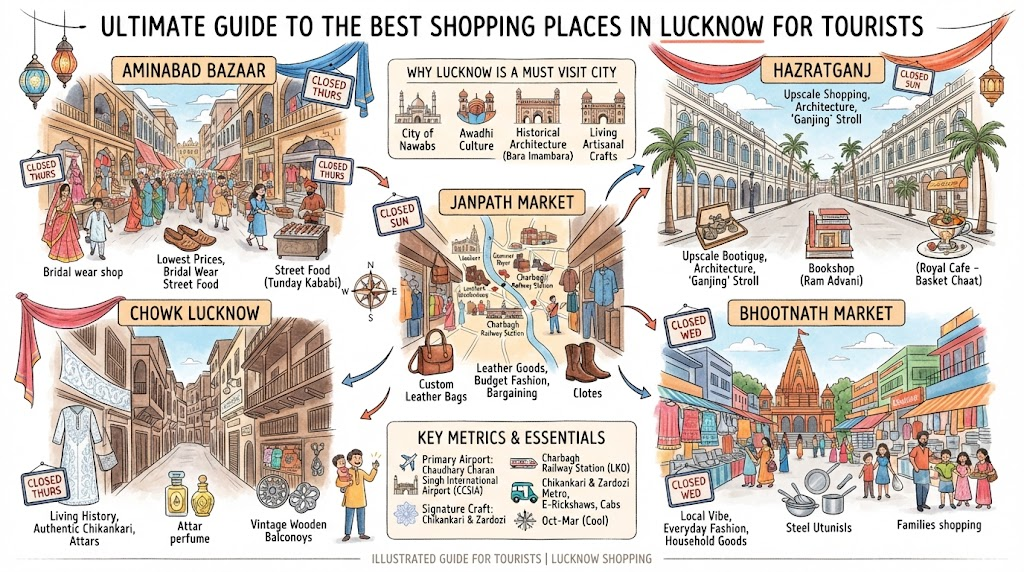
Why Lucknow is a must visit city
Lucknow occupies a profoundly significant chapter in the cultural and geographical tapestry of Northern India. Resting along the banks of the Gomti River, it has historically served as the epicentre of Awadhi art, literature, and sophisticated lifestyle. Today, the city seamlessly bridges its regal past with contemporary expansion. Excellent connectivity via the clean Lucknow Metro network, expansive expressways, and a major international airport ensures that the city is incredibly accessible for luxury seekers, budget backpackers, and families alike.
The local travel circuit perfectly balance heritage sightseeing with high-energy street shopping. You can spend your morning marveling at the gravity-defying architecture of the Bara Imambara and your afternoon navigating the vibrant, colorful bazaars nearby. The sheer variety of local crafts—ranging from the world-famous Chikankari embroidery to intricate Zardozi silver-thread work and authentic Attar (botanical perfumes)—makes Lucknow a premier destination for travelers looking to bring home pieces of living history rather than generic souvenirs.
| Key Metric | Regional Detail |
|---|---|
| Primary Airport Hub | Chaudhary Charan Singh International Airport (CCSIA) |
| Major Rail Head Link | Charbagh Railway Station (LKO) |
| Signature Craft Form | Hand-embroidered Chikankari and Zardozi textiles |
| Local Transport Backbone | Lucknow Metro, E-Rickshaws, and App-Based Cabs |
| Peak Shopping Season | October to March (Pleasant, cool weather) |
Best Places or Experiences
Aminabad Bazaar
Aminabad Bazaar stands as the undisputed heartbeat of Lucknow’s commercial heritage, operating continuously since the era of the Nawabs in the late 18th century. Walking into this chaotic, multi-layered marketplace feels like stepping directly into a living historical archive where generations of traders have sold fine goods. The air is thick with the sweet smell of roasting kebabs and the vibrant chatter of intense local bargaining. It is a sprawling maze of interconnected lanes, each specializing in unique items ranging from daily household goods to exquisite bridal wear.
The true glory of Aminabad lies in its unmatched collection of traditional footwear, synthetic and pure fabric stores, and local jewelry houses. The market functions as a vast wholesale and retail ecosystem where local fashion trends are born and celebrated. It is dense, loud, and utterly exhilarating, demanding that you slow your pace down, dive straight into the crowds, and embrace the raw, unfiltered energy of historic Awadhi commerce.
The vibrant energy of Aminabad Bazaar. Source: Hindustan Times / Hindustan Times via Getty Images
- Location: Central Lucknow, roughly 4 kilometers from Charbagh Railway Station.
- Why it is worth visiting: It is the oldest operating market in the city, offering the lowest prices and largest variety of Awadhi garments.
- Best things to do: Hunt for authentic Chikankari kurtas at the famous Madan Sarees, shop for traditional embroidered Nagra shoes, and take a food break at Tunday Kababi.
- Best time to visit: Late afternoon (4:00 PM to 8:00 PM) when the market comes alive with lights and energy.
- Ideal for whom: Bargain hunters, cultural explorers, and foodies looking for deep historic roots.
- Travel tip: Aminabad is completely closed on Thursdays, so plan your itinerary accordingly to avoid empty streets.
Hazratganj
If Aminabad represents the traditional soul of Lucknow, Hazratganj is its sophisticated, elegant parlor. Established in 1827 by Nawab Nasir-ud-Din Haider and later adapted by the British, this premium avenue features striking uniform Victorian-style architecture painted in cream and black. The local pastime of strolling leisurely down this wide, pedestrian-friendly boulevard is so iconic that it has its own colloquial term: ‘Ganjing’. It is where heritage buildings house premium modern brands, elite boutiques, and historic bookstores.
Hazratganj offers an upscale shopping experience where you can browse high-end handloom stores, luxury Chikankari showrooms, and premium jewelry houses without the intense crush of street crowds. The atmosphere here is distinctly relaxed, clean, and highly fashionable, making it the perfect spot to transition from a day of intense sightseeing into a delightful evening of fine dining and boutique curio hunting.
The elegant avenues of Hazratganj. Source: Hindustan Times / Hindustan Times via Getty Images
- Location: Heart of downtown Lucknow, 5 kilometers from the Old City hub.
- Why it is worth visiting: It offers a unique architectural mix of British colonial structures housing premium, authentic state handloom outlets like SEWA and Umrao.
- Best things to do: Browse rare regional literature at Ram Advani Booksellers, purchase high-certified hand-woven sarees, and treat yourself to the famous Basket Chaat at Royal Cafe.
- Best time to visit: Evening (6:00 PM onwards) when the colonial streetlamps illuminate the walkways.
- Ideal for whom: Luxury shoppers, couples, architecture lovers, and bookworms.
- Travel tip: The entire district is pedestrian-friendly, but parking spaces fill up rapidly; use the Lucknow Metro and alight directly at the Hazratganj station.
Chowk Lucknow
Chowk represents the raw, unedited cradle of Awadhi civilization, defined by incredibly narrow, winding lanes that have resisted the push of modern commercialization. This is the historic neighborhood where master artisans still sit on white floor cushions (gaddis), meticulously practicing centuries-old embroidery and metal-beating arts passed down through generations. The architecture here features decaying yet beautiful archways, wooden balconies, and vintage brick facades that whisper stories of royal patronage.
Shopping in Chowk is a journey of discovery for rare, premium luxury items that generic markets do not stock. It is the ultimate global hub for pure, genuine Chikankari work done on fine mulmul, silk, and organza fabrics. Furthermore, it is the home of the city’s legendary perfumers who formulate natural Attar using ancient distillation systems, capturing the scents of earth, rain, and fresh jasmine in small glass bottles.
Traditional artisan stores inside the historic Chowk. Source: mathess / Getty Images
- Location: Old Lucknow district, roughly 3 kilometers away from the Bara Imambara complex.
- Why it is worth visiting: It is the authentic production center for pure, non-mechanized Chikankari embroidery, ivory carvings, and bone-work.
- Best things to do: Visit the legendary Asghar Ali perfumers for authentic botanical Attar, buy raw, untreated chikan dress pieces straight from artisan workshops, and try sweet Nimish cream dessert.
- Best time to visit: Morning between 11:00 AM and 2:00 PM before the narrow lanes get highly congested.
- Ideal for whom: Textile collectors, history purists, and seasoned photographers.
- Travel tip: The lanes are far too tight for auto-rickshaws; hire a local cycle-rickshaw walker or travel entirely on foot to explore deep inner squares.
Bhootnath Market
Bhootnath Market, located in the residential expanse of Indira Nagar, is a vibrant modern bazaar that gives tourists an authentic look into how contemporary residents of Lucknow shop. Named after the prominent Lord Shiva temple situated right at its center, this market offers a brilliant mix of organized street vendors, mid-tier retail showrooms, and traditional wedding outfitters. It is highly dynamic, bursting with bright colors, displays of shining steel kitchenware, and endless racks of beautiful clothing.
The market excels at providing affordable everyday fashion, highly competitive prices on fine silver jewelry, and an expansive range of household goods. Because it caters primarily to local families rather than tourist crowds, the pricing here is naturally realistic, and the customer service retains a warm, neighborly charm. It is an excellent destination if you want to purchase great Indian wear, colorful bangles, and domestic home decor items without dealing with tourist premiums.
The bustling local storefronts of Bhootnath Market. Source: Hindustan Times / Hindustan Times via Getty Images
- Location: Indira Nagar, Eastern Lucknow, directly accessible via the Bhootnath Market Metro Station.
- Why it is worth visiting: It provides an authentic local community shopping vibe with completely realistic, non-tourist pricing structures.
- Best things to do: Shop for colorful glass bangles at local stalls, pick up affordable block-printed cotton kurtas, and enjoy spicy street food at the dynamic snacks corner.
- Best time to visit: Mid-evening (5:00 PM to 8:00 PM) to catch the lively neighborhood energy.
- Ideal for whom: Family travelers, budget shoppers, and those seeking an authentic look at local life.
- Travel tip: The market has an excellent dedicated metro station, making it incredibly easy to reach from any hotel along the transit line.
Janpath Market
Janpath Market is a compact, bustling commercial alleyway nestled comfortably within the larger Hazratganj shopping ecosystem. Unlike the wide, open sidewalks of main Hazratganj, Janpath is a covered maze of small, interconnected shops that specialize in rapid retail, custom tailoring, and highly affordable fashion pieces. The market is particularly popular among the city’s university students and young professionals who come here to purchase trendy clothing, custom leather items, and daily wear accessories.
The absolute highlight of Janpath is its extensive collection of specialized leather goods stores, offering high-quality custom-made boots, jackets, and travel bags at excellent price points. Interspersed between these leather retailers are stellar Chikankari boutiques that sell beautifully styled readymade garments perfect for casual outings. It is loud, fast-paced, and offers excellent opportunities to hone your bargaining skills.
- Location: Inside the Hazratganj commercial block, central Lucknow.
- Why it is worth visiting: It is the premier local hub for affordable leather products, custom clothing alterations, and budget fashion items.
- Best things to do: Purchase custom-made leather footwear, bargain for colorful casual chikan tops, and hunt for vintage coins at antique shops.
- Best time to visit: Daytime between 1:00 PM and 5:00 PM for easy browsing inside the shops.
- Ideal for whom: Budget backpackers, students, and fashion hunters looking for casual wear.
- Travel tip: The shop owners here expect bargaining; politely counter their initial price quotes by roughly 20-30% to find a fair middle ground.
Offbeat Exploration: Hidden Gems Tourists Miss
Nakhas Market (Sunday Flea Market)
For true explorers, the Sunday morning flea market at Nakhas is an unmissable cultural event. Operating for over two centuries, this dawn market sees the streets of Old Lucknow transform into a giant bazaar. Traders spread out blankets loaded with eclectic goods: vintage copper utensils, British colonial coins, antique door handles, used books, and exotic pets. It is gritty, chaotic, and absolute paradise for antique collectors and urban photographers.
Kapoorthala Shopping Complex
While most tourists flock straight to Aminabad, younger locals head to Kapoorthala in Aliganj for contemporary fashion innovations. This commercial zone specializes in modern adaptations of traditional arts. Here, you will find stunning fusion wear, like Chikankari work done with metallic wires on modern silhouettes, denim jackets, and western gowns. It is the perfect place to see how ancient crafts are evolving to appeal to younger, global generations.
Detailed Practical Guidance for Travelers
| Destination | Standard Entry Fee | General Timings | Best Local Food Options Nearby | Recommended Nearby Attractions |
|---|---|---|---|---|
| Aminabad Bazaar | Free Access | 11:00 AM – 9:30 PM (Closed Thursday) | Tunday Kababi, Prakash Kulfi | Kaiserbagh Palace Complex |
| Hazratganj | Free Access | 10:00 AM – 10:00 PM (Closed Sunday) | Royal Cafe, Jonehing Chinese | General Post Office Heritage Building |
| Chowk Lucknow | Free Access | 11:00 AM – 9:00 PM (Closed Thursday) | Rahim’s Kulcha Nihari, Mubeen’s | Bara Imambara & Rumi Darwaza |
| Bhootnath Market | Free Access | 11:00 AM – 10:00 PM (Closed Wednesday) | Bhootnath Chaat Corner, Local Bakeries | Bhootnath Shiva Temple |
| Janpath Market | Free Access | 11:00 AM – 8:30 PM (Closed Sunday) | Sharma Ji Ki Chai (Short Walk) | Hazratganj Metro Boulevard |
Logistics & On-Ground Navigation
Local Transport Options
- Lucknow Metro: The cleanest, fastest way to travel north-to-south. It links major zones like the Airport, Hazratganj, and Bhootnath Market beautifully.
- E-Rickshaws: These silent, electric vehicles are ideal for navigating short distances within busy markets like Aminabad and Bhootnath. Always confirm the fare before sitting down.
- Cycle-Rickshaws: These remain the absolute best option for entering the narrow lanes of the historic Chowk area where wider vehicles cannot physically fit.
- App-Based Cabs (Ola/Uber): Perfect for comfortable, air-conditioned travel between major shopping districts, though they can get stuck in old-city traffic jams.
Budget Planning
- Budget/Backpacking Tier: Expect to spend roughly ₹1,500 to ₹2,500 per day. This covers travel via the Lucknow Metro and public e-rickshaws, enjoying delicious street food, staying in cozy guesthouses, and shopping at budget-friendly street stalls.
- Mid-Range/Comfort Tier: Expect to spend around ₹5,000 to ₹9,000 per day. This allows you to travel in private app-based cabs, dine at heritage restaurants, stay in premium business hotels, and shop for high-quality, certified garments at established heritage showrooms.
Safety and Inclusivity Tips
- Families: Keep a close eye on children in dense crowds like Aminabad. Stick to daytime hours for shopping trips, and take regular breaks at comfortable indoor restaurants.
- Couples: Hazratganj offers a wonderful, secure, and deeply romantic atmosphere for evening walks, fine dining, and relaxed boutique shopping.
- General Safety: Lucknow is a welcoming and safe city for travelers. However, it is always wise to keep your wallet and smartphone secure in front pockets when exploring crowded markets.
Strategic Travel Planning Guardrails
Travel Planning Tips for Lucknow
- Optimize for the Weather: Plan your shopping trip between October and March to enjoy pleasant outdoor walking conditions.
- Embrace Digital Payments: Unified Payments Interface (UPI) is accepted almost everywhere, from large air-conditioned showrooms to small street cart vendors.
- Keep Cash Handy: Carry small paper notes (₹100 and ₹500) for cycle-rickshaw rides and tiny street purchases.
- Check the Calendar: Always remember market holidays (Aminabad is closed Thursdays, Hazratganj is closed Sundays) to avoid closed shops.
- Wear Comfortable Shoes: Expect to walk a lot through historical markets; choose supportive shoes over formal footwear.
Common Mistakes to Avoid
- Buying Without Inspection: Always inspect Chikankari garments carefully under bright light to ensure the hand-embroidery is neat and free of loose threads.
- Accepting First Prices: Do not pay the initial price quoted by street vendors; polite bargaining is an accepted part of local shopping culture.
- Overpacking the Daily Schedule: Avoid trying to visit both the far-east Bhootnath Market and the far-west Chowk on the exact same afternoon.
- Sticking Only to Malls: Skip the modern glass shopping malls; the true soul and heritage of Lucknow live in its atmospheric street markets.
- Missing Out on Street Food: Do not let a bias toward luxury dining stop you from enjoying legendary street food spots like Sharma Ji Ki Chai.
Suggested Itinerary Blueprints
1. Day Quick Dash (The Heritage Retail Circuit)
Designed for business travelers or tourists with limited time. Spend your morning exploring the historic lanes of Chowk to buy premium, authentic Chikankari dress pieces and botanical Attars. In the afternoon, take a short ride over to Hazratganj for comfortable, upscale boutique shopping, and finish your evening with excellent street food at Royal Cafe.
2. Day Deep-Dive (The Classic Awadhi Exploration)
- Day 1: Start your trip at Aminabad Bazaar to experience the incredible energy of Lucknow’s oldest market. Spend your afternoon hunting for fine embroidered footwear and fabrics, followed by a delicious dinner at the iconic Tunday Kababi.
- Day 2: Head out to the eastern side of the city to explore Bhootnath Market. Enjoy shopping for colorful daily wear and home decor items alongside local families, and wrap up your day with a relaxing evening walk down Janpath Market.
3. Complete Weekend Travel Plan (The Ultimate Retail Loop)
- Friday: Arrive in the city and head straight to Hazratganj for a wonderful evening introduction to the city, complete with premium boutique shopping and fine dining.
- Saturday: Dedicate your morning to the historic artisan workshops of Chowk. In the afternoon, dive into the bustling, high-energy lanes of Aminabad for excellent bargain hunting.
- Sunday: Wake up early at dawn to explore the fascinating antique treasures of the Nakhas Flea Market. Spend your afternoon relaxed, picking up contemporary fusion fashion at the modern Kapoorthala Complex.
Common Tourist Mistakes to Avoid
- Geographic Blunders: Trying to combine geographically opposed zones or circuits on the exact same day. Old Lucknow (Chowk) and New Lucknow (Gomti Nagar/Indira Nagar) are far apart; crossing between them during peak traffic hours can easily waste half your afternoon in transit.
- Commercial Traps: Spending excessive vacation time in modernized shopping hubs rather than authentic, atmospheric local spaces. Standard modern malls offer the exact same brands you can find anywhere else in the world; choose the historic open-air bazaars instead.
- Neglecting Modern/Alternative Zones: Forgetting to explore the quieter, residential, artistic, or cafe-centric modern expansions of the region. Districts like Kapoorthala and parts of Gomti Nagar feature innovative fusion boutiques that show how traditional Awadhi crafts are evolving for the future.
- Transport Overpayment: Actionable advice on using official meters or cross-referencing ride-sharing apps to avoid price gouging. Always check app-based transport maps to get a realistic sense of current pricing before negotiating a fare with an independent auto-rickshaw driver on the street.
- Luxury Dining Bias: Explaining why missing street-level culinary vendors deprives the traveler of the destination’s true soul. The culinary arts of Lucknow are deeply tied to its street food heritage; missing out on local tea stalls and kebab carts means missing a core part of the city’s living culture.
Frequently Asked Questions
1. Which market is the best place to buy authentic Chikankari in Lucknow?
The historic Chowk district is widely considered the absolute best area to buy authentic hand-embroidered Chikankari garments, as it functions as the direct production center where master artisan families have lived and worked for generations. For a more comfortable, air-conditioned boutique experience with fixed prices, premium showrooms like SEWA and Umrao in Hazratganj are also excellent choices.
2. Are the prices in Aminabad Bazaar fixed, or do tourists need to bargain?
Prices among street vendors and smaller retail outlets in Aminabad Bazaar are definitely not fixed, and polite bargaining is highly encouraged. It is standard practice to counter an initial street price quote by roughly 25% to 30%, though you should respect fixed-price signs when shopping inside larger, established textile showrooms.
3. What is the main difference between shopping in Hazratganj and Aminabad?
Hazratganj offers an upscale, pedestrian-friendly shopping boulevard lined with uniform Victorian architecture, luxury brand showrooms, and premium heritage stores with fixed prices. Aminabad is a dense, high-energy historic market defined by narrow lanes, massive crowds, lower wholesale prices, and great opportunities for traditional bargaining.
4. Can I easily find parking for a rental car near Chowk or Aminabad?
Finding street parking for a private rental car near Chowk or Aminabad is incredibly difficult due to the dense crowds and historic, narrow lanes. It is highly recommended to leave your car at a hotel parking lot and travel to these busy markets using the clean Lucknow Metro system combined with local e-rickshaws.
5. What are the best hours to visit the shopping markets to avoid peak crowds?
To enjoy a more relaxed shopping experience, aim to visit major markets like Chowk and Aminabad during the late morning hours between 11:00 AM and 1:30 PM, right as the shops open. The absolute peak rush hours occur in the evenings between 5:30 PM and 8:30 PM when local residents finish their workdays.
6. Is the Nakhas Sunday market worth visiting for standard garment shopping?
No, the Nakhas Sunday morning market is a specialized weekly flea market best suited for antique collectors, vintage coin hunters, and photographers looking for rare curiosities. If your main goal is shopping for clothes or fine textiles, standard markets like Aminabad, Chowk, or Hazratganj are much better options.
7. Are digital wallet payments and credit cards widely accepted in Lucknow’s street markets?
Digital payments via UPI are incredibly popular and accepted by almost every seller, including small street food vendors and rickshaw drivers. However, standard credit and debit cards are usually only accepted at larger, established indoor retail showrooms, so keeping a small amount of cash on hand is always a smart idea.
8. What unique souvenirs should I look for besides Chikankari clothing?
Beyond iconic Chikankari textiles, you should look for genuine botanical Attar perfumes from historic distilleries in Chowk, beautiful hand-crafted Zardozi metallic embroidery, exquisite bone-work decorative pieces, and traditional embroidered leather Nagra shoes.
9. On which days of the week do the major markets close for business?
Markets in Lucknow follow staggered weekly holidays: Aminabad and Chowk are closed on Thursdays, Hazratganj and Janpath are closed on Sundays, and Bhootnath Market is closed on Wednesdays. Always double-check these days when planning your travel itinerary.
10. How can I differentiate between authentic hand-made Chikankari and cheap machine-made imitations?
Authentic hand-made Chikankari embroidery always features small, natural variations in stitch size and shows visible thread knots on the reverse side of the fabric. Cheap machine-made imitations look perfectly uniform, lack reverse-side knots, and typically feature loose threads across the back of the design.
11. Is Lucknow safe for solo women travelers looking to enjoy evening shopping?
Yes, Lucknow is generally a very welcoming and safe city for solo women travelers. Well-lit commercial avenues like Hazratganj are perfect for relaxed evening walks and shopping, though it is always smart to maintain standard travel awareness when navigating the very dark, narrow lanes of the old city late at night.
12. What famous local street food dishes should I try while shopping in Hazratganj?
While exploring the avenues of Hazratganj, you should absolutely try the legendary, multi-layered Basket Chaat at Royal Cafe, enjoy a hot kulhad of saffron-infused tea at Sharma Ji Ki Chai, and treat yourself to cool, sweet Kulfi at the nearby local dessert stalls.
Conclusion
Choosing a shopping journey through the historic markets of Lucknow over a standard holiday at a modern resort brings rich rewards. By walking away from predictable commercial centers, you step directly into an authentic world shaped by royal patronage and generations of dedicated artisan families. Whether you are admiring the fine details of a hand-stitched kurta in Chowk or walking down the elegant, lit sidewalks of Hazratganj, you are doing more than just buying goods. You are participating in a living cultural legacy, supporting ancient arts, and bringing home meaningful travel stories that will stay with you long after your trip is over.
