Introduction
Forget the sterile, glass-fronted shopping malls of modern metropolises where every storefront looks identical. True travel is about losing yourself in the sensory labyrinth of historic trade quarters, where centuries of heritage echo through chaotic alleyways. Lucknow invites you to trade cookie-cutter commercialism for the timeless charm of its legendary bazaars. Here, every thread of embroidery tells a story of royal patronage and unmatched artisanal dedication.
Why Lucknow is a must-visit city
Lucknow serves as a magnificent living museum of North Indian culture, standing gracefully at the crossroads of history, architecture, and refined aesthetics. Unlike cities swallowed by rapid, characterless urbanization, the “City of Nawabs” fiercely preserves its soulful pace, legendary hospitality, and the sophisticated Urdu phrasebook known as Tehzeeb. Geographically anchored along the banks of the Gomti River, it boasts seamless rail connectivity from major Indian hubs, modern expressways, and a growing international airport, welcoming everyone from budget backpackers to luxury heritage seekers.
The travel circuit seamlessly bridges Mughal-era architectural marvels with sprawling British residency ruins and vibrant culinary lanes.
| Feature | Details |
| Primary Vibe | Royal Heritage, Fine Craftsmanship, and Culinary Paradise |
| Best Connectivity | Chaudhary Charan Singh International Airport & Major Rail Terminals |
| Signature Craft | Hand-embroidered Chikan textiles and Attar (perfumes) |
| Ideal Travel Duration | 3 to 5 Days for a comprehensive cultural immersion |
Best Places or Experiences
1. Aminabad Market
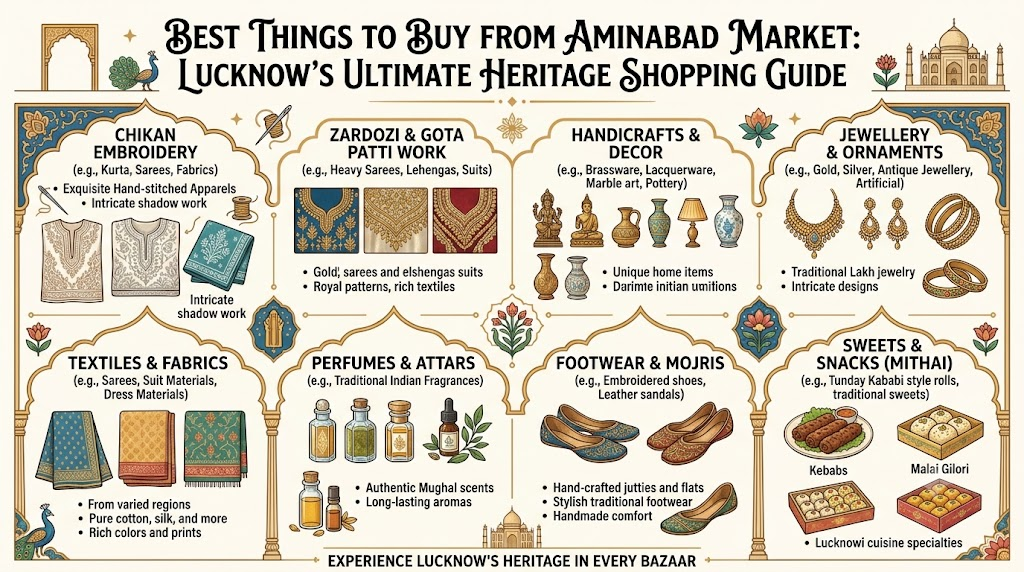
Step into Aminabad, and you are stepping straight into the 18th-century mercantile heart of Awadh. This historic market district is a sensory overload of vibrant textiles, bustling street food carts, and glittering jewelry shops that have served generations of locals. The architecture here tells tales of old-world commerce, with narrow alleyways branching out into specialized bazaars dedicated entirely to garments, books, and silver ornaments.
Beyond the frantic energy of its clothes lines, Aminabad offers a deep dive into the everyday social fabric of Lucknow. You will hear the gentle hum of bargaining mixed with the sizzle of street-side kebabs, creating an atmosphere that feels entirely untouched by time.
- Location: Central Lucknow, approximately 4 kilometers from the Lucknow Charbagh Railway Station.
- Why it is worth visiting: It is the undisputed epicenter of Lucknow’s traditional Chikankari textile shopping and historic street food culture.
- Best things to do: Hunt for authentic hand-embroidered Chikan kurtis at Mohan Market, sample legendary kebabs at Tunday Kababi, and browse vintage Urdu literature at local bookstalls.
- Best time to visit: Late afternoon through evening (4:00 PM to 8:30 PM) when the market illuminates and the weather cools down.
- Ideal for whom: Shopaholics, textile enthusiasts, culture seekers, and street food lovers.
- Travel tip: Wear comfortable walking shoes and keep small cash denominations handy, as narrow lanes make digital card payments difficult in older shops.
2. Bara Imambara
Constructed in 1784 by Nawab Asaf-ud-Daula, the Bara Imambara is an architectural masterpiece designed without a single iron beam or wooden support. Its massive central arched hall is widely regarded as one of the largest vaulted structures in the world, engineered with ingenious acoustic precision.
The complex is most famous for its labyrinthine upper floor, known locally as the Bhulbhulaiya. Navigating its hundreds of interconnected staircases and identical corridors offers an eerie yet thrilling glimpse into royal architectural defense mechanisms.
- Location: Hussainabad area, roughly 5 kilometers northwest of Aminabad Market.
- Why it is worth visiting: It showcases the stunning engineering genius of 18th-century Awadh and features the mystical Bhulbhulaiya maze.
- Best things to do: Explore the rooftop views of the old city, navigate the maze with a licensed local guide, and admire the stepwell (shahi baoli) on the premises.
- Best time to visit: Early morning (9:00 AM) to beat the afternoon crowds and enjoy soft lighting for photography.
- Ideal for whom: History buffs, architecture lovers, and curious explorers.
- Travel tip: Always hire a government-certified guide near the entrance to safely navigate the maze and hear authentic historical anecdotes.
3. Rumi Darwaza
Standing tall at sixty feet, the Rumi Darwaza is the iconic architectural emblem of Lucknow. Modeled after the ancient Sublime Porte of Istanbul, this imposing gateway was built during a devastating famine to provide employment for the city’s citizens through a brilliant “Food-for-Work” program.
Its intricate lime-plaster carvings and majestic umbrella-like chhatris capture the distinct synthesis of Turkish and Awadh design motifs. At dusk, when floodlights illuminate its carved facade, it transforms into a breathtaking urban monument.
- Location: Adjacent to the Bara Imambara complex in the Hussainabad precinct.
- Why it is worth visiting: It is the historic signature gateway of the city and a supreme example of 18th-century Awadhi architecture.
- Best things to do: Capture striking architectural photographs at sunset, take a leisurely heritage walk around the surrounding square, and enjoy evening street snacks nearby.
- Best time to visit: Golden hour just before sunset or late evening when the monument is illuminated.
- Ideal for whom: Photographers, solo backpackers, and casual sightseers.
- Travel tip: Traffic passes directly through the arch, so exercise caution if you are attempting street-level photography from the traffic islands.
4. Chowk Market
Chowk is Lucknow’s oldest residential and trading neighborhood, where time seems to have frozen centuries ago. Famous for its traditional artisan workshops, this is where master craftsmen still hand-carve wooden printing blocks, craft intricate Zardozi gold thread embroidery, and distill traditional floral attar in copper vessels.
The atmosphere here is wonderfully chaotic, fragrant with the lingering scents of jasmine and kewra oils, and filled with generations of families maintaining ancestral crafts.
- Location: Old Lucknow, about 2 kilometers north of the Bara Imambara.
- Why it is worth visiting: It is the ultimate destination to purchase pure, chemical-free traditional attar and witness master artisans at work.
- Best things to do: Visit century-old perfumeries like Sugandh Co, shop for authentic Zardozi embroidered fabrics, and taste authentic Nimish (a winter milk froth delicacy).
- Best time to visit: Mid-afternoon (2:00 PM to 6:00 PM) when artisanal workshops are fully active.
- Ideal for whom: Craft connoisseurs, souvenir hunters, and cultural anthropologists.
- Travel tip: Respect local artisans by asking permission before photographing their intricate handiwork up close.
5. British Residency
Spread across sprawling, manicured lawns, the ruins of the British Residency stand as a poignant reminder of the historic 1857 Siege of Lucknow. Bullet-riddled walls, shattered brickwork, and broken archways still bear the deep scars of artillery fire and combat.
A well-maintained museum on the grounds houses rare photographs, lithographs, and ordnance from the era, providing a comprehensive historical perspective on the events that reshaped British and Indian history.
- Location: Ashok Marg, near the banks of the Gomti River, roughly 3 kilometers from Hazratganj.
- Why it is worth visiting: It offers profound historical insights into the Indian Rebellion of 1857 within a peaceful, garden-like setting.
- Best things to do: Walk through the shaded museum galleries, inspect the scarred structural ruins, and enjoy a quiet afternoon stroll among ancient banyan trees.
- Best time to visit: Morning hours when the weather is pleasant and crowds are minimal.
- Ideal for whom: Military history enthusiasts, solitude seekers, and photography buffs.
- Travel tip: Wear mosquito repellent, as the lush, shaded garden grounds can attract insects during humid afternoons.
Offbeat Exploration: Hidden Gems Tourists Miss
Mahmudabad Estate Library
Tucked away from the typical tourist trail, this private library preserves a staggering collection of rare Persian, Arabic, and Urdu manuscripts alongside colonial-era correspondence. It offers an exclusive window into the intellectual and literary patronage of Awadh’s aristocracy.
Butler Palace and Surroundings
Overlooking a quiet lake, Butler Palace is an early 20th-century architectural gem built in the Indo-Saracenic style. Surrounded by thick bamboo groves and quiet residential lanes, it provides a peaceful escape from the bustling city core for morning walkers and nature lovers.
Detailed Practical Guidance for Travelers
| Destination | Standard Entry Fee | General Timings | Best Local Food Options Nearby | Recommended Nearby Attractions |
| Aminabad Market | Free | 11:00 AM – 10:00 PM | Tunday Kababi, Prakash Kulfi | Kaiserbagh Palace, Qaisarbagh Baradari |
| Bara Imambara | INR 50 (Indians) / INR 500 (Foreigners) | 6:00 AM – 5:00 PM | Rahim’s Nihari, Akbari Gate Street Food | Rumi Darwaza, Chota Imambara |
| Rumi Darwaza | Free (Open Air) | 24 Hours | Chowk Street Vendors, Royal Cafe (Hazratganj) | Bara Imambara, Clock Tower |
| Chowk Market | Free | 10:00 AM – 9:00 PM | Idris Biryani, Old Chowk Sweet Shops | Akbari Gate, Shahi Baoli |
| British Residency | INR 25 (Indians) / INR 300 (Foreigners) | 7:00 AM – 6:00 PM | Hazratganj Bakeries, Café Lucknow | Ambedkar Park, Gomti Riverfront |
Logistics & On-Ground Navigation
Local Transport Options
- Railways & Metro: Lucknow Metro connects major transport spines cleanly from North to South, while Charbagh Railway Station links the city nationally.
- Auto-Rickshaws & E-Rickshaws: Ubiquitous across all neighborhoods; e-rickshaws are ideal for short hops through narrow old city bazaars.
- App-Based Cabs: Ola and Uber operate reliably for transit between modern hubs like Hazratganj and historic zones like Chowk.
- Car Rentals: Daily chauffeured car rentals are widely available and recommended for hassle-free multi-stop heritage tours.
Budget Planning
- Budget / Backpacking Tier: INR 1,200 to INR 2,000 per day (covering hostel/budget stay, local e-rickshaws, and legendary street food).
- Mid-Range / Comfort Tier: INR 4,000 to INR 7,000 per day (covering heritage boutique stays, app cabs, guided tours, and sit-down dining).
Safety and Inclusivity Tips
- For Families: Stick to well-lit main thoroughfares in the evening and hire verified guides at historic monuments.
- For Couples: Lucknow is generally conservative yet safe; traditional modesty in attire is appreciated in old market areas.
- General Safety: Keep valuables secure in crowded market lanes like Aminabad and Chowk to avoid pickpocketing.
Strategic Travel Planning Guardrails
Travel Planning Tips for Lucknow
- Plan your visit between October and March when the winter weather is cool, pleasant, and ideal for extensive walking tours.
- While digital payments via UPI are widely accepted in modern stores, keep cash handy for street vendors, small-scale textile shops, and parking fees.
- Dress modestly when visiting religious sites and historic Imambaras, ensuring shoulders and knees are covered.
- Stay hydrated, especially during warmer months, and carry a reusable water bottle during outdoor heritage explorations.
- Pace your itinerary carefully; combining hectic old city shopping with remote parks on the same day can lead to unnecessary transit fatigue.
Common Mistakes to Avoid
- Do not rely solely on modern shopping malls for souvenirs; you will miss out on authentic handloom treasures found only in traditional bazaars.
- Avoid booking accommodation far away from both the historic core and transit hubs if you want to minimize daily travel times.
- Do not skip trying local Awadhi street food due to hygiene apprehensions; stick to popular, high-turnover legacy stalls for a safe and delicious culinary experience.
- Avoid hailing unmetered street autos without negotiating or agreeing on a fare beforehand.
- Do not rush through the Bhulbhulaiya maze without a guide; it is easy to get disoriented in the identical corridors.
Suggested Itinerary Blueprints
- Day Quick Dash (Heritage & Tastes of Awadh): Designed for business travelers or short-stay visitors. Morning tour of Bara Imambara and Rumi Darwaza, followed by afternoon shopping in Aminabad Market and an evening meal of galouti kebabs.
- Day Deep-Dive (Old City & Craft Legacy): Day 1 focuses on historic monuments, British Residency, and the Gomti Riverfront. Day 2 is dedicated entirely to exploring Chowk artisan workshops, purchasing Chikan textiles, and sampling traditional street food.
- Complete Weekend Travel Plan (The Grand Awadh Loop): Friday arrival and evening walk through Hazratganj. Saturday dedicated to monuments, Chowk, and Aminabad shopping. Sunday reserved for offbeat estates, local museums, and culinary food walks before departure.
Common Tourist Mistakes to Avoid
- Geographic Blunders: Trying to combine geographically opposed zones, such as distant suburban parks and deep old-city bazaars, on the exact same transit window during peak traffic hours.
- Commercial Traps: Spending excessive vacation time browsing modernized western-style shopping malls rather than soaking in the authentic, atmospheric local heritage spaces.
- Neglecting Modern/Alternative Zones: Forgetting to explore the quieter, artistic, and cafe-centric modern expansions like Gomti Nagar that showcase contemporary urban Lucknow.
- Transport Overpayment: Failing to cross-reference fares on ride-sharing apps before hailing street auto-rickshaws, leading to unnecessary price gouging.
- Luxury Dining Bias: Explaining why missing street-level culinary vendors deprives the traveler of tasting the destination’s true, unpretentious soul.
Frequently Asked Questions
1. What makes Aminabad Market famous for shopping?
Aminabad is renowned for being Lucknow’s oldest and largest commercial bazaar, offering an unmatched variety of authentic hand-embroidered Chikankari garments, traditional apparel, and books at wholesale prices.
2. Are there entry fees for historical monuments in Lucknow?
Yes, monuments like the Bara Imambara and British Residency charge nominal entry fees for domestic tourists, with separate pricing tiers for foreign visitors.
3. What is the best time of year to visit Lucknow?
The winter months from October to March offer the most pleasant weather conditions for walking tours, street exploration, and outdoor sightseeing.
4. How can I distinguish genuine Chikankari embroidery?
Genuine Chikan work features subtle, flat hand-embroidery stitches (like shadow work and makhfi) on breathable cotton or georgette fabrics, often with slight natural irregularities on the reverse side.
5. Is Lucknow safe for solo and family travelers?
Lucknow is widely regarded as one of the safer cultural cities in North India, characterized by warm local hospitality and helpful residents.
6. What are the must-try dishes in Lucknow?
Key culinary highlights include Galouti Kebabs, Tunday Kebabs, Awadhi Biryani, Nihari with Kulcha, and winter seasonal sweets like Nimish.
7. Can I use digital payment methods in traditional markets?
While digital UPI apps are accepted in many larger shops, carrying physical cash is essential for street food vendors, small artisan stalls, and auto-rickshaws.
8. How many days are sufficient for a complete trip to Lucknow?
A duration of 3 to 4 days provides a balanced pace to cover major heritage monuments, artisanal markets, and culinary hotspots comfortably.
9. What is the significance of the Rumi Darwaza?
Built in 1784 during a severe famine, this iconic sixty-foot gateway served as a famine-relief employment project and stands as an architectural marvel of Awadh.
10. Are guided tours necessary for the Bhulbhulaiya?
Yes, hiring a licensed guide is highly recommended to understand the architectural layout and safely navigate the complex, pitch-dark corridors of the labyrinth.
11. What is traditional Attar, and where can I buy it?
Attar is a natural, botanical perfume distilled using traditional hydro-distillation methods in copper pots, best purchased from historic perfumeries in the Chowk area.
12. What is the best way to commute within the city?
A combination of the Lucknow Metro for major north-south corridors and app-based cabs or auto-rickshaws for local neighborhood transit offers the most efficiency.
Conclusion
Choosing Lucknow over ordinary, homogenized vacation spots is an active decision to embrace living history, unhurried grace, and profound cultural depth. Every alleyway in Aminabad, every carved arch of the Rumi Darwaza, and every fragrant note of heritage attar whispers stories of an era defined by artistic perfection. When you pack your bags with handcrafted memories from this royal city, you carry home not just souvenirs, but a timeless piece of India’s beating cultural heart.
