Introduction
Forget the frantic tourist conveyor belts of over-hyped metro hubs and crowded resort towns. Lucknow offers something increasingly rare in modern travel: a soulful, unhurried rendezvous with living history, aristocratic etiquette (tehzeeb), and unmatched culinary mastery.
Here along the banks of the Gomti, ancient Nawabi heritage meets modern urban sophistication. Walking through the narrow alleys of Chowk or gazing at grand monuments feels like stepping into a refined era of poetry, grand architecture, and authentic cultural connection.
The iconic Nawabi era Rumi Darwaza gateway.
Why Lucknow is a must-visit city
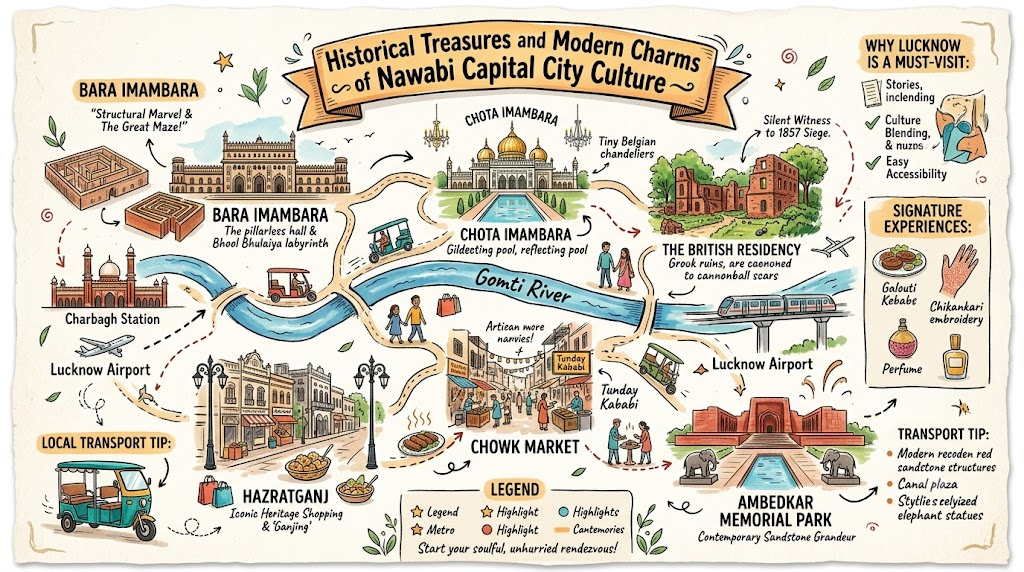
Lucknow stands as the beating heart of Awadh culture, blending profound historical significance with effortless modern accessibility. It is a city built on stories, where every gateway, garden, and grand hallway carries echoes of Nawabi patrons, British colonial encounters, and freedom struggles. Easily accessible via Chaudhary Charan Singh International Airport, an expansive high-speed railway network, and modern expressways, it welcomes weekenders, slow-travelers, and multi-generational families with equal warmth.
The city’s travel circuit seamlessly balances the historic heritage of Old Lucknow with the planned, manicured grandeur of Gomti Nagar. Whether you are tracing architectural wonders, shopping for fine Chikan embroidery, or embarking on a street-food pilgrimage, the city offers an extraordinarily rich itinerary.
| Travel Parameter | Details & Key Highlights |
|---|---|
| Ideal Trip Duration | 3 Days / 2 Nights for major heritage highlights |
| Peak Season | October to March (Pleasant, cool weather) |
| Connectivity Hubs | Lucknow Airport (LKO), Lucknow Charbagh Railway Station (LJN) |
| Signature Craft | Handcrafted Chikankari and Zardozi textiles |
| Food Essentials | Galouti Kebab, Kulcha-Nihari, Basket Chaat |
Top Places or Experiences
Bara Imambara
Built by Nawab Asaf-ud-Daula in 1784 as a grand famine-relief project, this massive complex stands as an incredible structural marvel. The central hall is one of the largest arched constructions in the world built without a single supporting beam or pillar, held together by interlocking brickwork and traditional rice-husk mortar.
Above this central hall lies the famous Bhool Bhulaiya, an intricate labyrinth of 1,000 narrow passages and 489 identical doorways designed to disorient unwelcome intruders. The elevated corridors offer breathtaking panoramic views of the entire historic quarter.
Bara Imambara architectural marvel.
- Location: Machchhi Bhavan, Old Lucknow; approximately 5 km from the city center.
- Why it is worth visiting: Unmatched Awadhi engineering featuring the world-famous pillarless central vault and the intriguing labyrinth.
- Best things to do: Navigate the Bhool Bhulaiya maze, inspect the acoustics in the whispering galleries, and admire the stepwell (Shahi Baoli).
- Best time to visit: Early morning between 8:30 AM and 10:30 AM to beat heat and crowds.
- Ideal for whom: History buffs, architecture lovers, and curious family travelers.
- Travel tip: Hire an official government-approved guide at the main gate; attempting the maze without one guarantees getting lost.
Chota Imambara
Also known as the Palace of Lights, this exquisite monument was constructed by Nawab Muhammad Ali Shah in 1838 as a congregation hall for Shiite Muslims and a personal mausoleum. The structure displays intricate Indo-Islamic and Persian design, featuring gilded domes, delicate calligraphy, and marble courtyards.
During festive occasions, the interior shines under hundreds of Belgian glass chandeliers, ornate brass lamps, and crystal glasswork imported directly from Europe during the 19th century.
The gilded Chota Imambara.
- Location: West of Bara Imambara, Old Lucknow; roughly 6 km from Charbagh Railway Station.
- Why it is worth visiting: Magnificent interior chandelier collection and gilded decorative domes reflecting Nawabi affluence.
- Best things to do: Photograph the grand reflective pool, admire original European chandeliers, and explore the nearby Satkhanda watchtower.
- Best time to visit: Late afternoon around 4:00 PM for optimal outdoor golden-hour light.
- Ideal for whom: Photographers, heritage lovers, and art appreciators.
- Travel tip: Modest dress is strictly required; ensure shoulders and knees are covered before entering the prayer halls.
The British Residency
The historic Residency remains a deeply poignant silent witness to the Siege of Lucknow during the Indian Rebellion of 1857. Built in 1800 for the British Resident General, the sprawling compound once housed thousands of military personnel and civilians during the prolonged siege.
Today, the brick ruins stand inside peaceful, lush landscaped gardens. Cannonball scars still mark the weathered walls, offering visitors an authentic, unfiltered window into a crucial turning point in Indian colonial history.
- Location: Mahatma Gandhi Marg, Deep Narayan Road; 3.5 km from Hazratganj.
- Why it is worth visiting: An evocative historical landmark showcasing dramatic 1857 siege ruins surrounded by serene nature.
- Best things to do: Visit the on-site underground 1857 museum, explore the damaged banquet hall ruins, and walk through the tranquil botanical grounds.
- Best time to visit: Morning between 9:00 AM and 11:30 AM or late afternoon before sunset.
- Ideal for whom: History enthusiasts, solo travelers, and peaceful walking groups.
- Travel tip: Carry a water bottle and wear comfortable walking shoes as the grounds cover several acres.
Hazratganj
Established in 1810 by Nawab Saadat Ali Khan, Hazratganj serves as Lucknow’s iconic downtown heritage shopping boulevard. The entire market underwent a major Victorian-style redesign, unifying storefronts with pastel beige facades, black wrought-iron lamp posts, and classic signage.
Locals affectionately call strolling through this vibrant district “Ganjing.” It offers an engaging mix of traditional Chikan garment houses, historic bookshops, modern international brands, and legendary street eateries.
- Location: Central Business District, Lucknow city center; 3 km from Charbagh Station.
- Why it is worth visiting: Experiencing authentic “Ganjing” culture amid beautiful Victorian architecture and classic shops.
- Best things to do: Shop for authentic handcrafted Chikankari wear, relish legendary Royal Cafe Basket Chaat, and browse vintage books at Universal Booksellers.
- Best time to visit: Evening from 5:00 PM to 9:00 PM when the streetlights illuminate the promenade.
- Ideal for whom: Shoppers, street-food lovers, families, and evening walkers.
- Travel tip: Parking can be challenging; use e-rickshaws or local metro to drop off directly at Hazratganj station.
Ambedkar Memorial Park
Spanning over 107 acres in modern Gomti Nagar, this massive architectural park is constructed entirely from high-grade red sandstone quarried from Rajasthan. Dedicated to social reformers, the complex represents contemporary monument design on a scale rarely seen in modern urban planning.
The central pathway is flanked by 62 grand stone elephant statues, leading toward a giant central dome housing bronze statues and murals depicting historic social equality movements.
Ambedkar Memorial Park illuminated at night.
- Location: Vipul Khand, Gomti Nagar; approximately 8 km from old heritage zones.
- Why it is worth visiting: Mind-boggling modern monumental scale, red sandstone architecture, and dramatic lighting.
- Best things to do: Walk the grand elephant gallery, photograph reflections along the canal plaza, and enjoy sunset vistas.
- Best time to visit: Late evening around 6:00 PM when the entire park lights up against the night sky.
- Ideal for whom: Modern architecture fans, evening strolls, and photography enthusiasts.
- Travel tip: The open stone plaza gets very hot under direct sunlight; plan your visit exclusively for cooler evening hours.
Chowk Market Heritage Walk
The historic Chowk quarter represents the original beating heart of Old Lucknow, operating continuously for centuries as an artisan bazaar and culinary center. Its maze of narrow lanes is packed with master embroiderers, perfumers (attar distillers), silver-foil craftsmen, and century-old food stalls.
Walking through Chowk offers a rich sensory journey where the scent of roasting kebabs mixes with sweet floral perfumes and the metallic clatter of handcrafted jewelry workshops.
- Location: Old Lucknow area; 2 km west of Bara Imambara.
- Why it is worth visiting: Experiencing Old Lucknow’s authentic culinary roots, heritage handicraft lanes, and traditional attar shops.
- Best things to do: Taste melted Galouti Kebabs at Tunday Kababi, purchase wood-distilled floral attar, and observe live Zardozi embroidery work.
- Best time to visit: Evening from 6:30 PM to 9:30 PM for peak culinary energy.
- Ideal for whom: Culinary explorers, cultural enthusiasts, and street photographers.
- Travel tip: Avoid taking large cabs into the narrow lanes; take an e-rickshaw to the main chowk gate and explore on foot.
Offbeat Exploration: Hidden Gems Tourists Miss
The Dilkusha Kothhi Ruins
Located in a quiet residential corner, Dilkusha Kothi stands as the remains of an 1800 hunting lodge designed in the English Baroque style by Major Gore Ouseley. Unlike the grand Islamic monuments nearby, this roofless shell surrounded by manicured lawns offers a tranquil, uncrowded alternative for history lovers seeking quiet contemplation.
La Martiniere College Buildings
Built in the late 18th century as the grand country palace of French adventurer Claude Martin, Constantia (now part of La Martiniere College) is a striking hybrid of European Gothic and Indo-Saracenic styles. Its facade features gargoyles, Roman statues, and classical arches, offering one of the most unusual architectural photo backdrops in northern India.
Firangi Mahal
Hidden deep within the Chowk lanes, Firangi Mahal was originally owned by a French merchant before being transferred to royal scholars in the late 17th century. It became a historic seat of Islamic learning and played a pivotal role in the Indian Freedom Movement, hosting leaders like Mahatma Gandhi.
Detailed Practical Guidance for Travelers
| Destination | Standard Entry Fee | General Timings | Best Local Food Options Nearby | Recommended Nearby Attractions |
|---|---|---|---|---|
| Bara Imambara | ₹50 (Indian), ₹500 (Foreign) | 6:00 AM – 5:00 PM (Closed Mon) | Idrees Biryani, Rahim’s Nihari | Rumi Darwaza, Chota Imambara |
| Chota Imambara | Included in Imambara Combo Ticket | 6:00 AM – 5:00 PM | Local roadside Awadhi Sweet shops | Clock Tower, Satkhanda |
| British Residency | ₹25 (Indian), ₹300 (Foreign) | 7:00 AM – 6:00 PM | Dastarkhwan (Lalbagh branch) | Hazratganj, Begum Kothhi |
| Hazratganj | Free public access | 10:00 AM – 10:00 PM | Royal Cafe, Sharma Tea Stall | Janeshwar Mishra Park |
| Ambedkar Park | ₹20 per head | 11:00 AM – 9:00 PM | Vintage Machine Cafe, Gomti Riverfront | Gomti Riverfront Park |
| Chowk Market | Free public access | 11:00 AM – 10:30 PM | Tunday Kababi, Mubeen’s, Pandit Raja Thandai | Firangi Mahal, Akbari Gate |
Logistics & On-Ground Navigation
Local Transport Options
- Lucknow Metro: Fast, clean, air-conditioned, and efficient for traveling north-to-south between the airport, Charbagh Railway Station, and Hazratganj.
- Auto & E-Rickshaws: The undisputed kings of navigating Old Lucknow’s narrow alleys. Always negotiate rates beforehand or request meter usage.
- App-Based Cabs: Uber and Ola operate reliably across Lucknow, making them ideal for trips to Gomti Nagar and outlying parks.
Budget Planning
- Backpacker / Budget Tier: ₹1,200 – ₹2,000 per day. Covers budget heritage guesthouses, public metro/e-rickshaws, street food feeds, and basic entry tickets.
- Comfort / Mid-Range Tier: ₹3,500 – ₹6,500 per day. Covers boutique 3/4-star hotel stays, private cab rentals, sit-down Awadhi specialty restaurants, and guided monument tours.
Safety and Inclusivity Tips
- Families: The city is exceptionally welcoming to multi-generational family groups. Stick to well-lit main corridors in market zones after 9:00 PM.
- Couples: Public parks like Janeshwar Mishra and Gomti Riverfront are safe and friendly for couples enjoying casual evening walks.
- General Safety: Old market lanes get densely packed during peak evening hours; keep wallets and smartphones secured in front pockets.
Local Secret: When dining at traditional eateries in Old Lucknow, ask for small tasting portions so you can sample dishes across multiple historic stalls without feeling overly full.
Strategic Travel Planning Guardrails
Travel Planning Tips for Lucknow
- Book winter accommodation (November to February) well in advance, as heritage hotels fill up quickly during peak wedding and holiday seasons.
- Keep moderate physical cash on hand for street-food vendors and e-rickshaws in Old Lucknow where digital network coverage can lag.
- Respect local customs at active religious sites; remove footwear and cover your head when requested inside sacred corridors.
- Schedule heavy sightseeing for early mornings to avoid peak afternoon traffic in old city zones.
- Purchase the combined entry ticket at Bara Imambara to save money on nearby heritage monuments.
Common Mistakes to Avoid
- Attempting to drive full-sized rental cars into the narrow lanes of Chowk or Aminabad during peak business hours.
- Rushing through the culinary scene in a single day; Lucknow’s food demands slow, deliberate exploration over multiple meals.
- Assuming every shop accepts credit cards; smaller handicraft vendors operate primarily via cash or UPI.
- Skipping modern areas like Gomti Nagar entirely in favor of focusing exclusively on old historical zones.
- Paying full quoted prices to street vendors without polite, customary negotiation.
Suggested Itinerary Blueprints
1. Day Quick Dash (Nawabi Heritage Sprint)
- Target Audience: Express travelers, transit visitors, and weekend stopovers.
- Morning: Start at 8:30 AM at Bara Imambara to explore the hall and Bhool Bhulaiya. Walk through Rumi Darwaza to visit Chota Imambara.
- Afternoon: Lunch at Akbari Gate for authentic Galouti Kebabs. Spend an hour strolling through the historic Residency gardens.
- Evening: Finish with light shopping and dinner in Hazratganj at Royal Cafe.
2. Day Deep-Dive (Heritage, Food & Culture Loop)
- Target Audience: Culture enthusiasts, foodies, and relaxed weekend travelers.
- Day 1 (Old Lucknow Heritage & Culinary):
- Morning: Complete exploration of Bara Imambara, Shahi Baoli, and Chota Imambara.
- Afternoon: Lunch at Idrees Biryani. Take an afternoon heritage walk through Firangi Mahal and Chowk art studios.
- Evening: Culinary tour around Akbari Gate sampling Kulcha-Nihari and authentic Paan.
- Day 2 (Colonial History & Modern Landmarks):
- Morning: Visit the British Residency and explore La Martiniere College.
- Afternoon: Lunch in Hazratganj followed by Chikan embroidery shopping at heritage emporiums.
- Evening: Sunset visit to Ambedkar Memorial Park followed by riverside walks along Gomti Riverfront Park.
3. Complete Weekend Travel Plan (The Ultimate Awadh Experience)
- Friday Evening: Arrive, check into your hotel, and enjoy a relaxed dinner at Dastarkhwan near Lalbagh.
- Saturday: Follow the Day 1 Deep-Dive itinerary exploring Old Lucknow’s monuments, Chowk artisan bazaars, and traditional food alleys.
- Sunday: Follow the Day 2 Deep-Dive path through the Residency, Hazratganj, and Gomti Nagar’s modern sandstone parks before departing.
Common Tourist Mistakes to Avoid
- Geographic Blunders: Trying to combine geographically opposed zones like Chowk (far West) and Gomti Nagar Extension (far East) during peak morning rush hour.
- Commercial Traps: Spending precious vacation hours inside modernized air-conditioned shopping malls rather than soaking up the atmospheric charm of traditional bazaars.
- Neglecting Modern/Alternative Zones: Forgetting to explore the quieter, cafe-centric expansions of Gomti Nagar, which feature green parks and contemporary art spaces.
- Transport Overpayment: Failing to use ride-hailing apps or standard meter guidelines when hiring auto-rickshaws outside major rail and airport terminals.
- Luxury Dining Bias: Sticking exclusively to hotel buffets and missing out on street-level vendors whose secret recipes have been perfected over generations.
Frequently Asked Questions
1. What is the best time of year to plan a trip to Lucknow?
The optimal period to visit is between October and March when the weather is cool and pleasant, ideal for outdoor monument exploration.
2. How many days are sufficient to experience the city fully?
A 3-day itinerary allows you to comfortably explore main heritage monuments, complete shopping trips, and enjoy a thorough culinary tour without rushing.
3. Is Lucknow safe for solo female travelers?
Yes, the city is generally safe and welcoming. Standard urban travel precautions should be followed during late-night transit in quieter areas.
4. What is the most famous food item to try in Old Lucknow?
The soft, slow-cooked Galouti Kebab served with Ulta Tawa Paratha is the absolute flagship culinary creation of Awadhi cuisine.
5. Are photography and videography allowed inside the Bara Imambara?
Photography is permitted in main courtyards and the labyrinth, though tripod usage and commercial video recording require special advance permits.
6. What is the best area to stay for first-time visitors?
Hazratganj and Gomti Nagar offer the best balance of safety, high-end hospitality, clean surroundings, and easy transit connectivity.
7. How do I ensure I am buying genuine Chikankari embroidery?
Purchase garments from established heritage emporiums in Hazratganj or direct master workshops in Chowk, checking for delicate hand-sewn knotwork on the reverse side.
8. Is the Bhool Bhulaiya suitable for young children or elderly visitors?
While children enjoy the maze, the narrow staircases and steep steps require decent mobility and may be challenging for elderly travelers.
9. Can I visit the historical monuments on Mondays?
Major government-managed monuments like the Bara Imambara and Chota Imambara remain closed to tourists on Mondays for routine maintenance.
10. What local transport is best for navigating Old Lucknow’s narrow alleys?
Electric rickshaws (e-rickshaws) are by far the cleanest, cheapest, and most efficient mode of transport through tightly packed bazaar streets.
11. Do restaurants in Lucknow offer good options for vegetarian travelers?
Absolutely. While famous for non-vegetarian kebabs, Lucknow offers legendary vegetarian delights like Basket Chaat, Khasta Kachori, and Pandit Raja Thandai.
12. Is cash required, or are digital payments widely accepted across markets?
Digital UPI payments are accepted almost everywhere, though keeping small cash denominations handy is useful for small rickshaw fares and street stalls.
Conclusion
Choosing a journey to Lucknow means choosing an enriching immersive dive into a world where history lives, breathes, and welcomes you like an old friend. Beyond its breathtaking domes and legendary kitchens lies a city defined by warmth, respect, and timeless grace. Leaving its historic corridors, you carry home far more than photographs—you carry the sweet memory of Awadhi hospitality, delicate aromas of attar, and the unforgettable spirit of tehzeeb.
