Introduction
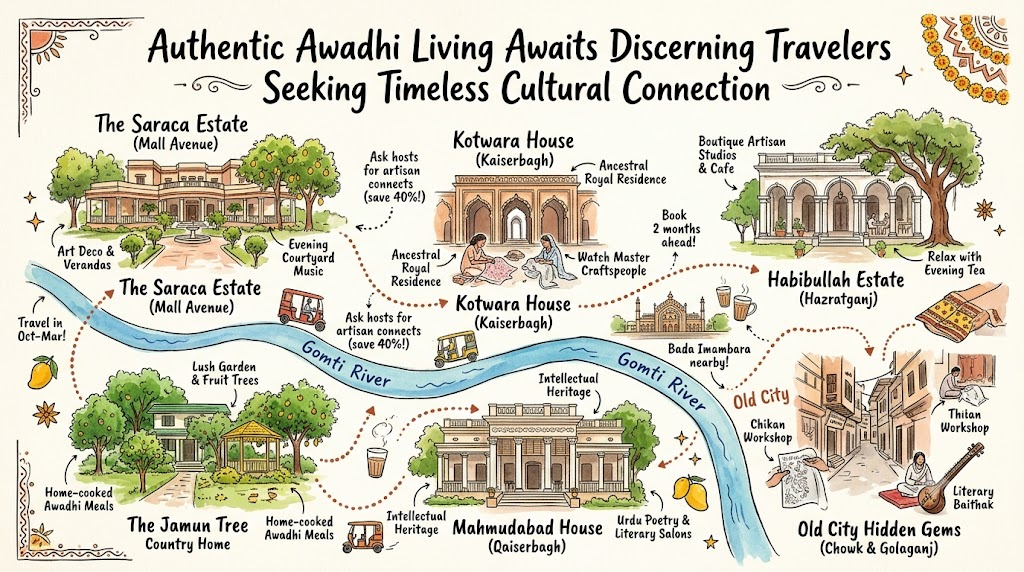
Modern leisure travel often traps travelers in crowded tourist hotspots and sterile hotel corridors that lack regional character. Lucknow offers an antidote to that cookie-cutter tourism through its living heritage, literary salons, and aristocratic warmth. To truly understand this historic city, one must experience the legendary etiquette of Awadhi hospitality from within local residential estates. Staying at a heritage homestay allows you to sip saffron chai in peaceful internal courtyards, listen to stories from native hosts, and experience authentic community life.
Why Lucknow is a must-visit city
Lucknow represents a vital chapter of North Indian culture, standing as the cradle of refined Urdu poetry, classical Kathak dance, and world-renowned Awadhi gastronomy. Geographically anchored along the Gomti River basin, it has evolved from an 18th-century courtly epicenter into a vibrant metropolis. High-speed expressways, an international airport, and modern rail infrastructure make the city accessible to heritage seekers, culinary travelers, and slow-tourism enthusiasts alike.
The city’s travel circuit smoothly links historic colonial and nawabi quarters with quiet garden suburbs and bustling craft bazaars. Choosing homestays instead of generic commercial hotels embeds you directly into this cultural fabric, connecting you with generational culinary traditions and craft preservation.
| Travel Dimension | Overview |
|---|---|
| Best Travel Months | October to March (Pleasantly cool days and crisp evenings) |
| Ideal Stay Duration | 3 to 4 Days for deep neighborhood immersion |
| Gateway Hubs | Chaudhary Charan Singh International Airport, Charbagh Junction Station |
| Core Heritage Vibe | Aristocratic courtliness (tehzeeb), artisanal Chikan embroidery, ancestral hospitality |
Best Places or Experiences
The Saraca Estate Experience
The Saraca Estate in Mall Avenue captures the essence of classic 1930s Awadhi residential architecture with its sprawling verandas, sprawling lawns, and central courtyard. Built by prominent local aristocrats, the estate preserves vintage art deco flooring, period rosewood furniture, and high ceilings that keep rooms cool naturally.
Staying here introduces guests to refined courtyard living. Mornings begin with birdsong across ancient mango trees, followed by curated conversations with hosts about Awadhi court traditions, royal lineage, and architectural conservation.
Historic Saraca Estate in Mall Avenue.
- Location: Mall Avenue, approximately 3.5 km from Lucknow Charbagh Railway Station.
- Why it is worth visiting: Pristine art deco and Indo-Saracenic residential architecture paired with authentic family hospitality.
- Best things to do: Take an early morning walking tour of the gardens, join evening courtyard musical sessions, and sample home-style Awadhi dishes prepared using heirloom family recipes.
- Best time to visit: Late afternoon through crisp winter evenings (November to February).
- Ideal for whom: Couples seeking quiet romance, solo culture writers, and architecture enthusiasts.
- Travel tip: Request upper-floor terrace rooms to enjoy panoramic views across heritage canopies at sunrise.
Kotwara House in Kaiserbagh
Kotwara House stands inside the historic Kaiserbagh palace complex, serving as the ancestral residence of the royal Kotwara dynasty, led by renowned filmmaker Muzaffar Ali. This estate serves as a living museum, housing vintage textiles, royal portraits, antique palanquins, and traditional crafts.
Guest accommodations combine authentic history with artistic warmth. Stays often include encounters with traditional crafts, as the estate runs social initiatives promoting fine Zardozi and Chikankari embroidery.
Courtyard arches at Kotwara House.
- Location: Kaiserbagh Palace Complex, about 4 km north of Charbagh Station.
- Why it is worth visiting: Unrivaled access to royal Awadhi design, fine art collections, and heritage revival workshops.
- Best things to do: Tour the private family art gallery, watch master craftspeople demonstrate hand embroidery, and enjoy an authentic Awadhi dinner served in the inner courtyard.
- Best time to visit: October to March, particularly around sunset when courtyard lamps are lit.
- Ideal for whom: Culture enthusiasts, textile collectors, and slow travelers.
- Travel tip: Book your stay well in advance, as family-hosted guest suites are limited.
Habibullah Estate Retreat
Habibullah Estate in Hazratganj provides a peaceful heritage sanctuary right next to the city’s historic retail district. Built during the colonial nawabi era, the estate features high-columned porticos, sprawling green lawns, and brick archways sheltered from street noise.
The property blends historical charm with creative spaces, housing boutique artisan studios, an organic cafe, and family-managed suites. Staying here puts you steps away from Hazratganj’s iconic street life while maintaining the tranquility of a countryside estate.
Artisan compound at Habibullah Estate.
- Location: 11 Mahatma Gandhi Marg, Hazratganj, 3 km from the central station.
- Why it is worth visiting: Combines prime downtown walkability with an authentic aristocratic country-house atmosphere.
- Best things to do: Browse curated craft boutiques within the outhouses, relax with evening tea under decades-old tamarind trees, and take guided walking tours of Hazratganj.
- Best time to visit: Midday to late evening for optimal courtyard shade and pleasant cafe weather.
- Ideal for whom: Independent cultural travelers, creative professionals, and boutique shoppers.
- Travel tip: Enter via the MG Marg private driveway to bypass central Hazratganj market traffic.
The Jamun Tree Country Home
Located in a quiet green neighborhood away from city traffic, The Jamun Tree is a family-run boutique homestay surrounded by mature fruit trees and flowerbeds. The property emphasizes eco-friendly living, quiet library spaces, and home-cooked regional meals.
The hosts take pride in introducing travelers to local traditions, sharing insider dining tips and organizing private neighborhood heritage walks. It serves as a comfortable, peaceful base for extended creative stays.
- Location: Near Faizabad Road corridor, roughly 8 km from central Hazratganj.
- Why it is worth visiting: Genuine family-run warmth, lush garden surroundings, and home-cooked Awadhi meals.
- Best things to do: Read in the sunny garden pavilion, join host-led cooking demonstrations for family vegetarian curries, and borrow estate bicycles to explore nearby parks.
- Best time to visit: Winter mornings when dew covers the lawns and outdoor breakfast is served.
- Ideal for whom: Remote workers, multi-generational families, and extended-stay writers.
- Travel tip: Request meals a few hours in advance, as the home kitchen sources produce fresh daily.
Mahmudabad House Experience
Mahmudabad House in Qaiserbagh reflects the intellectual and literary heritage of one of Awadh’s premier aristocratic houses. Built with classical stucco ornamentation, spacious library verandas, and Persian-carpeted sitting rooms, the estate evokes the historic courtly era.
Guests enjoy intimate conversations with hosts on history, Urdu poetry, and musicology. The homestay provides an authentic cultural immersion, welcoming travelers as respected houseguests rather than commercial clients.
- Location: Qaiserbagh heritage quarter, 4 km from Charbagh Railway Station.
- Why it is worth visiting: Direct immersion in Awadhi poetry, classical scholarship, and traditional family hosting.
- Best things to do: Browse family archives of historic manuscripts, attend evening poetry readings when hosted, and savor slow-cooked Awadhi dishes.
- Best time to visit: Evening hours from November to February for courtyard gatherings.
- Ideal for whom: Writers, historians, and literary travelers.
- Travel tip: Respect private family protocol and arrange arrivals in advance to meet your hosts.
Offbeat Exploration: Hidden Gems Tourists Miss
The Chikan Embroidery Workshops of Chowk
While tourists usually shop at commercial retail showrooms, the genuine craft heart beats in the narrow residential quarters of Chowk. Booking a tour through your homestay host lets you visit home workshops where generational artisans perform delicate shadow-work and murri needlecraft.
Golaganj Literary Salons
Tucked inside historic bungalows in Golaganj are private literary societies that host traditional Baithaks. Guests can listen to classical sitar, thumri vocals, and Urdu poetry recitals in an intimate setting that commercial stages cannot replicate.
Firangi Mahal Heritage Quarter
Once an internationally renowned center of Islamic scholarship and home to Mahatma Gandhi during his city visits, this historic neighborhood features winding lanes, carved wooden doorways, and quiet community life untouched by mass tourism.
Detailed Practical Guidance for Travelers
| Destination | Standard Entry Fee | General Timings | Best Local Food Options Nearby | Recommended Nearby Attractions |
|---|---|---|---|---|
| The Saraca Estate | Guest Room Tariff | Check-in 2:00 PM / Check-out 11:00 AM | Azrak fine Awadhi dining, Mall Avenue | La Martiniere College |
| Kotwara House | Private Guest Access | Check-in 1:00 PM / Check-out 11:00 AM | Dastarkhwan near Tulsi Theatre | Safed Baradari, Begum Hazrat Mahal Park |
| Habibullah Estate | Free compound walk | 10:00 AM – 9:00 PM | Cherry Tree Cafe, Rovers Chaat | Hazratganj Promenade, General Post Office |
| The Jamun Tree | Guest Room Tariff | Check-in 12:00 PM / Check-out 10:30 AM | Home-cooked Awadhi meals on site | Indira Gandhi Pratishthan, Lohia Park |
| Mahmudabad House | Prior Appointment | Check-in 2:00 PM / Check-out 11:00 AM | Tunday Kababi, Aminabad branch | Bada Imambara, Residency Complex |
Logistics & On-Ground Navigation
Local Transport Options
- Metro Network: The North-South Metro corridor connects the airport with central Hazratganj, providing clean, punctual transport.
- E-Rickshaws: The most efficient option for short rides through narrow heritage lanes in Chowk, Kaiserbagh, and Aminabad.
- App-Based Taxis: Ola, Uber, and local radio cabs operate reliably across the city, ideal for day trips or airport transfers.
- Heritage Walking: The best way to explore historic central districts like Kaiserbagh, Hazratganj, and the Residency is on foot.
Budget Planning
- Budget / Cultural Backpacking: ₹1,500 – ₹2,500 per day (local homestay rooms, metro transit, and iconic street-side kebab stalls).
- Mid-Range / Heritage Comfort: ₹5,500 – ₹9,000 per day (boutique heritage homestay suites, private auto hires, and curated dining).
Safety and Inclusivity Tips
- Families: Residential homestay neighborhoods are quiet, secure, and well-lit, offering safe environments for young children and elderly travelers.
- Couples: Heritage homestays provide discreet, peaceful settings with private gardens far removed from noisy downtown commercial blocks.
- General Safety: Keep basic cash handy for e-rickshaws, and dress modestly when visiting residential areas or active religious monuments.
Local Secret: Always consult your homestay host before buying handcrafted Chikan garments; they can introduce you directly to master artisans, saving you 40% over retail showroom markups.
Strategic Travel Planning Guardrails
Travel Planning Tips for Lucknow
- Book heritage homestays at least two months ahead for peak winter travel between November and February.
- Keep UPI digital payment apps active, but keep smaller paper bills (₹10 to ₹100) ready for rickshaws and street vendors.
- Coordinate with hosts regarding meal preferences in advance, as homestay kitchens cook authentic dishes fresh to order.
- Pack comfortable slip-on footwear for ease of removal when entering traditional living rooms and monuments.
- Allocate at least one full unscheduled afternoon simply to relax on residential garden verandas.
Common Mistakes to Avoid
- Packing your itinerary so tightly that you miss out on relaxing host conversations and slow afternoon tea.
- Choosing modern highway hotels that disconnect you from the historic city core.
- Missing out on seasonal culinary specialties like winter Makhan Malai by waking up too late in the morning.
- Relying exclusively on large private cars, which get trapped in narrow heritage district alleyways.
- Buying mass-produced machine embroidery marketed to tourists instead of authentic handcrafted needlework.
Suggested Itinerary Blueprints
1-Day Quick Dash (Colonial & Nawabi Core)
Designed for travelers on a tight schedule seeking an authentic taste of historic Lucknow.
- Morning: Enjoy home-cooked Parathas at your homestay, followed by a walk through the historic British Residency.
- Afternoon: Tour Kotwara House and the Kaiserbagh Palace complex, stopping for authentic kebabs in nearby Lalbagh.
- Evening: Stroll down the Hazratganj promenade and enjoy tea on the lawns of Habibullah Estate.
2-Day Deep-Dive (Heritage, Craft & Culinary Immersion)
A balanced two-day itinerary blending historical monuments, craft preservation, and culinary discovery.
- Day 1: Explore Bada and Chhota Imambara in the morning, tour Chowk’s hidden embroidery alleys with your host in the afternoon, and sample traditional street food at night.
- Day 2: Spend a quiet morning on the verandas of your homestay, explore La Martiniere College’s architecture, and end with an evening music session at Saraca Estate.
Complete Weekend Travel Plan (The Aristocratic Awadh Loop)
A comprehensive three-day loop for slow-travel enthusiasts.
- Friday: Check into your heritage homestay, unwind in the garden courtyard, and take a relaxed evening walk through Hazratganj.
- Day 2: Take a morning architectural tour of Kaiserbagh, attend a craft workshop at Kotwara House, and enjoy a curated family dinner with your hosts.
- Sunday: Wake up early to taste fresh Makhan Malai in Chowk, tour the Mahmudabad library archives, and finish your trip with sunset tea by the Gomti Riverfront.
Common Tourist Mistakes to Avoid
- Geographic Blunders: Attempting to combine Old Lucknow’s Chowk bazaar with distant Gomti Nagar attractions on the same afternoon wastes hours in crosstown traffic.
- Commercial Traps: Spending your time in modern shopping malls instead of exploring historic bazaars like Janpath, Aminabad, and Chowk.
- Neglecting Modern/Alternative Zones: Overlooking leafy residential areas like Mall Avenue and Gomti Nagar’s expansive parks leaves you with an incomplete view of the city.
- Transport Overpayment: Always negotiate auto-rickshaw fares beforehand or verify pricing on ride-hailing apps to ensure fair rates.
- Luxury Dining Bias: Eating only at high-end hotel restaurants deprives you of legendary, family-run food stalls that have perfected their recipes over generations.
Frequently Asked Questions
1. What makes staying at a homestay in Lucknow better than a conventional luxury hotel?
Staying at an authentic homestay connects you directly with local families, historic architecture, and traditional Awadhi etiquette. Guests enjoy personalized meals prepared from heirloom family recipes, quiet garden courtyards, and valuable insider advice that commercial hotel concierges simply cannot provide.
2. Are homestays in Lucknow suitable and secure for solo female travelers?
Yes, heritage homestays across neighborhoods like Mall Avenue, Civil Lines, and Hazratganj provide safe, secure environments with attentive family hosts, private security, and reliable transport coordination for solo women exploring the city.
3. Can homestay kitchens accommodate strict vegetarian or dietary preferences?
Most homestay hosts are happy to adjust their home-cooked meals for vegetarian, vegan, or mild spice preferences when notified in advance, preparing wholesome regional lentil, paneer, and vegetable dishes.
4. How far in advance should I reserve a heritage homestay for winter travel?
Because boutique homestays typically maintain only two to six guest suites, booking two to three months ahead is recommended for peak travel between November and February.
5. What is the standard price range for a quality homestay in the city?
Nightly rates range from ₹2,000 to ₹4,000 for standard guest rooms, while restored aristocratic suites and boutique heritage residences range from ₹6,000 to ₹12,000 per night.
6. Do homestay hosts help arrange local heritage walks and craft tours?
Yes, many hosts have deep roots in local cultural preservation and can arrange private walking tours, textile studio visits, and meetings with master artisans.
7. Which neighborhoods offer the best base for exploring on foot?
Hazratganj, Kaiserbagh, and Mall Avenue are the most walkable neighborhoods, offering quiet, tree-lined streets close to major monuments, heritage cafes, and metro stations.
8. Is Wi-Fi connectivity fast enough for remote work in local homestays?
Most urban homestays provide reliable, high-speed fiber broadband connections, making them suitable for remote workers and creative professionals on extended working trips.
9. Are house rules at local homestays overly restrictive for evening outings?
Hosts respect guest independence while maintaining reasonable night curfews (typically around 10:30 PM to 11:00 PM) for household security. Simply notify your host in advance if you plan to return late.
10. What is the best way to travel between the airport and central homestays?
Prepaid airport taxis or ride-hailing apps like Uber provide reliable 25 to 40-minute transfers directly to your homestay entrance at fixed, fair prices.
11. Can homestays arrange authentic Awadhi home-cooked non-vegetarian feasts?
Yes, several aristocratic homestays specialize in multi-course Awadhi dinners featuring slow-cooked biryanis, kormas, and kebabs prepared with traditional spice blends.
12. Do homestays provide practical parking space for personal or rental cars?
Most residential homestays in Mall Avenue and Hazratganj provide secure, gated on-site parking for travelers arriving by private vehicle.
Conclusion
Choosing a homestay in Lucknow transforms your visit from a standard vacation into a personal, culturally enriching journey. Sharing morning tea on a quiet veranda, hearing family stories handed down across generations, and experiencing genuine Awadhi warmth leaves an impression that impersonal hotels cannot match. You arrive as a curious traveler, but you leave as a lifelong friend of the city.
