Introduction
Most popular urban destinations greet modern travelers with crowded transit centers, relentless traffic jams, and identical commercial districts. Lucknow offers something entirely different: an unhurried capital where historic neighborhoods still embrace the courtly grace of Awadh. Instead of sterile tourist bubbles, staying here places you directly inside living heritage.
Choosing the right base in the city shapes your entire journey. Each district carries its own distinct atmosphere, from the colonial arches of Hazratganj to the sleek boulevards of Gomti Nagar and the historic lanes of Chowk. Finding the right location lets you experience the city’s warmth, poetry, and culinary traditions directly from your doorstep.
Why Lucknow is a must-visit city
Lucknow serves as the beating cultural heart of the Indo-Gangetic plains, standing as a living monument to architectural innovation and literary sophistication. The Nawabs of Awadh blended Persian elegance with regional Indian traditions, creating a distinct civilization renowned for refined etiquette, Urdu poetry, classical Kathak dance, and world-class cuisine. From the vaulted, unsupported arch of the Bara Imambara to the delicate strokes of Chikankari embroidery, the city rewards slow, appreciative exploration rather than rushed sightseeing.
Beyond its artistic heritage, the modern capital offers exceptional logistical convenience for all traveler types. The Agra-Lucknow and Purvanchal Expressways ensure smooth road journeys, while an advanced international airport and comprehensive railway network link it across India. Its boutique guest houses, heritage properties, and business hotels cater seamlessly to solo backpackers, couples, and multi-generational families.
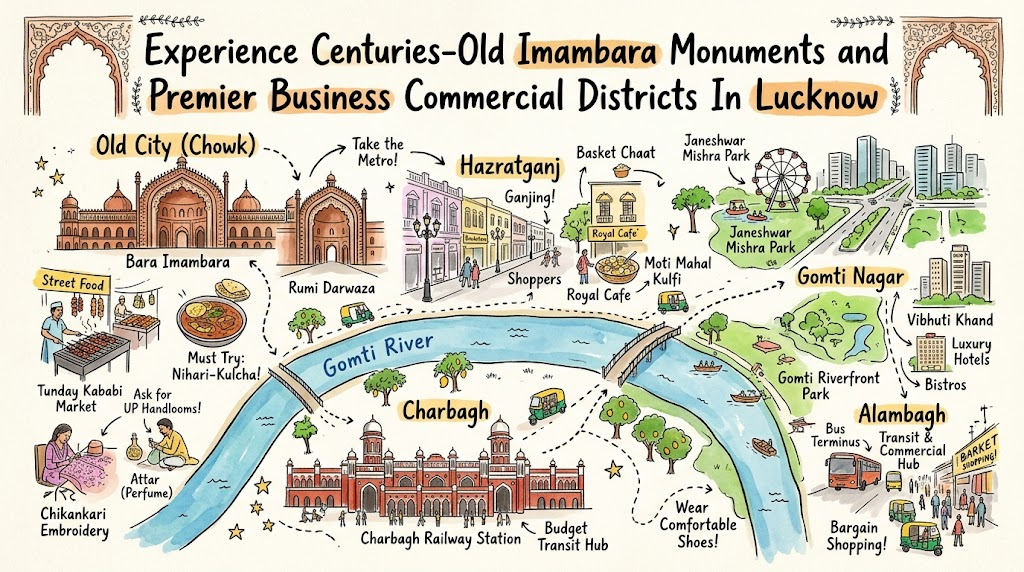
The city’s travel circuit naturally divides across the Gomti River into three primary sectors: the atmospheric, monument-rich Old City; the central heritage shopping hub; and the sprawling, modern trans-Gomti residential expansion.
| Key Fact | Details |
|---|---|
| Geographic Coordinates | 26.8467° N, 80.9462° E along the Gomti River |
| Best Travel Season | October to March (Crisp mornings, pleasant afternoons) |
| Transit Hubs | Chaudhary Charan Singh International Airport (LKO), Charbagh Railway Station (LKO/LJN) |
| Primary Base Districts | Hazratganj, Gomti Nagar, Charbagh, Chowk, Alambagh |
| Famous Local Crafts | Chikankari, Zardozi, Attar perfumery, Bone carving |
[Best Places or Experiences]
Hazratganj
Hazratganj is the beating cosmopolitan heart of Lucknow, designed in the nineteenth century as an imperial shopping corridor and transformed into an elegant heritage promenade. Lined with uniform pastel-cream colonial facades, wrought-iron lampposts, and wide sidewalks, it invites travelers to indulge in the cherished local evening ritual known as Ganjing.
Staying in Hazratganj places you right at the junction of the city’s historic core and modern suburbs. Heritage hotels, lively bookstores, vintage cinema halls, and legendary multi-generational sweetshops sit within walking distance, making it the premier urban base for first-time visitors who want walkable access to culture and dining.
The historic facades of Hazratganj.
- Location: Central Lucknow, roughly 4 km north of Charbagh Railway Station and 14 km from Chaudhary Charan Singh Airport.
- Why it is worth visiting: Unmatched walkability, historic architecture, and immediate access to famous local cafes, handicraft emporiums, and metro stops.
- Best things to do: Join locals for an evening walk down the main promenade, browse classic titles at the historic Ram Advani Booksellers, and enjoy crisp Basket Chaat at Royal Cafe.
- Best time to visit: Late afternoons and evenings from 4:30 PM to 9:30 PM, particularly from October through February.
- Ideal for whom: First-time travelers, solo wanderers, culture enthusiasts, and couples who enjoy walkable urban settings.
- Travel tip: Traffic on the main strip is strictly monitored, making pedestrian walking pleasant, but side lanes get crowded during weekday office hours.
Gomti Nagar
Gomti Nagar represents the sophisticated, contemporary face of Lucknow, functioning as one of India’s largest planned residential and commercial townships. Characterized by wide four-lane boulevards, peaceful gated neighborhoods, and sprawling urban parks, this district offers quiet retreats away from inner-city congestion.
Travelers choosing Gomti Nagar enjoy luxury five-star hotels, rooftop lounges, boutique cafes, and sprawling waterfront developments. It serves as an ideal base for families and business travelers who value modern room amenities, dependable parking, and quick access to green recreational spaces.
Modern riverside boulevards in Gomti Nagar.
- Location: Trans-Gomti Eastern Zone, approximately 8 km from Hazratganj and 20 km from the airport.
- Why it is worth visiting: Excellent modern hospitality standards, tree-lined boulevards, and proximity to massive urban parks.
- Best things to do: Take an evening sunset cruise along Gomti Riverfront Park, cycle the tracks of Janeshwar Mishra Park, and dine at contemporary rooftop bistros in Vibhuti Khand.
- Best time to visit: November through February for open-air park strolls and pleasant waterfront dining.
- Ideal for whom: Families with children, corporate travelers, luxury seekers, and visitors seeking quiet nights.
- Travel tip: The area is spread across numbered sectors, so verify your hotel’s exact block before hiring an auto-rickshaw.
Charbagh
Charbagh is the city’s classic railway district, anchored by the iconic Charbagh Railway Station. Built in 1914, the red-and-white station blends Mughal, Rajput, and British architectural styles, resembling an intricate palace with cupolas, towers, and arched corridors.
The surrounding neighborhood functions as a buzzing, round-the-clock transit hub packed with economical guest houses, budget hotels, and fast-service diners. Staying in Charbagh offers maximum efficiency for travelers catching early trains or navigating the city on a modest budget
The palace-like facade of Charbagh Station.
- Location: South-Central Lucknow, forming the city’s primary rail terminus, 11 km from the airport.
- Why it is worth visiting: Unbeatable connectivity to all transit lines, lively markets, and practical budget accommodation.
- Best things to do: Photograph the station’s architecture, taste hot Poori-Sabzi at local morning diners, and take direct metro lines to both the old town and the airport.
- Best time to visit: Year-round for transit utility; early mornings offer great street photography.
- Ideal for whom: Transit travelers, budget backpackers, rail enthusiasts, and quick-stop tourists.
- Travel tip: Walk two minutes beyond the main station entrance to catch the underground metro rather than negotiating with aggressive taxi touts.
Chowk
Chowk is the historic heart of Old Lucknow, holding centuries of courtly tradition, architectural marvels, and culinary heritage. Entering this labyrinth of winding lanes reveals historic Havelis, centuries-old attar perfumeries, metal workshops, and master embroiderers crafting fine Chikankari needlework.
Accommodation here primarily consists of atmospheric homestays and modest heritage residences. Staying inside or right beside Chowk immerses you in the sights, calls, and smells of traditional Awadh, letting you step straight out of your room into the city’s best historic street-food market
.
Heritage architecture and bustling lanes of Chowk
- Location: Old Lucknow, about 6 km northwest of Hazratganj and 7 km from Charbagh Station.
- Why it is worth visiting: Genuine historic immersion, close proximity to major Mughal-era monuments, and the epicenter of authentic Awadhi cuisine.
- Best things to do: Sample melt-in-the-mouth Galawati Kebabs at the original Tunday Kababi, watch artisans produce pure floral attar, and photograph vintage timber doorways.
- Best time to visit: Evening hours between 6:00 PM and 10:30 PM, when the bazaar’s barbecue grills and sweetshop displays come alive.
- Ideal for whom: Heritage researchers, passionate foodies, street photographers, and intrepid cultural travelers.
- Travel tip: Narrow lanes make car access difficult; use pedal-rickshaws or walk once you arrive in the district.
Alambagh
Alambagh began as an eighteenth-century royal garden complex along the old Kanpur highway and has developed into a major commercial gateway. Today, it features a modern multi-story bus terminus, bustling garment markets, and a wide array of mid-range business hotels.
Its strategic position along the primary airport corridor makes Alambagh a sensible base for travelers with tight business itineraries or early flight departures. The direct metro link connects you to central heritage zones within fifteen minutes, avoiding outer highway traffic.
- Location: South-West Corridor, roughly 4 km south of Charbagh and 8 km north of the airport.
- Why it is worth visiting: Convenient midway base between the flight terminal and the city center, offering excellent shopping bargains.
- Best things to do: Browse colorful textiles at the bustling Alambagh Market, explore the historic garden gateway memorials, and enjoy family dining at local North Indian restaurants.
- Best time to visit: Morning through early evening; October through March offers pleasant market browsing.
- Ideal for whom: Business visitors, flight-transit travelers, and budget-conscious families.
- Travel tip: Book accommodations within walking distance of the elevated metro stations to avoid peak-hour highway delays.
Offbeat Exploration: Hidden Gems Tourists Miss
The Residency Catacombs and Shaded Lawns
While visitors frequently admire the artillery-scarred brick towers of The British Residency, few explore the cool subterranean catacombs beneath the main banquet hall. These lower rooms sheltered hundreds of non-combatants during the siege of 1857. The quiet surrounding gardens provide a peaceful refuge for reading and contemplation away from urban noise.
Husainabad Clock Tower Water Tank
Directly beneath the tallest clock tower in India lies an expansive, reflective heritage reservoir. Overlooked by travelers rushing toward the Bara Imambara, this water body mirrors the Victorian clock tower and Gothic stone pavilions. It offers spectacular, quiet reflections for morning photography without crowds.
Nawab Asaf-ud-Daula’s Baoli at Imambara Complex
Hidden inside the complex of the Bara Imambara, this multi-tiered stepwell boasts an ingenious visual surveillance design. Built around a cool central well, the angled windows allowed ancient guards to watch incoming visitors’ water reflections long before they could see the guards.
Detailed Practical Guidance for Travelers
| Destination | Standard Entry Fee | General Timings | Best Local Food Options Nearby | Recommended Nearby Attractions |
|---|---|---|---|---|
| Hazratganj | Free public access | 10:30 AM – 10:00 PM | Basket Chaat at Royal Cafe, Kulfi at Moti Mahal | General Post Office, Begum Hazrat Mahal Park |
| Gomti Nagar | Free (Parks ₹10–₹20) | Open 24 Hours | Fine dining at Falaknuma, modern cafes at Summit | Janeshwar Mishra Park, Ambedkar Memorial |
| Charbagh | Station platform ₹10 | Open 24 Hours | Traditional Poori-Sabzi, roadside Mughlai diners | Charbagh Railway Station, Alambagh Market |
| Chowk | Free market entry | 11:00 AM – 11:00 PM | Tunday Kababi, Rahim’s Nihari, Ram Asrey sweets | Bara Imambara, Chhota Imambara, Rumi Darwaza |
| Alambagh | Free market access | 10:00 AM – 9:30 PM | Classic North Indian thalis, street Chaat vendors | Alambagh Memorial Gateway, Phoenix United Mall |
Logistics & On-Ground Navigation
Local Transport Options
- Lucknow Metro (Red Line): Highly efficient, clean, and air-conditioned, connecting the airport directly to Charbagh, Hazratganj, and the northern suburbs.
- E-Rickshaws: Plentiful, budget-friendly battery-operated shuttles ideal for short hops between metro stops and local neighborhood alleys.
- App-Based Taxis (Uber/Ola): The most comfortable option for cross-river journeys between Gomti Nagar, Alambagh, and old heritage monuments.
- Auto-Rickshaws: Abundant across all major street corners; ensure drivers use digital fare meters or negotiate the exact fare before boarding.
Budget Planning
- Budget Tier (Backpackers/Solo): ₹1,500 – ₹2,500 per day. Includes clean guest-house accommodation in Charbagh, metro transit, and traditional street meals.
- Mid-Range Tier (Couples/Families): ₹4,500 – ₹8,500 per day. Includes boutique hotels in Hazratganj or Gomti Nagar, private app-cab rides, guided walks, and sit-down Awadhi dinners.
Safety and Inclusivity Tips
- Families: Gomti Nagar and Hazratganj offer the most comfortable family environments, featuring smooth sidewalks, wide parks, and modern dining spots.
- Couples: Stick to well-patrolled public parks, licensed heritage cafes, and established brand hotels in central shopping and waterfront districts.
- General Safety: The city is welcoming, but travelers should keep personal belongings secure in dense Old City lanes and avoid unmetered late-night auto-rickshaws.
Local Secret: When shopping for genuine hand-embroidered Chikankari clothing, look for the Uttar Pradesh Handlooms or SEWA artisan outlets in Hazratganj to avoid synthetic machine-made copies sold at inflated tourist prices.
Strategic Travel Planning Guardrails
Travel Planning Tips for Lucknow
- Secure your winter hotel reservations at least four to six weeks in advance, as heritage hotels fill rapidly from November to February.
- Keep a mix of UPI mobile payment apps and small physical cash notes ready for buying food and crafts in Old City bazaars.
- Dress modestly with covered shoulders and knees when visiting active religious monuments like the Imambaras and Jama Masjid.
- Schedule your heavy monument walking tours during morning hours, saving the hot afternoons for air-conditioned museums or relaxing lunch breaks.
- Pick accommodations within walking distance of a Lucknow Metro Red Line station to bypass daily road congestion.
Common Mistakes to Avoid
- Booking a hotel on the extreme outskirts simply for minor savings, resulting in expensive daily taxi commutes into central districts.
- Attempting to explore both Old Lucknow monuments and trans-Gomti modern parks on the same afternoon across peak rush hours.
- Relying on large rental SUVs to explore the narrow alleyways of Chowk and Aminabad.
- Skipping traditional morning breakfast delicacies like warm Nihari-Kulcha or Jalebi-Makhan Malai in favor of hotel buffets.
- Forgetting that several central markets and state-run monument museums observe weekly closures on Mondays.
Suggested Itinerary Blueprints
1-Day Quick Dash (Heritage Express Loop)
Designed for transit visitors and business travelers who want to see the city’s key highlights in twenty-four hours.
- Morning: Tour the historic Bara Imambara complex and walk through the imposing Rumi Darwaza.
- Afternoon: Savor authentic Galawati Kebabs in Chowk, then head to Hazratganj for an afternoon shopping walk.
- Evening: Conclude your day with riverfront views and dinner along the illuminated Gomti Riverfront Park promenade.
2-Day Deep-Dive (Royal Awadh & Modern Horizons)
A balanced weekend journey pairing historic monuments with contemporary city sights.
- Day 1: Explore the historic Old City, starting at the British Residency, continuing through the Imambaras, and ending with an evening food tour in Chowk.
- Day 2: Spend a relaxed morning exploring Janeshwar Mishra Park, shop for Chikankari in Hazratganj, and finish with a rooftop dinner in Gomti Nagar.
Complete Weekend Travel Plan (The Grand Nawabi Circuit)
A comprehensive three-day loop covering the full cultural and geographic spectrum of the city.
- Friday: Arrive, settle into your hotel in Hazratganj, and enjoy an evening stroll along the heritage shopping strip followed by dinner at a classic cafe.
- Saturday: Spend the morning exploring the Old City’s monuments, visit the botanical gardens at Sikander Bagh, and take an evening street-food walk through Aminabad.
- Sunday: Discover the historic stepwell at the Imambara, take an afternoon boat ride in Gomti Nagar, and enjoy sunset photography at Dilkusha Kothi ruins.
Common Tourist Mistakes to Avoid
- Geographic Blunders: Don’t book morning tours in Chowk and afternoon activities in Gomti Nagar on the same day. Crossing the river bridges during peak hours wastes valuable holiday time in heavy traffic.
- Commercial Traps: Spending your entire trip inside air-conditioned shopping malls robs you of Lucknow’s authentic charm. Focus instead on traditional bazaars, heritage bookshops, and historic bazaars.
- Neglecting Modern/Alternative Zones: Skipping Gomti Nagar entirely leaves you with an incomplete impression of the city. Its riverside promenades and wide parks showcase the city’s successful modern urban planning.
- Transport Overpayment: Always cross-reference street auto fares with ride-hailing apps like Uber or Ola before agreeing to fixed cash prices with unmetered drivers.
- Luxury Dining Bias: Restricting your meals to upscale hotel dining rooms keeps you from experiencing the city’s true soul. The real magic of Awadhi cuisine lives in heritage family-run kitchens and traditional street vendors.
Frequently Asked Questions
1. Which area is best to stay in Lucknow for first-time tourists?
Hazratganj is the top neighborhood for first-time visitors because of its central location, colonial charm, and excellent walkability. Staying here places you within easy reach of top restaurants, traditional handicraft shops, and the central metro line, making trips to both historic monuments and modern districts effortless.
2. Is Gomti Nagar too far away from the main historic sightseeing monuments?
Gomti Nagar sits roughly eight to ten kilometers east of the primary Old City monuments. While not within walking distance, reliable app cabs and auto-rickshaws connect the two districts in twenty to thirty minutes, making it a comfortable base for families seeking luxury hotels and quieter, greener surroundings.
3. Are there good budget accommodations near Charbagh Railway Station?
Charbagh offers the city’s highest concentration of budget hotels, modest lodges, and passenger guest houses right outside the station gates. It is an ideal base for solo travelers, backpackers, and transit visitors who prioritize quick rail connections and affordable nightly rates over quiet surroundings.
4. Can tourists walk comfortably between the monuments in Chowk?
The major monuments within Chowk—including the Bara Imambara, Rumi Darwaza, and Chhota Imambara—sit relatively close together and can be explored on foot. However, the inner market lanes are crowded and narrow, so hiring a cycle-rickshaw is helpful for navigating comfortably between busy food stalls and textile alleys.
5. How safe is it for solo female travelers staying in central Lucknow?
Central neighborhoods like Hazratganj and planned districts like Gomti Nagar are safe and welcoming for solo female travelers. Both areas feature well-lit streets, reliable police patrols, and easy access to app-based cabs. Standard travel precautions apply when navigating crowded Old City bazaars late at night.
6. Which neighborhood is best for travelers focused primarily on local food?
Chowk and the adjacent Aminabad district are paradise for culinary travelers, placing you steps away from legendary culinary institutions like Tunday Kababi, Rahim’s Nihari, and century-old sweetshops. Staying here or in nearby Hazratganj guarantees easy, immediate access to the best street-food stalls in the city.
7. Does the Lucknow Metro connect directly to Chaudhary Charan Singh Airport?
Yes, the Lucknow Metro Red Line features a dedicated underground terminal station right outside the main airport arrival gates. The line runs north through Alambagh, Charbagh, and Hazratganj, providing a fast, air-conditioned transit option that bypasses road traffic during peak weekday morning and evening rush hours.
8. What is the typical room rate for comfortable mid-range hotels in the city?
Mid-range boutique hotels in central districts like Hazratganj and Gomti Nagar generally cost between ₹3,000 and ₹5,500 per night. These rates typically include air-conditioned rooms, complimentary breakfast, high-speed Wi-Fi, and helpful on-site travel desks that can arrange day tours and reliable city cab hires.
9. Are short-term homestays and heritage boutique properties available in Lucknow?
The city features a growing collection of restored colonial bungalows, traditional Awadhi Kothis, and boutique homestays, particularly around Hazratganj, Cantonment, and Mall Avenue. These properties provide a personal, character-rich stay, often featuring home-cooked meals and insider sightseeing tips from welcoming local families.
10. Is staying near the Gomti Riverfront convenient for families with young children?
Staying near the Gomti Riverfront or in Gomti Nagar is ideal for families with young kids. The area offers wide, traffic-free walking paths, open grass lawns, and large recreation grounds like Janeshwar Mishra Park, giving children plenty of space to run, play, and ride pedal boats safely.
11. Which area should business travelers choose for modern corporate amenities?
Business travelers should base themselves in Gomti Nagar, especially around Vibhuti Khand and Shaheed Path. This modern commercial district houses upscale business hotels, corporate office hubs, international convention facilities, and high-end dining spots, ensuring smooth logistics for busy schedules without inner-city commuting delays.
12. How many days should a tourist spend in Lucknow to see the city comfortably?
A stay of two to three full days allows travelers to experience both sides of the city comfortably without feeling rushed. This timeline provides enough space to explore the major historic monuments, shop for authentic handmade textiles, sample historic street-food circuits, and enjoy peaceful walks through the city’s scenic waterfront parks.
Conclusion
Choosing the right place to stay in Lucknow is the first step toward uncovering a city that lives at its own gracious, poetic tempo. Whether you wake to the early morning bustle of historic bazaars in Chowk, stroll past the colonial elegance of Hazratganj, or relax in the peaceful riverside avenues of Gomti Nagar, the capital embraces you with unmatched hospitality. Taking time to settle into its neighborhoods reveals why this legendary city remains one of India’s most enriching, soulful travel destinations.
