Introduction
Receiving a complex medical diagnosis changes everything in an instant, creating an immediate need for clear direction and reliable medical guidance. Navigating oncology care requires navigating complex terminology, diverse clinical trials, and varied treatment protocols across institutions worldwide. Families often feel overwhelmed when searching through countless websites to find the best hospital for cancer treatment tailored specifically to their pathology and personal situation.
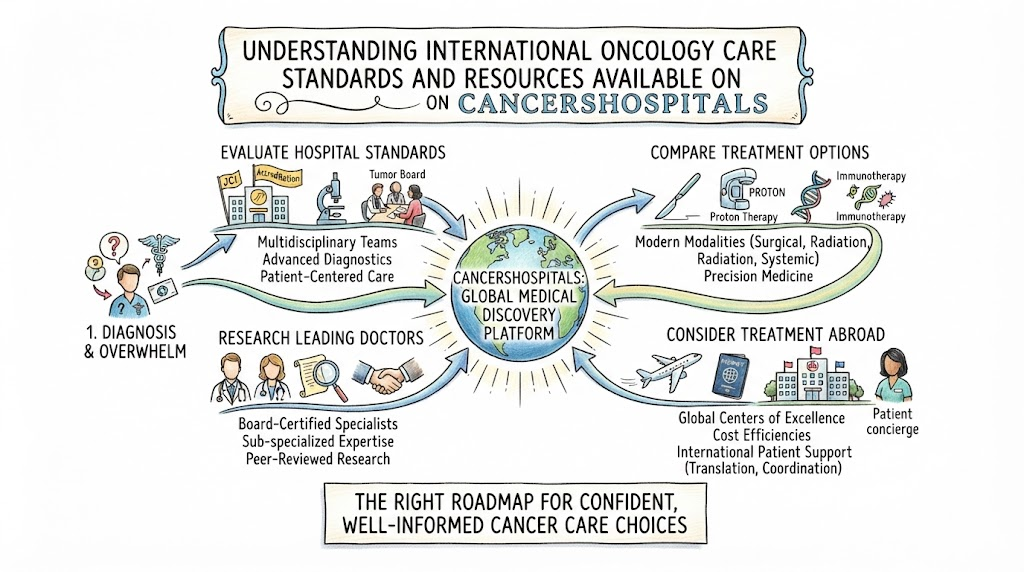
During these critical moments, having a centralized research resource streamlines decision-making and reduces emotional stress. Modern platforms like CancersHospitals empower patients and caregivers by organizing institutional credentials, surgical capabilities, and oncology specialties into accessible data points. By reviewing verified hospital profiles, clinical trial availability, and specialized oncology departments in one structured portal, families gain the clarity needed to make confident, well-informed medical choices.
What Should You Look for in Cancer Hospitals?
Selecting top-tier cancer hospitals requires evaluating critical benchmarks that directly impact clinical outcomes and long-term recovery. Advanced institutional accreditation, multidisciplinary tumor boards, and dedicated nursing ratios represent essential baseline standards. Leading centers consistently demonstrate high annual procedure volumes for specific cancer types, which correlates directly with lower complication rates and improved long-term survival.
When evaluating accredited oncology hospitals, focus closely on these core criteria:
- Multidisciplinary Tumor Boards: Regular collaborative conferences where medical oncologists, surgical oncologists, radiation specialists, pathologists, and geneticists review each patient case collectively.
- Specialized Technology & Infrastructure: Access to next-generation sequencing (NGS), robotic-assisted surgical systems, precision radiation tools (such as proton therapy and CyberKnife), and dedicated intensive care units.
- Clinical Trial Access: Active participation in Phase I–III clinical trials for breakthrough immunotherapy, cellular therapies (such as CAR-T), and targeted molecular agents.
- Comprehensive Supportive Care: Integrated on-site services including oncology nutrition, specialized physical rehabilitation, pain management, and psycho-oncology support.
Understanding Cancer Treatment Options
Modern oncology has evolved far beyond standard one-size-fits-all regimens, transitioning into highly personalized precision medicine. Comprehensive cancer treatment hospitals utilize advanced genomic profiling to pinpoint specific genetic mutations driving tumor growth, allowing doctors to select targeted therapies that destroy malignant cells while sparing healthy tissue.
The table below highlights standard and advanced treatment modalities available at top medical institutions:
| Treatment Modality | Primary Mechanism | Best Suited For | Key Clinical Advantage |
| Precision Surgery | Complete tumor resection with minimally invasive/robotic tools | Localized solid tumors, organ preservation | Reduced recovery time, minimal blood loss |
| Advanced Radiation | Image-guided stereotactic beams or charged proton particles | Inoperable, deep, or sensitive-site tumors | Pinpoint tumor targeting, minimal collateral tissue damage |
| Targeted Therapy | Small-molecule inhibitors and monoclonal antibodies | Tumors with identified actionable mutations | High specificity against cancer cells with fewer systemic side effects |
| Immunotherapy | Checkpoint inhibitors and engineered cellular therapies | Metastatic or refractory cancers | Long-term durable systemic response and immune surveillance |
How to Compare the Best Cancer Treatment Hospitals
Comparing the best cancer treatment hospitals requires structured methodologies rather than relying purely on reputation or marketing brochures. Healthcare navigators recommend establishing a formal comparison matrix that weighs clinical capabilities against your diagnosis.
To effectively evaluate and choose the best cancer hospitals, follow this structured five-step framework:
- Verify Disease-Specific Volume: Confirm the hospital performs a high volume of procedures specifically for your cancer subtype and stage.
- Review Survival & Outcome Metrics: Examine published 5-year survival statistics, infection rates, and surgical revision percentages.
- Assess Subspecialty Expertise: Ensure the department features dedicated organ-specific oncologists rather than general practitioners.
- Audit Technology Suites: Check whether the facility houses modern diagnostic PET-CT/MRI scanners and advanced linear accelerators.
- Evaluate Logistics & Coordination: Verify insurance compatibility, multilingual patient assistance, and telemedicine follow-up services.
Researching the Best Cancer Doctors
The physician leading your oncology care plan plays a defining role in your clinical path. Searching for the best cancer doctors involves examining their board certifications, fellowship training at premier academic institutions, and published peer-reviewed research. Dedicated specialists frequently lead landmark clinical trials and contribute directly to international treatment guidelines.
Expert oncologists recommend preparing thoroughly before your initial clinical consultation. Always request a detailed breakdown of the proposed treatment sequencing, potential alternative therapies, anticipated side effects, and expected recovery milestones. A reliable specialist welcomes second opinions and collaborates transparently with your primary healthcare providers to coordinate seamless care.
When Should You Consider Cancer Treatment Abroad?
Seeking cancer treatment abroad has become an effective path for patients seeking specialized care unavailable locally. Patients often explore cross-border care when facing rare tumor types, seeking cutting-edge therapies awaiting regulatory clearance at home, or searching for high-quality care at competitive price points.
Traveling for international cancer treatment offers distinct clinical advantages:
- Access to Breakthrough Therapies: Immediate access to emerging immunotherapies, specialized radiopharmaceuticals, and novel surgical devices.
- Shorter Scheduling Lead Times: Rapid admission for critical surgeries and radiation without extended waiting lists.
- Significant Cost Efficiencies: High-quality clinical interventions at substantial savings compared to private domestic healthcare costs.
- Dedicated International Units: Full-service concierge departments handling medical visas, medical record translation, airport transfers, and lodging coordination.
Exploring Cancer Hospitals Around the World
The landscape of the best cancer hospitals in the world spans across multiple continents, offering diverse clinical strengths. Leading medical centers in North America, Western Europe, and progressive Asian medical hubs have developed specialized clinical departments recognized internationally for clinical excellence and oncology innovation.
Renowned global centers emphasize integrated translational medicine, moving laboratory breakthroughs into clinical practice quickly. Whether seeking proton beam therapy in advanced European centers, complex robotic gastrointestinal resections in leading Asian medical cities, or targeted clinical trials in major research institutions, international patients have a wide variety of premier healthcare destinations to consider.
How CancersHospitals Can Help With Your Research
Evaluating international oncology options independently can be a daunting, time-consuming task for families under stress. The CancersHospitals platform simplifies this process by bringing together hospital credentials, treatment options, doctor profiles, and destination logistics into a single, intuitive interface.
Through this centralized platform, patients can filter facilities by cancer type, compare surgical technologies, and review medical travel requirements before contacting providers. By bridging the gap between patients and specialized oncology centers, the platform helps individuals make well-researched healthcare decisions without feeling overwhelmed by fragmented information.
Questions to Ask Before Choosing a Hospital
Before finalizing your treatment destination, conducting a thorough clinical interview with prospective institutions ensures complete alignment with your medical needs:
- How many procedures of this exact cancer subtype does your surgical team perform each year?
- Will my case be reviewed by a formal multidisciplinary tumor board before initiating therapy?
- What specific clinical trials or experimental protocols am I eligible for at your institution?
- What emergency support, intensive care facilities, and specialized oncology nursing are on-site?
- What comprehensive follow-up coordination and digital telemedicine services do you provide after discharge?
Frequently Asked Questions About CancersHospitals
What services does CancersHospitals provide for cancer patients?
The platform offers a comprehensive medical research directory that helps patients locate accredited oncology facilities, research specialized cancer doctors, explore advanced treatment modalities, and compare international medical options.
How does CancersHospitals help patients compare global oncology centers?
It compiles verified data on institutional accreditations, clinical specializations, available technologies, treatment procedures, and patient support amenities into structured profiles for clear side-by-side comparison.
Can I find specialized oncology doctors through the platform?
Yes, you can search for medical, surgical, and radiation oncologists based on their clinical focus, subspecialty expertise, years of practice, and affiliated hospital networks.
Does researching hospitals on the platform replace a medical consultation?
No, all directory information is designed purely for educational research and institutional comparison, and it does not replace professional medical evaluation, diagnosis, or personalized treatment planning by qualified physicians.
What types of cancer treatments can I research on the site?
You can research a wide range of therapies, including conventional chemotherapy, precision surgery, stereotactic radiation, proton therapy, immunotherapy, targeted therapy, and cellular treatments.
How does the platform assist patients looking for medical travel options?
It provides detailed overviews of international hospital destinations, cross-border patient coordination services, language assistance availability, and essential travel logistics for global care.
Is there a cost to browse hospital and doctor profiles on the website?
Browsing and exploring the directory of hospital listings, specialist profiles, and educational treatment guides is completely free for patients and families.
Can patients with rare cancers find suitable facilities through the directory?
Yes, the platform highlights specialized academic centers and research institutes that feature dedicated rare-disease programs and active clinical trial registries.
How often is the hospital and specialist information updated?
Institutional profiles, medical technology suites, and specialist credentials undergo regular reviews to ensure patients access up-to-date and accurate clinical directory information.
What should I prepare before contacting hospitals found on the platform?
You should gather your complete medical history, including recent pathology slides, biopsy reports, high-resolution diagnostic imaging scans (CT, MRI, PET), and current medication lists.
Final Thoughts
Navigating a cancer diagnosis requires a clear head, trusted medical facts, and reliable institutional insights. Finding the right medical team and facility can make a substantial difference in treatment efficacy, clinical outcomes, and overall patient comfort throughout the recovery journey.
By utilizing dedicated platforms like CancersHospitals to evaluate global oncology standards, verify specialist credentials, and understand modern therapy choices, patients and their loved ones can approach their healthcare decisions with confidence, clarity, and peace of mind.
